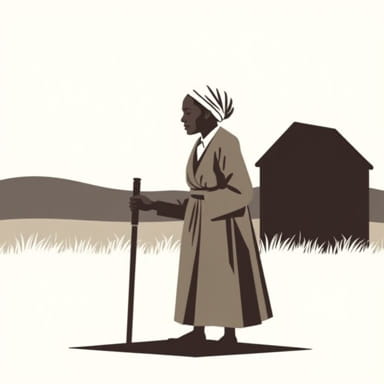
Harriet Tubman’s early life was marked by struggle, strength, and an unwavering will to survive in a world that denied her freedom. Born into slavery in the early 1820s in Dorchester County, Maryland, Tubman’s youth was shaped by harsh labor, abuse, and a deep sense of injustice. Despite being denied formal education, she developed profound intelligence and spiritual resilience that would later guide her actions. Understanding the early life of Harriet Tubman is crucial for appreciating how she became a legendary conductor of the Underground Railroad and a symbol of courage in American history.
Birth and Family Background
Harriet Tubman was born Araminta Ross around 1822, though the exact date remains uncertain due to the lack of birth records for enslaved individuals. She was one of nine children born to Benjamin Ross and Harriet Rit Green, both of whom were enslaved. Her family lived on the plantation of Edward Brodess, who frequently hired them out to other landowners.
Even as a young child, Tubman was subjected to the separation of family members an all-too-common occurrence among enslaved families. Several of her sisters were sold to distant plantations, a fact that left a lasting emotional scar on her. This early exposure to the brutality of slavery deeply influenced her later mission to reunite families through the Underground Railroad.
Harsh Childhood and Labor
From as early as five or six years old, Tubman was hired out to do domestic work. Her early jobs included tasks like babysitting, cleaning, and weaving, but she was often abused and neglected. One of her earliest recorded jobs involved being sent to a woman named Miss Susan to care for a baby. If the baby cried, Harriet was whipped a trauma she later described with vivid pain.
By her teenage years, Tubman was assigned to more physically demanding work, such as plowing fields and hauling logs. Despite her small stature, she showed extraordinary physical strength and determination. It was during these years that she gained firsthand knowledge of the landscape of Maryland’s Eastern Shore knowledge that would later prove vital during her missions as a conductor on the Underground Railroad.
The Injury That Changed Her Life
One pivotal moment in Harriet Tubman’s early life came when she was struck in the head by a heavy metal weight. The injury occurred when an overseer tried to hit another enslaved person who was attempting to escape; Harriet stepped in the way and took the blow. This head trauma caused her to suffer from severe headaches, seizures, and periods of unconsciousness for the rest of her life.
After the injury, Tubman began to experience powerful visions and dreams, which she interpreted as messages from God. These spiritual experiences played a critical role in shaping her beliefs and gave her the conviction that she had been chosen for a higher purpose. Her deep religious faith became both a source of comfort and a guiding force in her future endeavors.
Understanding Slavery from a Young Age
Growing up in bondage, Harriet Tubman developed a profound understanding of the cruelty and injustice of slavery. She witnessed the pain of family members being sold, endured endless days of forced labor, and lived with the constant threat of punishment. These formative experiences instilled in her a deep desire for freedom not just for herself, but for others as well.
Early Signs of Rebellion
Even as a child, Tubman showed signs of defiance. She often ran away for short periods, despite the risk of brutal punishment. These early escapes were small but significant acts of resistance that demonstrated her courage and unwillingness to accept injustice. Her ability to evade capture and survive in the wild laid the groundwork for her later success in leading others to freedom.
Her Escape from Slavery
Harriet Tubman finally escaped from slavery in 1849, at around 27 years old. The decision to flee was sparked by rumors that she and her brothers were going to be sold. While her brothers initially turned back, Harriet continued on her own, navigating through forests and swamps, guided by the North Star and aided by members of the Underground Railroad.
This moment marked a turning point not just in her life, but in American history. Her escape was only the beginning of her greater mission to return to the South and help others reach freedom. She would go on to make at least 13 trips back to the South and personally escort around 70 enslaved people to safety.
Legacy Rooted in Her Early Years
The hardships of Harriet Tubman’s early life formed the foundation of her legendary courage. Her upbringing gave her intimate knowledge of the geography, slaveholding systems, and social networks of the South, which she would later use to outwit slave catchers. Her suffering forged resilience; her faith gave her hope. Without understanding her early years, one cannot fully grasp the scope of her bravery and determination.
Key Lessons from Her Early Life
- Resilience in the Face of Hardship: Harriet endured physical and emotional abuse, yet refused to be broken.
- Strong Family Bonds: The forced separation from her siblings inspired her to reunite other families through the Underground Railroad.
- Spiritual Conviction: Her injury and visions gave her a sense of divine mission that fueled her later actions.
- Experience with the Land: Her labor and brief escapes gave her practical knowledge for guiding others to freedom.
Harriet Tubman’s early life was not simply a period of suffering it was a time of preparation. The pain she endured, the strength she developed, and the insights she gained all contributed to her emergence as one of America’s most heroic figures. Understanding the early life of Harriet Tubman reveals not only the roots of her courage but also the depth of her humanity. Her journey from slavery to freedom did not begin with her famous escapes it began with the strength she forged in her youth.