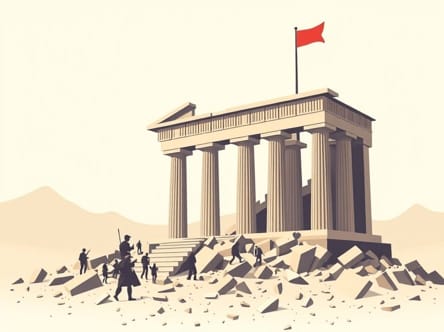
The Bronze Age Collapse marks one of the most significant and mysterious turning points in ancient history. Occurring around 1200 BCE, this period saw the rapid decline and destruction of several major civilizations across the Eastern Mediterranean and Near East. Once flourishing societies that had made remarkable advances in art, architecture, trade, and governance suddenly fell into decline or vanished altogether. This collapse disrupted established networks of power, trade, and culture, leading to a dark age that lasted for centuries. Understanding the causes and consequences of the Bronze Age Collapse provides valuable insights into the vulnerabilities of complex societies.
Background of the Late Bronze Age
The Late Bronze Age was a time of remarkable cultural and economic development. Powerful empires and kingdoms such as the Mycenaean Greeks, the Hittites, the Egyptians, and the city-states of the Levant thrived during this era. These civilizations were connected through extensive trade networks, diplomatic relations, and military alliances. Bronze, an alloy of copper and tin, was the key material that enabled advancements in weaponry, tools, and art, helping these societies to prosper.
Major cities like Mycenae, Troy, Ugarit, and Hattusa were centers of political and cultural power. They boasted monumental architecture, advanced writing systems, and organized militaries. The Late Bronze Age is often viewed as a peak of ancient civilization before the sudden and catastrophic changes brought about by the collapse.
Key Civilizations Affected
- Mycenaean Greece: Known for their palatial centers and warrior culture.
- The Hittite Empire: Located in Anatolia, with extensive influence over the region.
- Ancient Egypt: Particularly during the New Kingdom period, one of the most powerful states.
- Canaanite City-States: Including Ugarit and other coastal cities involved in Mediterranean trade.
Signs of Collapse
Starting around 1200 BCE, evidence points to widespread destruction and abandonment of cities. Archaeological layers show burned palaces, broken fortifications, and a marked reduction in population. Trade networks that had linked distant regions were disrupted, leading to economic instability. Many administrative centers lost their ability to govern effectively, and writing systems such as Linear B in Mycenaean Greece disappeared.
The collapse was not uniform; while some regions were severely affected, others experienced a slower decline or transformation. For example, Egypt survived the period but faced internal strife and weakened influence outside its borders.
Possible Causes of the Bronze Age Collapse
The reasons behind this wide-reaching collapse have been the subject of intense scholarly debate. It is likely that a combination of factors contributed rather than a single cause. Some of the key theories include:
- Invasions by the Sea Peoples: Groups described in Egyptian records as Sea Peoples launched attacks on coastal cities, causing widespread destruction.
- Natural Disasters: Earthquakes, droughts, and famines may have destabilized societies and reduced agricultural output.
- Internal Revolts and Social Unrest: Economic hardships and power struggles could have led to uprisings and the weakening of political structures.
- Trade Disruptions: Breakdown of long-distance trade networks would have cut off vital resources like tin, essential for bronze production.
- Technological Changes: The gradual transition from bronze to iron tools and weapons might have disrupted economies and social orders.
The Role of the Sea Peoples
One of the most prominent explanations for the Bronze Age Collapse involves the mysterious Sea Peoples. These groups appeared suddenly in the historical record, attacking various regions including Egypt, the Levant, and Anatolia. Egyptian pharaohs such as Ramses III left inscriptions describing battles against these invaders. The Sea Peoples are thought to have been a confederation of displaced or migrating groups, possibly from the Aegean or Mediterranean islands, whose movements may have been triggered by environmental or economic pressures.
Their raids contributed to the destruction of many coastal cities, further destabilizing trade and political alliances. Although the Sea Peoples played a significant role, their exact origins and composition remain uncertain.
Environmental and Economic Factors
Environmental stresses likely exacerbated the collapse. Evidence from pollen analysis and sediment cores suggests periods of drought in the Eastern Mediterranean, which would have impacted food production. Reduced harvests could have led to famine, social unrest, and weakened states’ ability to defend their territories.
Economic problems also arose from the interruption of trade routes. Societies reliant on imported tin and luxury goods found themselves isolated. This isolation forced communities to become more localized and less complex, contributing to the decline of urban centers.
Aftermath and Legacy
The Bronze Age Collapse ushered in a period often called the Greek Dark Ages in the Aegean and a general decline in complexity across the Near East. Many former centers of power were abandoned, populations decreased, and writing systems disappeared or were lost for centuries. However, this dark period also paved the way for new cultures and political entities.
By the early Iron Age, new civilizations began to emerge, such as the Neo-Assyrian Empire and the kingdoms of ancient Israel. The collapse forced societies to reorganize, leading to changes in political structures, military tactics, and economic models.
Lessons from the Bronze Age Collapse
- Complexity and Vulnerability: The collapse highlights how highly interconnected societies can be fragile and vulnerable to cascading failures.
- Environmental Impact: Climate and environmental changes can have profound effects on human societies.
- Migration and Conflict: Movements of peoples can trigger wide-reaching political and social disruptions.
Modern scholars continue to study the Bronze Age Collapse to understand how ancient societies dealt with crisis and transformation. Its story serves as a reminder of the delicate balance between human civilization and environmental, economic, and social forces.
The Bronze Age Collapse remains one of the most fascinating and complex events in ancient history. The downfall of powerful kingdoms and empires around 1200 BCE transformed the cultural and political landscape of the Eastern Mediterranean and Near East. Although many questions remain about the precise causes, it is clear that a combination of invasions, environmental changes, economic disruptions, and internal conflicts contributed to this massive upheaval. The collapse led to a prolonged period of decline but also set the stage for new societies to rise. Studying this era provides important insights into the fragility and resilience of civilizations throughout history.