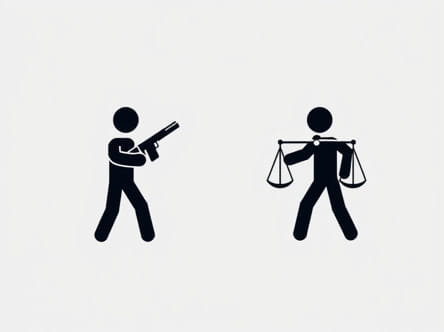
Summary execution and extrajudicial killing are two grave violations of human rights that often occur in conflict zones, under authoritarian regimes, or during law enforcement operations lacking oversight. Although the terms are sometimes used interchangeably in media and public discussions, they have distinct meanings and implications under international law. Understanding the difference between summary execution and extrajudicial killing is essential for interpreting reports of human rights abuses, holding perpetrators accountable, and advocating for justice. These unlawful acts not only threaten individual rights but also undermine the rule of law and democratic governance across societies.
Definition of Summary Execution
What Is a Summary Execution?
A summary execution refers to the immediate killing of an individual by authorities or military forces without a fair trial or legal process. These executions are typically carried out after the person is captured or detained and are often intended as punishment or deterrence without judicial oversight.
Summary executions violate numerous principles of international humanitarian law and human rights law. They bypass the court system entirely and eliminate the possibility of defense, appeal, or due process.
Common Features of Summary Executions
- No formal charges or legal proceedings
- Execution carried out by state actors or affiliated groups
- Often occurs during military operations, armed conflict, or crackdowns
- Intended as swift punishment or warning to others
Because they often occur in war zones or under emergency laws, summary executions are sometimes disguised as legitimate military actions, making accountability more difficult.
Definition of Extrajudicial Killing
What Is an Extrajudicial Killing?
Extrajudicial killing refers to the deliberate killing of a person by government authorities or their agents without any legal process or judicial approval. Unlike summary execution, which implies some form of immediate but informal judgment, extrajudicial killing is broader and can happen secretly, in retaliation, or as part of a policy of repression.
Extrajudicial killings often occur in societies with weak legal institutions or where state agents act with impunity. These killings can be targeted against political dissidents, activists, journalists, or minority groups and are frequently carried out by police, paramilitary forces, or intelligence agencies.
Characteristics of Extrajudicial Killings
- Occurs outside any legal framework
- Often involves premeditated targeting
- May be covered up or misreported as legitimate action
- Victims may be civilians or unarmed individuals
- Associated with abuse of power and lack of transparency
The term is commonly used in reports by human rights organizations, which document cases where state agents intentionally kill without judicial authority or oversight.
Key Differences Between Summary Execution and Extrajudicial Killing
Although both summary execution and extrajudicial killing involve the unlawful deprivation of life, there are subtle differences that distinguish them under legal and human rights frameworks.
Timing and Process
Summary execution typically refers to immediate killings following capture or apprehension, often with the appearance of an on-the-spot decision. Extrajudicial killings, by contrast, may involve planning and targeting, and are not necessarily tied to the moment of arrest or conflict.
Judicial Context
While both lack a proper trial, summary execution may involve a mock or hurried decision by military or police personnel in the field. Extrajudicial killing usually has no pretense of any legal process and may happen in secret.
Scope and Motive
Summary executions may occur during armed conflict or martial law as an unofficial but systematic tactic. Extrajudicial killings are more often political or strategic in nature and can include assassinations or disappearances.
Legal Implications
Both are considered illegal under international law, but they may fall under different investigative frameworks or legal categorizations depending on the circumstances and actors involved.
International Law and Human Rights Standards
Prohibition Under International Law
Both practices are prohibited under various international treaties and conventions. The Universal Declaration of Human Rights and the International Covenant on Civil and Political Rights affirm the right to life and the requirement for due process in any deprivation of liberty or punishment.
The Geneva Conventions also prohibit the execution of prisoners or civilians without trial, especially during armed conflicts. Acts of summary execution or extrajudicial killing may constitute war crimes or crimes against humanity if committed systematically or on a wide scale.
Monitoring and Accountability
Organizations such as the United Nations, Amnesty International, and Human Rights Watch regularly monitor and report on cases of unlawful killings. The UN Special Rapporteur on extrajudicial, summary, or arbitrary executions plays a key role in gathering information and urging governments to investigate and prevent such acts.
States are expected to investigate any suspected cases, prosecute those responsible, and provide compensation or remedies to victims’ families. However, in many cases, justice is hindered by political interference, fear, or lack of institutional independence.
Examples and Global Context
Throughout history and in modern times, cases of summary executions and extrajudicial killings have been reported in numerous regions. These abuses are often linked to authoritarian regimes, armed conflicts, or weak legal systems.
- Conflict Zones: In areas like Syria, Myanmar, or parts of Africa, summary executions of captured fighters or civilians have been documented during war.
- Police Violence: In countries with high levels of police brutality, such as the Philippines or parts of Latin America, extrajudicial killings have targeted alleged criminals or drug suspects.
- Political Repression: In authoritarian states, dissidents, journalists, or activists may be silenced through state-sponsored killings without legal recourse.
These examples highlight the urgent need for accountability mechanisms and international cooperation in investigating and preventing human rights violations.
Prevention and Advocacy
Legal Reforms and Oversight
To prevent these unlawful killings, countries must strengthen legal protections, enforce the rule of law, and ensure transparency in law enforcement and military operations. Independent oversight bodies, such as human rights commissions or ombudsman institutions, play a crucial role in monitoring abuses and recommending reforms.
Role of Civil Society and Media
Civil society organizations, journalists, and human rights advocates help expose abuses and put pressure on authorities to act. Through documentation, advocacy, and litigation, they contribute to a culture of accountability and justice.
International Support
Global institutions and foreign governments can provide support through sanctions, funding for legal aid, and diplomatic pressure on regimes that allow or encourage unlawful killings. Cooperation in international courts or tribunals may also be necessary in severe cases.
Summary execution and extrajudicial killing are two forms of illegal and unethical actions that threaten the basic right to life and due process. While they share similarities, understanding the distinctions between the two is essential for accurate reporting, legal interpretation, and accountability efforts. Both practices represent severe abuses of power and must be addressed through stronger legal safeguards, independent oversight, and international action. As awareness grows and global standards evolve, efforts to prevent these crimes and uphold justice must remain a priority for governments, institutions, and civil society alike.
#kebawah#