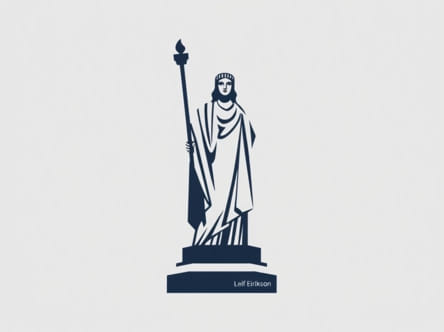
Standing tall as a symbol of early exploration and Norse heritage, the statue of Leif Erikson captures the imagination of those fascinated by Viking history and pre-Columbian voyages to North America. While many associate the ‘discovery’ of America with Christopher Columbus, the story of Leif Erikson offers a different narrative one of daring navigation, ancient seafaring traditions, and cultural pride. This statue has become a significant landmark in various cities, particularly where Scandinavian-American communities have sought to preserve their ancestry and honor the explorer’s contribution to history. With its imposing presence and historical resonance, the statue of Leif Erikson invites us to look deeper into both the man and the message behind the monument.
Who Was Leif Erikson?
Leif Erikson, often spelled Leif Ericsson or Leifr Eiríksson in Old Norse, was a Norse explorer born around the year 970. He was the son of Erik the Red, the famous founder of the first Norse settlements in Greenland. Leif is most well-known for his voyage to a land he called ‘Vinland,’ believed by many historians to be part of what is now Newfoundland in Canada. This journey occurred nearly 500 years before Columbus sailed west, making Leif Erikson one of the first Europeans to set foot on North American soil.
Legacy of Exploration
Erikson’s journey represented not just an adventurous spirit, but also the capabilities of Norse navigation, long before modern instruments. His voyage from Greenland to North America challenged later narratives that framed European discovery solely within the 15th and 16th centuries. Celebrated today as an iconic Norse explorer, Leif Erikson has become a figure of national pride in countries such as Iceland, Norway, and among Scandinavian-American communities in the United States.
History of the Leif Erikson Statue
The statue of Leif Erikson has been erected in several locations, each celebrating different aspects of his influence. One of the earliest and most famous statues was sculpted by Alexander Stirling Calder and was a gift from the U.S. government to Iceland in 1930 to commemorate the 1,000th anniversary of the founding of the Althing, Iceland’s parliament. Another prominent statue stands in Boston, Massachusetts, while others can be found in Seattle, Milwaukee, Chicago, and even in Reykjavik, Iceland.
Symbolism and Artistic Design
The artistic design of Leif Erikson statues typically emphasizes strength, exploration, and resolve. Most statues portray him in traditional Viking attire, often with a sword or shield, gazing outward as if surveying unknown lands. These artistic choices reflect the values associated with Erikson courage, curiosity, and cultural pride. The details, such as windswept cloaks and seafaring tools, often allude to his oceanic journey and his role as a pioneer of the North Atlantic world.
Locations and Significance in the United States
In the United States, Leif Erikson statues are often found in areas with a strong Scandinavian heritage. These monuments serve not only as historical markers but also as symbols of immigrant contributions to American society. Several of the most notable statues include:
- Boston, Massachusetts: Located on Commonwealth Avenue, this statue was erected in 1887 and is considered the first public statue of Leif Erikson in the United States.
- Seattle, Washington: Found in Shilshole Bay Marina, this statue was a gift from Norway in the 1960s and is a focal point of Leif Erikson Day celebrations.
- Minneapolis, Minnesota: Situated near the State Capitol, this statue recognizes the large Scandinavian-American population in the region.
Community Celebrations
Every year on October 9th, Leif Erikson Day is celebrated in the United States to honor his achievements. The day often includes wreath-laying ceremonies at statues, historical reenactments, cultural performances, and educational events. These activities revolve around the statues as centers of cultural identity and historical remembrance, particularly within Norwegian-American communities.
The Broader Cultural Impact
The statue of Leif Erikson goes beyond commemorating an individual; it serves as a broader symbol of Norse exploration and the blending of cultures. For many Scandinavian-Americans, these statues are not merely artistic or historical installations they are physical embodiments of their ancestral heritage and stories passed down through generations. They anchor historical memory in public spaces, allowing future generations to learn and reflect on a more inclusive narrative of discovery.
Educational Value
Statues like that of Leif Erikson also play an important role in public education. They invite students, tourists, and history enthusiasts to explore lesser-known aspects of exploration history. Many plaques and inscriptions detail Erikson’s journey, the context of Norse settlement in Greenland, and the archaeological evidence found at L’Anse aux Meadows, a recognized Norse site in Canada.
Modern Interpretations and Relevance
In today’s context, the statue of Leif Erikson continues to inspire reinterpretations and discussions about identity, migration, and cultural roots. As debates over historical monuments increase, Erikson’s statue has largely remained a celebrated figure, possibly due to his pre-Columbian voyage narrative and lack of direct colonial conquest. His legacy allows space for reflection on exploration without the heavy burdens of later colonial actions associated with other figures.
Preservation and Tourism
Many of the sites where Leif Erikson statues stand have become tourist attractions, contributing to local economies and heritage tourism. Museums and cultural centers often use these statues as entry points for deeper historical exhibitions and tours. Preservation efforts are typically supported by Scandinavian heritage organizations, local governments, and educational institutions, ensuring that the legacy of Leif Erikson remains accessible and meaningful.
The statue of Leif Erikson holds a unique place in the landscape of historical monuments. It honors a figure whose adventurous spirit crossed oceans and centuries, shaping the way we understand early exploration. Whether standing in Reykjavik, Boston, or Seattle, each statue reminds us that history is broad, multifaceted, and often more connected than we realize. For those drawn to the Viking legacy, Norse heritage, or the idea of forgotten chapters in world history, the statue of Leif Erikson stands as a powerful symbol of discovery and identity.