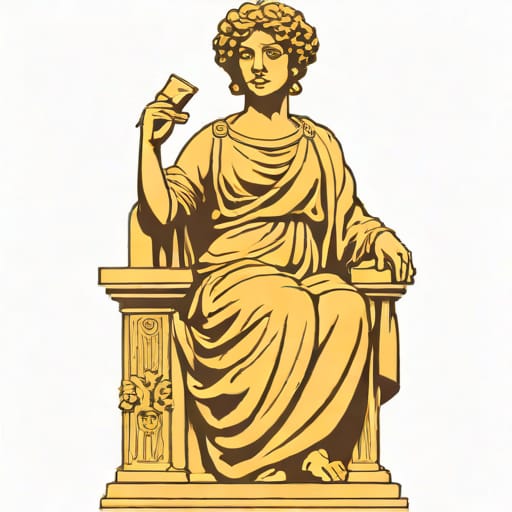
The statue of Agrippina the Younger stands as a remarkable testament to the artistry and political symbolism of ancient Rome, capturing both the likeness and the influence of one of the most powerful women of the Julio-Claudian dynasty. Agrippina the Younger, mother of Emperor Nero and wife of Emperor Claudius, was known for her intelligence, ambition, and political acumen, making her a subject of fascination for both historians and art enthusiasts. Statues of Agrippina were not merely artistic representations; they were tools of propaganda, reflecting her social status, family connections, and the careful cultivation of her public image. Examining the statue of Agrippina the Younger provides valuable insight into Roman sculpture, portraiture, and the ways in which women of the imperial family projected power in a male-dominated society.
Historical Context of Agrippina the Younger
Agrippina the Younger, born in 15 CE, was the daughter of Germanicus and Agrippina the Elder, and a granddaughter of Emperor Augustus. Her life was intertwined with the most significant political events of early Imperial Rome. She married Gnaeus Domitius Ahenobarbus, bore Nero, and later married her uncle, Emperor Claudius. Her influence in the imperial court was substantial, as she maneuvered through complex family dynamics and political rivalries. The creation of her statues during her lifetime or posthumously was a reflection of her status, ambition, and the ways in which Roman elites used portraiture to assert legitimacy and commemorate familial connections.
Artistic Features of the Statue
The statue of Agrippina the Younger is characterized by its adherence to Roman portraiture traditions, combining realism with idealization. Key artistic features include
- Facial ExpressionThe statue typically presents a composed and dignified expression, emphasizing intellect and authority.
- HairstyleAgrippina’s elaborate hairstyle is often carefully depicted, reflecting contemporary fashion trends among Roman noblewomen and signifying her elite status.
- Clothing and DraperyThe folds of her garments are intricately carved, highlighting the sculptor’s skill and the importance of modesty, elegance, and refinement in representing imperial women.
- Proportions and PoseThe statue often depicts her in a formal and upright posture, signaling her power, control, and gravitas within the social hierarchy of Rome.
Symbolism and Political Messaging
Roman statues were rarely neutral; they were imbued with symbolism that conveyed political and familial messages. In Agrippina’s statues, several aspects serve as visual rhetoric
- Connection to the Imperial FamilyThe statue emphasizes her lineage as a granddaughter of Augustus and mother of Nero, reinforcing her legitimacy and political significance.
- Authority and InfluenceThe dignified posture, facial expression, and attire project a sense of authority and control, showcasing her role in the court and her political acumen.
- Fertility and Maternal VirtueMany depictions subtly emphasize her role as a mother, particularly to Nero, reflecting the Roman ideal of maternal influence as a source of dynastic strength.
Techniques and Materials
Roman sculptors employed marble, bronze, and occasionally other materials to create statues of imperial women, including Agrippina. Marble was favored for its durability, smooth texture, and ability to hold fine detail. Sculptors used chisels, drills, and abrasives to achieve realistic facial features, delicate drapery, and intricate hairstyles. The combination of technical mastery and artistic expression allowed statues to convey both physical likeness and the social-political aura of the subject. In some cases, the statues may have been painted or gilded, adding additional layers of realism and visual impact.
Legacy of Agrippina’s Statues
The statues of Agrippina the Younger provide a rich source of information for historians, archaeologists, and art historians. They reveal not only Roman sculptural techniques but also insights into the role of women in the imperial family, the dynamics of power, and the importance of public image in Rome. Agrippina’s statues have been studied to understand fashion, hairstyles, and the subtle nuances of Roman portraiture, which often balanced realism with idealization to communicate authority and status. These works continue to influence contemporary interpretations of Roman art and imperial history.
Famous Examples and Locations
Several statues and busts of Agrippina the Younger survive in museums and collections across Europe. Notable examples include
- The Capitoline Museums in Rome, which house marble busts believed to represent Agrippina, showcasing detailed hairstyles and facial features.
- The Vatican Museums, featuring sculptures that illustrate the sophisticated drapery and stylistic elements typical of Julio-Claudian portraiture.
- Other regional archaeological collections that include fragments or reconstructions, allowing for study of Roman sculptural techniques and historical representation.
Interpretation in Modern Scholarship
Modern scholars examine Agrippina’s statues not only as works of art but also as historical documents. They analyze facial features, attire, and proportions to infer social roles, political influence, and personal characteristics. Some studies explore how imperial women used visual culture to assert authority in a society dominated by male rulers. Agrippina’s statues are also considered within the broader context of propaganda, dynastic politics, and the interplay between personal image and public perception in ancient Rome. By studying these sculptures, researchers gain a nuanced understanding of Roman history, gender roles, and artistic conventions.
Conservation and Preservation
Preserving the statue of Agrippina the Younger and similar Roman sculptures is critical for ongoing historical and artistic study. Conservation efforts include controlling temperature, humidity, and light exposure, as well as carefully cleaning and repairing damaged areas. Technological advancements, such as 3D scanning and digital modeling, also allow for detailed analysis and virtual reconstruction, ensuring that the legacy of Agrippina’s imagery can be studied by future generations without further risk to the original works.
The statue of Agrippina the Younger remains a powerful symbol of the intersection of art, politics, and gender in ancient Rome. Through careful craftsmanship, detailed portraiture, and symbolic representation, the statues convey her status, influence, and the sophisticated visual culture of the Julio-Claudian era. Studying these sculptures offers insights into the political strategies, social norms, and artistic achievements of ancient Rome, while highlighting the enduring importance of visual representation in shaping historical memory. For historians, art enthusiasts, and the general public, the statue of Agrippina the Younger continues to fascinate as both a masterpiece of Roman sculpture and a window into the life of one of Rome’s most intriguing imperial women.