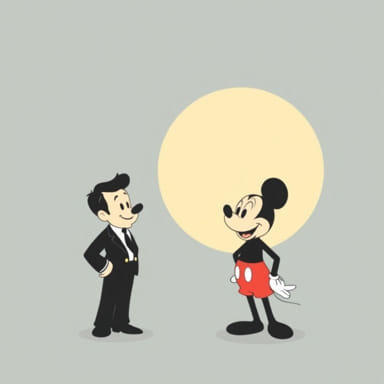
Walt Disney is a household name, synonymous with creativity, imagination, and the global empire of entertainment. However, behind Walt’s iconic vision was his older brother Roy O. Disney, a crucial figure who played an equally vital role in building the Walt Disney Company. The story of Roy and Walt Disney is one of partnership, contrast, and shared ambition that shaped the course of animation and family entertainment forever. Understanding the connection and contribution of each brother reveals the full picture of how the Disney legacy was born and evolved.
Early Life and Family Background
Roy Oliver Disney was born on June 24, 1893, in Chicago, Illinois, while Walter Elias Disney came later on December 5, 1901. Growing up in a modest family, both boys shared a strong work ethic and close bond. Roy, being the eldest of five children, had a sense of responsibility early in life, while Walt showed signs of artistic and imaginative leanings from a young age. Their upbringing instilled in them values of determination, frugality, and collaboration.
The Path to Partnership
Before joining forces, Roy served in the U.S. Navy during World War I and later worked in banking. Walt pursued a career in art and animation, eventually founding a small studio that faced financial difficulty. When Walt’s company, Laugh-O-Gram Studio, went bankrupt in 1923, he moved to Hollywood, and Roy followed shortly after. In October 1923, the brothers co-founded the Disney Brothers Studio, the first step toward building their entertainment empire.
Division of Roles and Business Structure
The partnership between Roy and Walt Disney worked because of their complementary skills. Walt was the creative mind a visionary, director, and innovator while Roy was the business strategist and financial manager. Roy managed the company’s finances, negotiated deals, and maintained investor relations. Walt’s imagination and storytelling would not have been sustainable without Roy’s steady hand keeping the business afloat.
- Roy Disney: Business operations, contracts, budget management, investor relations.
- Walt Disney: Creative development, storytelling, animation direction, project vision.
This division allowed the company to thrive even in uncertain times, including during the Great Depression and World War II. Roy kept the company solvent while Walt expanded its artistic boundaries.
Creation of Mickey Mouse and the Rise of the Studio
In 1928, Mickey Mouse was created, propelling the studio to fame. While Walt provided the voice and creative inspiration, Roy was instrumental in marketing the character and negotiating the distribution rights that brought revenue. Mickey Mouse merchandise and short films became wildly successful, laying the foundation for more ambitious projects such as Snow White and the Seven Dwarfs, the first full-length animated feature film.
Roy’s Role in Major Projects
As Walt continued to push creative boundaries, Roy had to find ways to fund his brother’s increasingly expensive ideas. Roy arranged financing for major films like Fantasia, Pinocchio, and Bambi. Despite setbacks, he maintained the studio’s stability. When Walt dreamed of building a theme park, Roy initially hesitated due to the financial risk but ultimately secured the funding necessary to make Disneyland a reality.
The Founding of Disneyland
Disneyland, opened in 1955 in Anaheim, California, was Walt’s brainchild, but Roy’s behind-the-scenes work made it possible. He negotiated with banks, investors, and even the television networks that helped finance the park through promotional content. Without Roy’s savvy business sense, Disneyland may never have opened its gates. It became a symbol of innovation, family fun, and immersive storytelling everything the Disney brand stood for.
The Loss of Walt and Roy’s Final Mission
Walt Disney died in 1966, leaving Roy to carry the weight of their shared dream. Though devastated, Roy postponed his own retirement to see Walt’s vision of a new park in Florida come to life. He took personal charge of the project, ensuring that Walt Disney World in Orlando would be built exactly as his brother had imagined.
The Opening of Walt Disney World
Roy Disney insisted the park be named Walt Disney World to honor his late brother. It opened on October 1, 1971. At the dedication, Roy stood proudly before a crowd and reminded them of Walt’s influence and dreams. Only two months after the park’s opening, Roy passed away on December 20, 1971. His last major act was preserving and fulfilling his brother’s legacy, a final gesture of love and commitment.
Legacy of Roy and Walt Disney
The Disney Company as we know it today would not exist without the balanced partnership between Roy and Walt Disney. Walt was the spark, the risk-taker, and the artistic genius. Roy was the foundation, the stabilizer, and the strategist. Together, they transformed a small animation studio into a global powerhouse of entertainment.
- Walt Disney brought unforgettable characters and imaginative worlds to life.
- Roy Disney ensured the company survived financial hurdles and scaled to new heights.
Their combined talents made possible not only animated classics but also the creation of theme parks, television programming, and innovations in entertainment technology. Roy’s humility often left him in the shadows of his younger brother, but modern assessments of Disney history increasingly recognize the vital role he played.
Lessons from the Disney Brothers
The story of Roy and Walt Disney teaches several key lessons:
- Vision needs structure: Creative dreams need business minds to become reality.
- Family collaboration can thrive: Despite differences in personality, mutual respect built a lasting empire.
- Legacy is a shared endeavor: The Disney name reflects the efforts of both brothers, not just one.
In a world that often celebrates the visionary, Roy’s story reminds us of the power of pragmatism and partnership. His role was quiet but essential, and he ensured that Walt’s creations were not only seen but sustained for generations.
Roy and Walt Disney were more than brothers; they were co-architects of a dream that reshaped entertainment across the globe. While Walt drew the spotlight with his imagination and public persona, Roy worked behind the scenes to turn dreams into tangible success. Their legacy is a testament to teamwork, shared purpose, and unwavering belief in each other’s strengths. The Disney empire stands not just as a monument to magic and imagination, but also to the enduring power of family and collaboration.