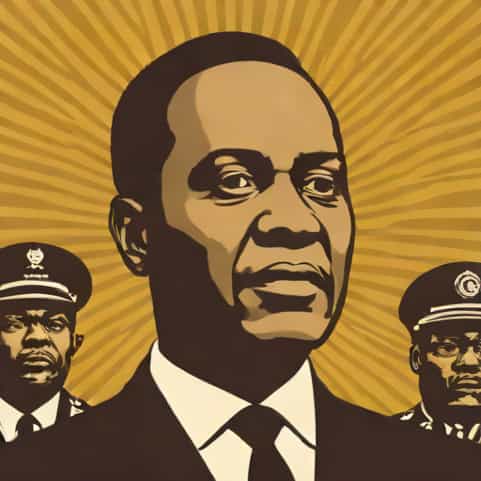
Kwame Nkrumah was one of Africa’s most influential political figures in the twentieth century, celebrated for leading Ghana to independence and promoting Pan-African unity. However, his government was overthrown in a military coup on February 24, 1966, while he was on a state visit abroad. The overthrow shocked many supporters and raised lasting debates about leadership, power, and governance in post-colonial Africa. Understanding the reasons for the overthrow of Kwame Nkrumah requires looking beyond a single cause and examining political, economic, social, and international factors that gradually weakened his rule.
Background of Nkrumah’s Leadership
Kwame Nkrumah became Ghana’s first prime minister in 1957 and later its first president when the country became a republic in 1960. He was admired for his vision of rapid modernization, African unity, and freedom from colonial influence. His early years in power were marked by ambitious development projects, expanded education, and strong nationalist sentiment.
Despite these achievements, Nkrumah’s style of leadership evolved over time. What began as popular and inclusive gradually became centralized and authoritarian. This shift laid the foundation for growing dissatisfaction among different segments of Ghanaian society.
Economic Difficulties and Public Discontent
One of the most significant reasons for the overthrow of Kwame Nkrumah was Ghana’s worsening economic situation during the early 1960s. At independence, Ghana had strong foreign reserves and benefited from high cocoa prices. Nkrumah used this wealth to fund large infrastructure projects, including factories, roads, and the Akosombo Dam.
However, many of these projects were expensive and did not generate immediate economic returns. At the same time, world cocoa prices fell sharply, reducing government revenue. Ghana’s foreign reserves declined, and the country accumulated heavy debt. Shortages of basic goods, rising unemployment, and inflation made daily life harder for ordinary citizens.
Impact on Workers and Farmers
Workers and farmers felt the economic strain directly. Wage controls limited income growth, while prices continued to rise. Cocoa farmers, in particular, were unhappy with low producer prices set by the state. Their frustration weakened one of Nkrumah’s strongest early support bases.
As economic hardship increased, public confidence in Nkrumah’s leadership declined. Many people began to associate his government with wasteful spending and poor economic management.
Authoritarian Rule and Political Repression
Another major factor behind the overthrow was Nkrumah’s increasingly authoritarian approach to governance. In 1964, Ghana officially became a one-party state, with the Convention People’s Party as the only legal political party. Nkrumah also declared himself president for life, a move that alarmed both citizens and political elites.
Political opponents were arrested, detained without trial, or forced into exile under laws such as the Preventive Detention Act. These actions created fear and resentment, even among former allies who had supported independence.
Loss of Democratic Legitimacy
While Nkrumah justified his actions as necessary for national unity and development, many Ghanaians viewed them as a betrayal of democratic ideals. Traditional leaders, professionals, students, and sections of the middle class felt excluded from political decision-making.
This loss of democratic legitimacy made it easier for critics to justify removing Nkrumah from power, especially when combined with economic decline.
Military and Police Dissatisfaction
The role of the military and police was crucial in the overthrow of Kwame Nkrumah. Over time, relations between Nkrumah and the security forces deteriorated. He distrusted the army, fearing it could threaten his rule, and took steps to weaken its influence.
Nkrumah created special security units that reported directly to him, bypassing the regular military command. Promotions and appointments were often based on political loyalty rather than professional merit, causing resentment within the armed forces.
Pay, Conditions, and Morale
Members of the military and police were also affected by economic difficulties. Poor pay, limited resources, and declining morale made them more open to supporting a coup. Many officers felt marginalized and believed the government no longer respected their role.
By 1966, sections of the military and police saw intervention as the only way to restore stability and protect their interests.
Foreign Policy and International Pressures
Nkrumah’s foreign policy also played a role in his downfall. He was a strong advocate of Pan-Africanism and a vocal critic of Western imperialism. Ghana developed close ties with socialist countries, including the Soviet Union and China, during the Cold War.
This stance worried Western governments, particularly the United States and Britain, which saw Nkrumah as too radical and unpredictable. While internal factors were central to the coup, international tensions created an environment in which his removal faced little external opposition.
Isolation from Western Allies
As relations with Western countries cooled, Ghana lost some financial and technical support. This increased economic pressure at home and reduced Nkrumah’s room for maneuver. His frequent overseas travels also created the perception that he was disconnected from domestic problems.
When the coup occurred during one of these trips, it highlighted how vulnerable his position had become.
Personality Cult and Leadership Style
Nkrumah encouraged a strong personality cult, presenting himself as the central symbol of the nation and the African revolution. His image appeared widely in public spaces, and state media emphasized his role as the Osagyefo, or redeemer.
While this approach strengthened loyalty among supporters, it also alienated critics who saw it as excessive and self-centered. Decisions were increasingly made by a small circle around the president, reducing transparency and accountability.
Role of Elites and Intellectual Opposition
Educated elites, including academics, lawyers, and journalists, became increasingly critical of Nkrumah’s government. Universities and the press faced restrictions, and dissenting voices were silenced. This alienation mattered because these groups often shaped public opinion.
Traditional authorities also felt undermined by the central government’s policies. Their loss of influence contributed to a broader coalition of discontent against Nkrumah’s rule.
Immediate Causes of the 1966 Coup
By early 1966, Ghana was facing economic hardship, political repression, and growing dissatisfaction across society. The absence of Nkrumah from the country provided a strategic opportunity for the military and police to act.
The coup was swift and largely bloodless, suggesting that resistance was limited. Many citizens welcomed the change, at least initially, hoping it would bring economic relief and political freedom.
The overthrow of Kwame Nkrumah was not the result of a single event but a combination of long-term structural problems and immediate triggers. Economic decline, authoritarian governance, military dissatisfaction, and international pressures all played important roles. While Nkrumah remains a towering figure in African history, his removal from power reflects the complex challenges faced by post-independence leaders. Examining the reasons for his overthrow provides valuable lessons about leadership, accountability, and the balance between vision and governance in newly independent states.