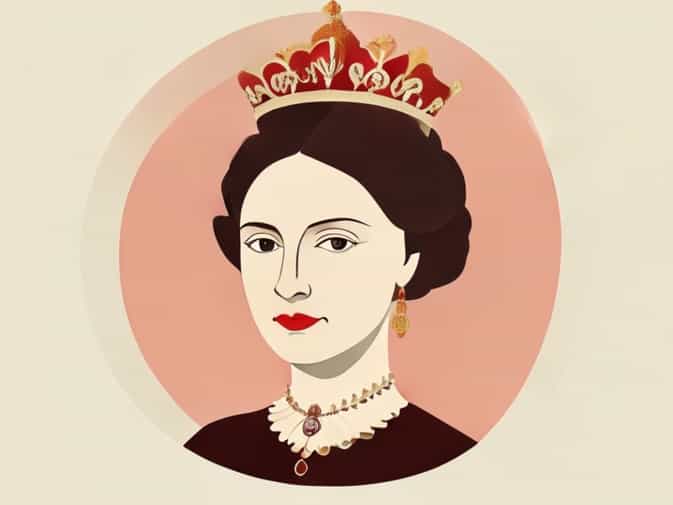
Queen Henrietta Maria of France was a significant historical figure whose life and legacy continue to fascinate historians, art enthusiasts, and the general public alike. Married to King Charles I of England, she played an influential role in the court during a period of political tension and upheaval in 17th-century Britain. Her portraits, created by renowned artists of the era, not only capture her beauty and regal presence but also reflect the political and cultural dynamics of her time. Examining these portraits provides a unique window into her personality, status, and the artistic conventions of her period.
Early Life and Marriage
Born on November 25, 1609, in Paris, Henrietta Maria was the daughter of King Henry IV of France and Marie de’ Medici. As a princess of France, she received an education befitting her royal status, including instruction in languages, religion, and the arts. Her upbringing prepared her for a role in European diplomacy, and her marriage to Charles I in 1625 was politically significant, aligning England and France through a union of royal houses.
Her marriage brought her to England, where she had to navigate a new culture, court traditions, and a complex political landscape. Her status as a Catholic queen in a predominantly Protestant country also influenced how she was depicted in portraits, often emphasizing her piety, elegance, and regal authority to convey both respect and acceptance among the English court.
Significance of Portraiture in the 17th Century
During Henrietta Maria’s lifetime, portraiture was a crucial medium for conveying power, status, and personal image. Royal portraits were not merely artistic expressions but also instruments of political messaging. They communicated authority, dynastic continuity, and cultural sophistication. As a queen, Henrietta Maria’s portraits were used to strengthen her position in England, assert her royal legitimacy, and reflect her refinement and influence.
Artists often collaborated closely with the queen to capture both her physical likeness and the qualities expected of a monarch. Symbolism, fashion, and posture were carefully chosen to convey authority, virtue, and political alliances.
Major Portraits of Queen Henrietta Maria
Several notable artists immortalized Queen Henrietta Maria in their works. One of the most prominent was Anthony van Dyck, a Flemish Baroque painter renowned for his skill in capturing aristocratic elegance and presence. Van Dyck’s portraits of Henrietta Maria are celebrated for their delicate rendering, rich use of color, and ability to convey both the queen’s beauty and her regal bearing.
In many portraits, she is depicted wearing luxurious gowns adorned with lace and jewels, often accompanied by symbols of her royal and religious identity. These works emphasized her sophistication, elegance, and stature as a queen consort of England, highlighting her central role in the court and the cultural life of the nation.
Artistic Style and Symbolism
Queen Henrietta Maria’s portraits frequently include symbolic elements that reflect her role and identity. For example, religious motifs, such as crosses or references to the Virgin Mary, underscore her Catholic faith. These symbols were significant, given the religious tensions in England at the time, and served to portray her as both pious and dignified.
Her attire in portraits often featured the latest French fashions, indicating her French heritage and influence on English court style. The elaborate use of textiles, embroidery, and jewels in these paintings not only demonstrated wealth but also reinforced her cultural authority and refined taste.
Notable Van Dyck Portraits
- Henrietta Maria in a Blue DressThis painting captures the queen seated gracefully, with delicate lighting emphasizing her facial features and the texture of her gown. It reflects both her elegance and her composed, regal demeanor.
- Full-Length PortraitsVan Dyck also painted full-length portraits, which allowed for elaborate displays of costume, setting, and posture. These works convey her presence as a queen with authority and poise.
- Portraits with ChildrenSome portraits depict Henrietta Maria with her children, emphasizing her role as a mother and the continuity of the royal line.
These paintings are characterized by Van Dyck’s signature style, combining realism with idealization. He captured not only the physical likeness of the queen but also the grandeur and refinement expected of her status.
Political Context and Portrayal
Henrietta Maria’s portraits also reflect the political challenges of her era. As a Catholic queen in Protestant England, she faced scrutiny and criticism. Portraits were used strategically to assert her legitimacy, demonstrate her devotion, and convey a sense of stability and dignity despite political tensions.
The English Civil War, which broke out in 1642, further complicated her role. During this time, her portraits often served to maintain her public image and reinforce loyalty among her supporters. They were a visual representation of her authority, reinforcing the monarchy’s presence even as the nation faced conflict and upheaval.
Impact on Later Portraiture
Queen Henrietta Maria’s portraits influenced royal portraiture for generations. The emphasis on elegance, symbolism, and political messaging became a standard for later depictions of English queens. Her collaboration with Van Dyck helped establish a visual language for monarchy, blending artistry with political and cultural significance.
Her portraits are now valuable not only for their aesthetic qualities but also as historical documents. They provide insight into 17th-century court life, fashion, and the intersection of art and politics. Museums and private collections housing these works continue to study and preserve them, recognizing their importance in understanding both art history and the history of the British monarchy.
Preservation and Legacy
Many of Queen Henrietta Maria’s portraits are preserved in major museums and galleries, including the Royal Collection in London. These works are studied for their technique, historical context, and cultural significance. Art historians often analyze the use of color, composition, and symbolism to gain a deeper understanding of the queen’s life and the period in which she lived.
The legacy of these portraits extends beyond art. They provide a lens through which to view the challenges and triumphs of a queen navigating a complex political and cultural landscape. Her image, immortalized by talented artists, continues to inspire admiration and scholarly interest centuries later.
Collecting and Viewing Henrietta Maria Portraits
- Many portraits are part of the Royal Collection and can be viewed during special exhibitions.
- Art books and catalogs provide high-quality reproductions and analysis of her portraits.
- Private collectors occasionally showcase her portraits, offering insights into the diversity of artistic interpretations.
The portraits of Queen Henrietta Maria are more than artistic representations; they are historical records, political statements, and cultural symbols. Created during a time of great social and political upheaval, these works capture her beauty, elegance, and influence while reflecting the complex dynamics of 17th-century England. Through the skill of artists like Anthony van Dyck, Henrietta Maria’s image has endured, allowing modern audiences to appreciate both her personal grace and her historical significance. Examining her portraits provides a fascinating glimpse into the life of a queen, the artistry of her era, and the enduring power of visual representation in shaping our understanding of history.