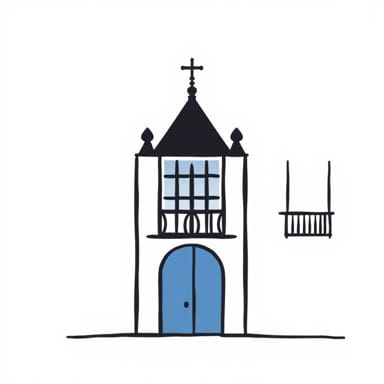
Among the most recognizable names in early 20th-century French painting is Maurice Utrillo, celebrated for his deeply atmospheric cityscapes and intimate portrayals of Montmartre. His paintings, or ‘quadri’ in Italian, capture the quiet charm of urban streets, churches, and houses in a style that bridges Impressionism and Naïve art. Utrillo’s works are highly regarded for their simplicity, muted tones, and poetic representation of everyday scenes. The artist’s emotional life and unique technique are reflected in each of his paintings, offering a view into not just a place but a state of mind. Collectors and art enthusiasts continue to value Utrillo’s quadri for their nostalgic aesthetic and historical relevance in the world of modern European art.
Who Was Maurice Utrillo?
Maurice Utrillo was born in Paris in 1883. He was the son of Suzanne Valadon, a model and artist in her own right, who posed for Renoir and Toulouse-Lautrec. Although his father is often listed as an unknown man, there has been speculation that Miguel Utrillo, a Spanish art critic and friend of Valadon, may have been his biological father.
Unlike many artists, Utrillo did not initially train at an academy. His mother introduced him to painting as a form of therapy to help him overcome personal struggles, particularly alcoholism and mental illness. Over time, Utrillo developed a distinctive style that won recognition in French and international art circles.
The Montmartre Influence
Many of Utrillo’s most famous quadri focus on Montmartre, a historic neighborhood in Paris. Montmartre was a hub for artists, writers, and bohemians, and Utrillo grew up surrounded by its vibrant, creative energy. This setting became the central theme in much of his work, with iconic landmarks such as the Sacré-CÅur Basilica, quiet alleyways, and small cafés frequently appearing in his paintings.
Utrillo had a unique ability to strip away the bustle of Paris and focus on its serene, timeless essence. His streets often appear empty, lined with old buildings that reflect a slower, quieter Paris that was fading even in his own time. This makes his paintings not only artistic expressions but also important historical records of Parisian life.
Stylistic Elements of Utrillo’s Quadri
Utrillo’s artistic style is often categorized into three main periods: the early Mannerist period, the White period, and the later Colorful period. Each phase reflects a transformation in technique and mood, making his body of work remarkably diverse.
The White Period
One of Utrillo’s most celebrated phases was his White Period, which spanned roughly from 1909 to 1914. During this time, he used white zinc and other pale pigments to depict buildings and streets in a light, almost ethereal manner. These quadri are known for their subtle shading, soft contrasts, and architectural clarity. The use of white gave his paintings a luminous quality, evoking a sense of stillness and reflection.
Materials and Techniques
Utrillo was known for using unconventional materials, especially in his early years. He sometimes mixed sand, plaster, or glue into his paint to create texture and dimension. His brushwork varied from fine lines for architectural detail to broader strokes for skies and landscapes. He worked primarily in oil, often on cardboard or canvas.
Naïve Yet Sophisticated
While often described as a naïve painter due to his lack of formal training, Utrillo demonstrated a sophisticated understanding of composition and mood. His quadri may appear simple at first glance, but closer inspection reveals meticulous planning and a deep emotional resonance. He understood how to use color sparingly to direct attention and how to build perspective that invites viewers into the scene.
Notable Works of Maurice Utrillo
Several of Utrillo’s paintings have gained international recognition and are housed in museums or private collections worldwide. Some notable works include:
- Rue des Abbesses– A classic representation of Montmartre with its narrow streets and iconic buildings.
- La Place du Tertre– Captures one of Montmartre’s most famous squares, often filled with artists and pedestrians.
- L’Ãglise de Montmagny– A church portrait showcasing his characteristic use of muted tones and precise structure.
- La Maison de Berlioz à Montmartre– Combines historical reference with Utrillo’s nostalgic style.
Each painting tells a unique story, not just of location, but of the artist’s internal world and vision of beauty in the ordinary.
Legacy and Market Value
Maurice Utrillo’s quadri continue to be admired by collectors and art historians. His ability to depict urban life with sensitivity and restraint has made his work timeless. Major auction houses regularly feature his paintings, which can fetch hundreds of thousands of euros depending on size, provenance, and condition.
His paintings have been displayed in numerous prestigious institutions, including the Musée de l’Orangerie and the Musée de Montmartre in Paris. There are also dedicated exhibitions in Japan, where Utrillo’s work enjoys exceptional popularity.
A Symbol of Urban Melancholy
Utrillo’s paintings are often associated with a gentle melancholy. Unlike the bright and energetic scenes of the Impressionists, his urban views seem wrapped in silence. This has endeared him to those who appreciate introspective art that captures not just what a place looks like, but how it feels to inhabit it. His quadri remain relevant in a world increasingly dominated by noise and speed, offering viewers a pause to reflect and reconnect with quieter moments.
The Artistic Bond with Suzanne Valadon
A significant influence on Utrillo’s development was his mother, Suzanne Valadon. She was one of the few prominent female artists of her time and provided both artistic guidance and emotional support. Their relationship was complex but deeply intertwined in both life and art. Valadon’s strong lines and use of color helped shape Utrillo’s aesthetic, especially in his later years when he moved beyond the White Period into bolder palettes and compositions.
Maurice Utrillo’s quadri offer more than mere representations of place they are emotional landscapes filled with memory, silence, and longing. His work stands at the intersection of realism and poetry, giving voice to the overlooked corners of Montmartre and beyond. For modern audiences, Utrillo remains a key figure in understanding early 20th-century urban art, and his paintings continue to inspire both collectors and casual admirers. Through his unique lens, even the most modest street becomes a subject of timeless beauty.