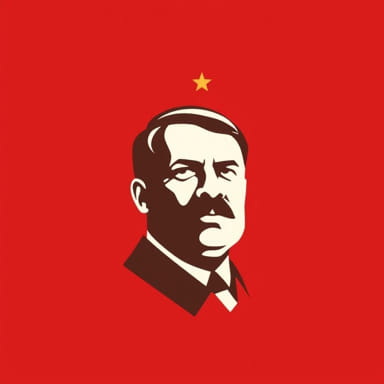
Throughout the 20th century, propaganda became a critical tool in the hands of political leaders seeking to control public opinion and reinforce their ideologies. Two of the most influential and controversial figures who utilized propaganda to further their goals were Vladimir Lenin in Soviet Russia and Adolf Hitler in Nazi Germany. Though both leaders came from different ideological backgrounds Lenin being a Marxist revolutionary and Hitler leading a fascist regime they shared a deep understanding of how propaganda could shape the masses. Examining Leninist and Hitlerian propaganda reveals similarities in technique, differences in content, and the long-lasting impact on global politics and society.
The Foundations of Leninist Propaganda
Ideological Purpose and Strategy
Leninist propaganda was deeply rooted in the Marxist-Leninist ideology. Its primary goal was to inspire class consciousness among the proletariat and to mobilize them for revolution. Lenin believed that mass communication had the power to awaken political awareness and promote socialist values. After the Bolshevik Revolution of 1917, the Soviet government quickly established control over the press, film, radio, and education systems to disseminate propaganda that aligned with party objectives.
Tools and Channels of Dissemination
Under Lenin, the Soviet Union used multiple channels to ensure widespread exposure to propaganda:
- Newspapers: Newspapers like Pravda were key tools for delivering official party messages.
- Posters and Art: Colorful posters featured heroic depictions of workers, peasants, and Red Army soldiers.
- Literacy Campaigns: Education was tied closely to ideology, teaching citizens to read so they could consume propaganda.
- Cinema: Lenin famously said, ‘Of all the arts, for us the cinema is the most important,’ recognizing its influence.
The content often highlighted the evils of capitalism, celebrated industrial progress, and idealized the role of the communist party in achieving social justice.
The Core of Hitlerian Propaganda
Ideological Motives and Objectives
In contrast, Hitlerian propaganda focused on promoting a fascist, nationalist, and racially charged ideology. Under the guidance of Joseph Goebbels, the Nazi regime crafted a highly sophisticated propaganda machine designed to glorify Adolf Hitler, instill anti-Semitic beliefs, and rally the nation behind a vision of Aryan supremacy. The propaganda aimed to unify the German people under a common cause while vilifying perceived enemies like Jews, communists, and foreign powers.
Propaganda Machinery and Media Control
Hitlerian propaganda was systemic, calculated, and thoroughly modern in its approach:
- Mass Rallies: Events such as the Nuremberg rallies showcased Nazi strength and inspired loyalty.
- Radio Broadcasts: The Nazis distributed affordable radios so that every German could hear Hitler’s speeches.
- Films: Directors like Leni Riefenstahl produced films that glorified the Nazi state, such as ‘Triumph of the Will.’
- Education and Youth Programs: The Hitler Youth taught children to embrace Nazi ideology from a young age.
Visual symbols like the swastika and slogans like Ein Volk, ein Reich, ein Führer (One People, One Empire, One Leader) were used to create a sense of unity and absolute loyalty to the Führer.
Comparing Leninist and Hitlerian Propaganda
Similar Techniques, Different Messages
Both Lenin and Hitler understood the importance of emotion in communication. Their propaganda was often filled with imagery and language designed to invoke fear, pride, hope, and anger. Techniques like repetition, scapegoating, and mythologizing the leader were used in both regimes. Yet the messages they spread were fundamentally different.
- Leninist propaganda focused on the struggle between classes, advocating the overthrow of the bourgeoisie.
- Hitlerian propaganda emphasized racial purity, nationalism, and anti-Semitism, rejecting democratic and Marxist ideas.
Manipulating History and Truth
Both leaders rewrote history to fit their narrative. In the Soviet Union, historical events were often revised to eliminate the contributions of political enemies. In Nazi Germany, the past was distorted to validate ideas of Aryan superiority and to blame Jews for national decline. Truth was not an objective reality but a flexible tool used to reinforce the ideology of the ruling party.
The Role of Propaganda in Consolidating Power
Creating a Cult of Personality
One of the most powerful functions of propaganda in both Leninist and Hitlerian systems was to build a cult of personality. Lenin was portrayed as the wise father of the revolution whose ideas would bring justice and equality. Hitler, on the other hand, was depicted as the savior of Germany, a leader of unmatched strength and destiny. Their images were omnipresent in posters, sculptures, books, and even school materials ensuring their symbolic dominance in everyday life.
Suppressing Dissent and Opposition
By controlling the flow of information, both regimes were able to suppress alternative viewpoints. In the USSR, dissenters were labeled enemies of the people and often sent to gulags. In Nazi Germany, critics were imprisoned, executed, or sent to concentration camps. Propaganda was used not just to promote an idea but to silence opposition and maintain fear-based control over the population.
Legacy and Lessons of Political Propaganda
Enduring Impact on Modern Politics
The legacy of Leninist and Hitlerian propaganda continues to influence political communication today. Their methods demonstrated how mass media could be used to reshape public opinion, justify violence, and manipulate democracy. In the age of digital media, the importance of verifying facts and promoting media literacy becomes more vital than ever.
Ethical Considerations and Historical Reflection
While propaganda itself is not inherently evil, its use by Lenin and Hitler serves as a cautionary tale about the dangers of unchecked political messaging. When governments monopolize information and rely on psychological manipulation to control the population, they risk undermining truth, freedom, and human dignity. Understanding this history helps safeguard societies from falling into similar patterns of authoritarian control.
The study of Leninist and Hitlerian propaganda offers insight into how powerful and dangerous communication can be when used by authoritarian leaders. Though their ideologies were vastly different communism versus fascism both leaders used propaganda to indoctrinate, control, and eliminate opposition. The effectiveness of their strategies lies not only in the messages they spread but in their ability to control all channels of information. As the modern world continues to navigate the challenges of misinformation and political polarization, reflecting on the propaganda of the past becomes an essential exercise in protecting democratic values and human rights.