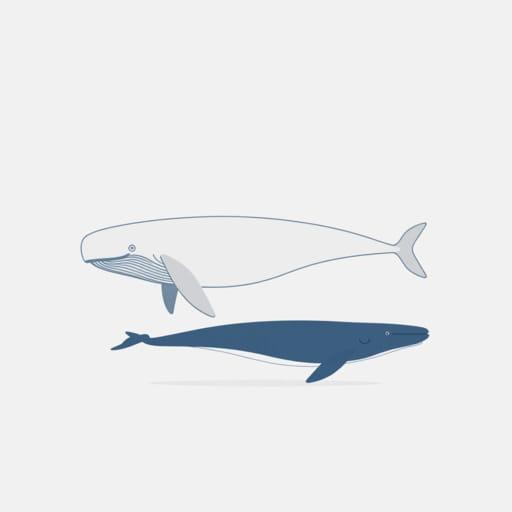
The oceans have always been home to some of the most extraordinary creatures in Earth’s history, both past and present. Among these giants, the Perucetus colossus, a recently studied extinct whale species, and the modern blue whale, Balaenoptera musculus, represent remarkable examples of aquatic gigantism. Both species demonstrate the evolutionary adaptations necessary for survival in marine environments, but they differ significantly in anatomy, lifestyle, and ecological impact. Comparing these two titans offers fascinating insights into marine evolution, the limits of body size, and how environmental factors shape the development of the largest creatures ever to inhabit our planet.
Introduction to Perucetus Colossus
Perucetus colossus is an extinct species of whale discovered from fossilized remains in Peru. This massive cetacean lived during the late Eocene epoch, roughly 36 million years ago, and represents one of the heaviest animals known to have existed. Fossil analysis suggests that Perucetus had an extraordinarily dense skeleton, possibly allowing it to support a body weight ranging between 85 to 340 tons, surpassing the modern blue whale in sheer mass. Unlike blue whales, which have a streamlined, hydrodynamic body built for long-distance swimming, Perucetus appears to have been slower and more specialized, likely adapted to shallow coastal environments where it could rest on the seafloor and feed efficiently.
Physical Characteristics of Perucetus
- Extremely dense bones, suggesting significant body weight and strong support for muscles and organs.
- Estimated length of 20-25 meters, slightly shorter than the average blue whale.
- Robust, heavy skeletal structure indicating a slower, benthic lifestyle.
- Adaptations for shallow water environments rather than open-ocean migration.
Introduction to the Blue Whale
The blue whale is the largest living animal on Earth, renowned for its immense length, streamlined body, and migratory capabilities. Adult blue whales can reach lengths of up to 30 meters and weights around 150-200 tons, making them slightly lighter in mass than the largest estimates for Perucetus colossus. Blue whales are filter feeders, consuming massive quantities of krill daily, and they travel across oceans to follow seasonal food availability. Their hydrodynamic design, powerful tail flukes, and large lungs allow them to sustain long-distance swimming and deep diving, showcasing remarkable adaptations for pelagic life.
Physical Characteristics of Blue Whales
- Length up to 30 meters, making them the longest known animals.
- Weight averaging 150-200 tons, with exceptional feeding and swimming efficiency.
- Streamlined body built for open-ocean migration and energy-efficient movement.
- Large mouth and baleen plates specialized for filter-feeding on krill and small plankton.
Comparison of Size and Mass
One of the most intriguing aspects of comparing Perucetus colossus and the blue whale is the question of size. While blue whales are longer on average, some estimates suggest that Perucetus may have exceeded them in overall mass due to its dense bones. The extreme bone density of Perucetus indicates a different strategy for supporting its body weight, whereas blue whales achieve their size through length and a lighter, more buoyant skeletal structure. This difference reflects adaptations to different ecological niches blue whales need to move efficiently through open oceans, while Perucetus may have relied on static strength in shallow coastal waters.
Mass vs. Length Considerations
- Perucetus heavier overall, estimated 85-340 tons, shorter body length, denser bones.
- Blue Whale longer body up to 30 meters, lighter weight, optimized for swimming efficiency.
- Adaptation trade-offs Perucetus emphasizes mass and support, blue whale emphasizes mobility and energy efficiency.
Ecological Roles and Feeding Strategies
The ecological roles of these giants also differ significantly. Perucetus colossus likely fed on benthic organisms such as mollusks, crustaceans, and other seafloor dwellers, using its massive body to disturb sediment and access prey. In contrast, blue whales are pelagic filter feeders that consume tiny krill in vast quantities, employing their baleen plates to filter thousands of liters of water per day. These differences highlight how gigantism can evolve under varying ecological pressures Perucetus may have developed a massive body to stabilize itself in shallow waters and process dense prey, while blue whales maximize length and efficiency to travel across open oceans in search of dispersed food sources.
Feeding and Behavior Differences
- Perucetus slow-moving, benthic feeder, likely stayed near coastlines.
- Blue Whale fast migratory filter feeder, pelagic lifestyle, capable of long-distance travel.
- Energy strategy Perucetus relied on bulk strength, blue whale relied on endurance and hydrodynamics.
Evolutionary Significance
Both Perucetus colossus and the blue whale represent unique points in cetacean evolution. Perucetus demonstrates that extreme mass and bone density were viable evolutionary strategies during the Eocene, providing insights into how ancient whales adapted to shallow-water niches. The blue whale, as a modern descendant of early cetaceans, reflects the success of streamlined bodies and filter-feeding strategies in the open ocean. By comparing these species, scientists gain valuable knowledge about the evolutionary pressures shaping body size, skeletal structure, and feeding ecology across millions of years.
Evolutionary Insights
- Perucetus shows that bone density can support extreme mass in coastal environments.
- Blue whales illustrate how open-ocean life favors hydrodynamic shape and efficient feeding mechanisms.
- Comparisons help scientists understand limits of size, buoyancy adaptations, and ecological constraints in cetaceans.
Conservation Lessons
Studying these giants also offers lessons for conservation. While Perucetus colossus is long extinct, blue whales face modern threats such as ship strikes, climate change, and historical whaling. Understanding how evolutionary adaptations enabled these animals to thrive in their respective environments can inform conservation strategies, such as protecting feeding grounds, monitoring population health, and preserving migratory corridors. The comparison reminds us that even the largest creatures on Earth are vulnerable to environmental pressures and human activities.
The comparison of Perucetus colossus and the blue whale highlights the diversity of strategies that have allowed cetaceans to achieve immense size. Perucetus, with its dense skeleton and heavy mass, represents a shallow-water giant optimized for strength and stability. Blue whales, with their long, streamlined bodies and filter-feeding adaptations, exemplify open-ocean gigantism emphasizing efficiency and endurance. By examining these two species, we gain insight into the evolutionary, ecological, and anatomical factors that have shaped the largest animals in Earth’s history. The study of these magnificent whales not only deepens our understanding of marine evolution but also underscores the importance of conserving the blue whale and the ecosystems it depends on, ensuring that these extraordinary animals continue to thrive in the modern world.