The word Quonset may seem unusual to many, yet it has become a recognizable term in architecture, military history, and industrial construction. Often associated with the distinctive semi-cylindrical, prefabricated buildings widely used during World War II, the term carries a rich history that connects language, geography, and wartime innovation. Understanding the origin of the word Quonset offers insight into how a place name can evolve into a global term for a specific type of structure, illustrating the intersection between local culture, military necessity, and industrial design.
Origins at Quonset Point
The term Quonset originates from Quonset Point, a small peninsula located in North Kingstown, Rhode Island, in the United States. During World War II, the U.S. Navy established a naval base there, which became a hub for the construction of prefabricated steel buildings designed for quick assembly. These structures were intended to meet the urgent demands of wartime logistics, providing shelter, storage, and operational spaces for military personnel. Over time, the buildings became synonymous with their place of origin, and the name Quonset was adopted to describe the design itself.
The Naval Base and Industrial Innovation
At Quonset Point, engineers faced the challenge of designing buildings that could be produced rapidly, shipped easily, and erected with minimal labor. The result was a semi-cylindrical, lightweight steel structure that combined durability with simplicity. These prefabricated buildings could be manufactured in factories, transported in sections, and assembled on-site without specialized tools. Their adaptability made them ideal for a variety of uses, from barracks and hospitals to warehouses and workshops. The success of this design at Quonset Point led to its widespread adoption across military bases worldwide.
Design Characteristics of a Quonset Hut
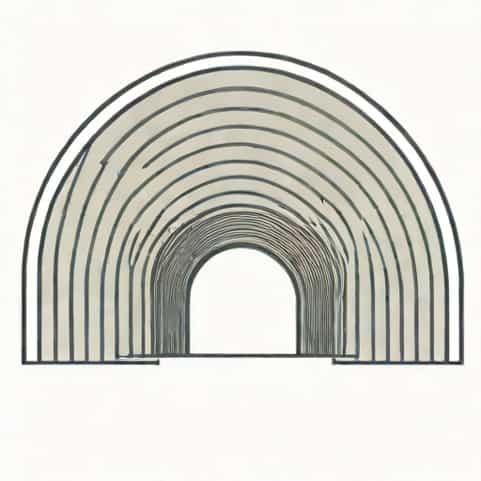
Quonset huts are easily recognizable due to their curved, semi-cylindrical shape, which allows for maximum interior space with minimal materials. The corrugated steel construction provides strength while remaining lightweight. The simplicity of the design made these buildings versatile and economical, which was essential during the resource-constrained years of World War II. Beyond the military context, Quonset huts eventually found civilian applications, including temporary housing, storage facilities, and agricultural buildings.
Technical Features and Advantages
- Prefabricated steel panels for easy assembly and transport.
- Semi-cylindrical shape providing structural integrity and resistance to weather.
- Flexible interior space adaptable to various functions.
- Efficient use of materials, reducing production costs.
- Portability, allowing relocation to different sites as needed.
These characteristics made Quonset huts a practical solution not only during wartime but also in postwar reconstruction and industrial development, demonstrating how military innovation can influence civilian architecture.
The Spread of the Term Quonset
After World War II, surplus Quonset huts were distributed widely, leading to the term becoming a generic descriptor for similar prefabricated structures. Contractors and builders adopted the word in commercial and residential contexts, and the design was replicated in numerous countries. In the United States, Quonset huts were used for everything from rural storage sheds to temporary classrooms, while internationally, the name carried the legacy of American military engineering. Over time, Quonset transcended its geographic origin, illustrating how place names can evolve into global terminology.
Quonset in Popular Culture and Industry
Beyond architecture, the term Quonset has appeared in literature, film, and historical discussions as a symbol of wartime efficiency and ingenuity. Documentaries on World War II often highlight Quonset huts as a visual shorthand for military bases and rapid construction techniques. In industrial contexts, the name continues to represent prefabricated, versatile structures that embody practicality and resilience. The word has thus become a cultural touchstone, linking language, history, and engineering innovation.
Comparison With Related Structures
- Nissen HutA British predecessor to the Quonset hut with a similar semi-cylindrical design.
- Butler BuildingA more permanent prefabricated steel structure used in industrial applications.
- Prefabricated ShedA generic term for lightweight, modular buildings used in agriculture or storage.
- Quonset HutSpecifically associated with U.S. military design, prefabrication, and postwar civilian adaptation.
While similar structures exist, the Quonset hut is distinct for its American origin, wartime significance, and the enduring use of the term in both historical and modern contexts.
Legacy of the Quonset Name
The enduring popularity of Quonset huts and the persistence of the term reflect the unique intersection of place, innovation, and language. Quonset Point’s contribution to wartime logistics and construction technology demonstrates how geographic names can become embedded in technical vocabulary. Today, the word Quonset evokes both historical memory and practical design principles, serving as a reminder of the creativity and adaptability that characterized World War II-era engineering.
Modern Applications and Cultural Significance
In the contemporary world, Quonset huts remain in use for storage, workshops, emergency shelters, and even residential projects. Their design continues to inspire prefabricated and modular architecture, highlighting the efficiency and adaptability first realized at Quonset Point. Cultural references to Quonset huts, whether in historical accounts, films, or museum exhibits, maintain the connection between the term and its origin, preserving the story of innovation behind the name.
The origin of the word Quonset is a fascinating example of how a geographic location can influence language and become synonymous with a specific technological innovation. Emerging from Quonset Point in Rhode Island, the term came to represent a distinctive, semi-cylindrical prefabricated building developed to meet the challenges of wartime construction. From military bases to civilian applications, Quonset huts have left a lasting impact on architecture, engineering, and cultural memory. Understanding the etymology of Quonset enriches our appreciation of language, demonstrating how practical innovation can shape vocabulary and create enduring linguistic legacies.
Exploring the history and origin of Quonset also highlights the broader relationship between place, invention, and terminology. By tracing the word back to its roots, we see how human ingenuity, wartime necessity, and efficient design combined to produce not only a practical building but also a term that entered the global lexicon. Quonset is more than a word; it is a symbol of adaptability, engineering excellence, and the enduring influence of American wartime innovation on language and architecture.