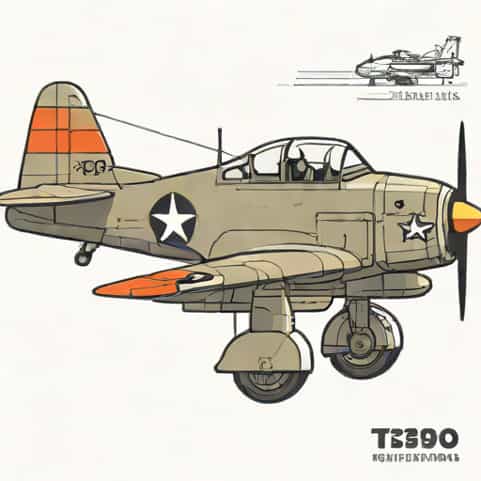
The North American T-28 Trojan is a legendary aircraft that played a significant role in both military training and combat operations during the mid-20th century. Initially designed as a trainer for the United States Air Force and Navy, the T-28 evolved into a versatile platform capable of supporting counterinsurgency missions and close air support. Its robust construction, powerful engine, and reliable handling made it a favorite among pilots and military instructors alike. Over the decades, the T-28 Trojan has become an iconic aircraft, celebrated for its historical significance and contribution to aviation development.
Development and Design
The T-28 Trojan was developed by North American Aviation in the late 1940s as a response to the need for a modern, versatile trainer aircraft. The aircraft was designed to bridge the gap between propeller-driven trainers of World War II and the emerging generation of jet-powered fighters. Its design emphasized durability, ease of maintenance, and the ability to perform aerobatic maneuvers necessary for advanced pilot training. The T-28 featured a low-wing monoplane layout, a tricycle landing gear, and a tandem cockpit that accommodated both instructor and student.
Engine and Performance
One of the defining features of the T-28 Trojan is its powerful radial engine. Most variants were equipped with a Wright R-1820 Cyclone radial engine, delivering up to 1,425 horsepower. This power allowed the aircraft to achieve speeds of around 345 miles per hour, climb rapidly, and perform complex aerobatic maneuvers. The aircraft’s performance characteristics made it suitable not only for training new pilots but also for adapting to light attack and counterinsurgency roles in combat situations.
Operational History
The T-28 Trojan entered service with the United States Air Force and Navy in the early 1950s. Its primary role was to train pilots in advanced flying techniques, preparing them for the transition to jet aircraft. The aircraft was praised for its forgiving flight characteristics, which allowed trainees to learn both basic and complex maneuvers safely. Over time, its adaptability led to its use in various military operations beyond training.
Combat Use
Although initially a trainer, the T-28 Trojan saw combat during the Vietnam War and other conflicts in Southeast Asia. Its robust airframe and powerful engine allowed it to carry bombs, rockets, and machine guns, making it effective in counterinsurgency missions. The aircraft’s ability to operate from rough airstrips and its ease of maintenance in the field made it particularly valuable in regions where infrastructure was limited. In Vietnam, T-28s were used to support ground troops, perform reconnaissance, and conduct close air support missions, proving the aircraft’s versatility in combat roles.
Variants of the T-28 Trojan
The T-28 Trojan was produced in multiple variants, each tailored for specific roles and improvements based on operational experience. These variants include
- T-28AThe initial Air Force trainer variant, optimized for advanced pilot training.
- T-28BNavy variant equipped with carrier landing capabilities and strengthened airframe.
- T-28CSimilar to the T-28B but featured additional modifications for carrier operations and training exercises.
- T-28DCounterinsurgency and attack variant used extensively in combat, capable of carrying weapons for ground support missions.
- T-28FModernized export variant with updated avionics and performance enhancements.
Export and International Service
The T-28 Trojan was exported to numerous countries, serving in various air forces around the world. Nations such as France, Thailand, Laos, and the Philippines used T-28s for both training and combat missions. In French service, T-28s played a significant role during the Algerian War, supporting counterinsurgency operations. The widespread adoption of the aircraft underscored its reliability, ease of use, and adaptability to different climates and operational requirements.
Legacy and Preservation
Today, the North American T-28 Trojan is highly regarded by aviation enthusiasts and historians. Many aircraft have been preserved in museums, while others remain airworthy and participate in airshows around the world. The T-28 is celebrated for its historical significance, representing a bridge between the propeller-driven aircraft of World War II and the jet age that followed. Its legacy continues to inspire pilots, collectors, and aviation engineers, highlighting the importance of versatile, durable design in military aviation.
Modern Recognition
The T-28 Trojan is often featured in aviation exhibitions, documentaries, and historical retrospectives. Its distinctive radial engine sound, polished airframe, and maneuverability make it a crowd favorite at airshows. Pilots who trained on or flew the T-28 frequently recount its handling qualities, reliability, and the confidence it instilled in student pilots preparing for advanced aircraft. The continued interest in the T-28 reflects its enduring impact on military aviation history.
Technical Specifications
While specifications vary among variants, the T-28 Trojan generally featured
- LengthApproximately 33 feet 8 inches
- WingspanAround 40 feet
- HeightApproximately 13 feet 3 inches
- Maximum SpeedAround 345 mph
- Service Ceiling34,700 feet
- RangeApproximately 1,000 miles
- PowerplantWright R-1820 radial engine, 1,425 hp
- Armament (combat variants)Machine guns, rockets, and bombs for ground attack missions
The North American T-28 Trojan remains an iconic aircraft in the history of military aviation. Initially designed as an advanced trainer, its adaptability allowed it to excel in combat roles, particularly in counterinsurgency operations. The aircraft’s powerful engine, robust design, and ease of maintenance made it a reliable choice for both training and operational missions. Its service in various countries and conflicts, coupled with its enduring presence in airshows and museums, underscores its historical and technical significance. The T-28 Trojan not only shaped the careers of countless pilots but also represents an important chapter in the evolution of military aviation technology, bridging the gap between propeller-driven trainers and modern jet aircraft.