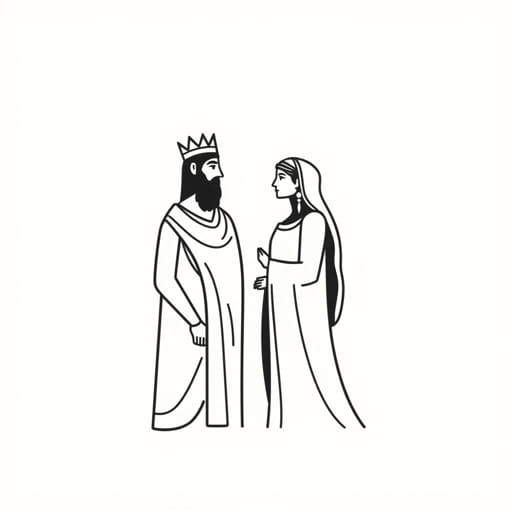
The figures of Nimrod and Semiramis have long captured the imagination of historians, theologians, and students of the Bible. Nimrod is explicitly mentioned in the Old Testament as a mighty hunter and the founder of great cities, while Semiramis is more of a legendary figure connected with Mesopotamian history and later traditions. Over time, these two names became intertwined in biblical interpretations, myths, and historical debates. Their association has fueled discussions about ancient kingdoms, the Tower of Babel, idolatry, and the origins of pagan religions. Exploring their story sheds light on how biblical history and extra-biblical traditions have blended to form enduring narratives about power, empire, and false worship.
Nimrod in the Bible
Nimrod appears in the Book of Genesis as the great-grandson of Noah through Ham. Genesis 108-12 describes him as a mighty hunter before the Lord and a powerful ruler who established key cities such as Babel, Erech, Akkad, and Nineveh. These references make him one of the earliest figures associated with empire-building in the post-flood world. His role in founding Babel connects him to the Tower of Babel story, where humanity sought to build a city and a tower reaching to the heavens.
The Meaning of Nimrod’s Name
The name Nimrod is often interpreted to mean rebel, reflecting his role as a leader of defiance against God. While the Bible does not explicitly say that he built the Tower of Babel, many Jewish and Christian traditions have linked him with this event. By portraying Nimrod as a hunter and city builder, Scripture emphasizes both his physical strength and his political ambition.
Nimrod and the Tower of Babel
The Tower of Babel narrative in Genesis 11 is closely connected to Nimrod’s legacy. The people’s desire to make a name for themselves and resist being scattered across the earth reflects the rebellious spirit often attributed to him. In this way, Nimrod is remembered not only as a hunter of animals but also as a hunter of men, gathering them into cities and empires that opposed divine command. The association with Babel made him a symbol of pride, rebellion, and the beginnings of organized idolatry.
Semiramis in Ancient Traditions
Unlike Nimrod, Semiramis is not mentioned directly in the Bible. She emerges from ancient Assyrian and Babylonian traditions, later filtered through Greek and Roman historians. Semiramis was described as a queen who possessed remarkable beauty, political power, and influence. In some accounts, she ruled as a regent for her son and expanded the Babylonian Empire. Over time, her name became linked with myths of divine motherhood, goddess worship, and legendary building projects.
The Role of Semiramis in Legends
According to later traditions, Semiramis was credited with founding Babylon or embellishing it with magnificent structures. She was often portrayed as both a powerful queen and a goddess-like figure, connected to fertility, war, and the heavens. Some writers associated her with Ishtar, the Mesopotamian goddess of love and war. These associations blurred the lines between history and mythology, making it difficult to separate fact from fiction.
The Connection Between Nimrod and Semiramis
Though the Bible does not link Nimrod and Semiramis, later traditions, especially in Jewish, Christian, and historical writings, often tied them together. The most common story portrays Semiramis as Nimrod’s wife. After Nimrod’s death, she is said to have elevated him to divine status and presented herself as the Queen of Heaven. This narrative suggests that together they formed the foundation of Babylonian idolatry, which influenced many later religions.
The Queen of Heaven
In the book of Jeremiah, the prophet condemns the worship of the Queen of Heaven. While the Bible does not name Semiramis directly, many interpreters connected this title to her. The association reinforced the belief that she played a central role in promoting false worship and goddess cults, setting a pattern that spread throughout the ancient world. In this sense, Semiramis became a symbol of idolatry and rebellion against the true God.
Mother and Child Imagery
Another theme that emerged in later traditions was the connection between Semiramis and Tammuz, who was often identified as her son. This mother-and-child imagery became prominent in Mesopotamian religion and was later linked by some Christian writers to pagan imitations of the relationship between Mary and Jesus. The story of Semiramis and her divine child served as an explanation for the widespread presence of mother-and-child worship in various cultures.
Symbolism of Nimrod and Semiramis
Throughout history, Nimrod and Semiramis came to symbolize more than just ancient rulers. They represented the rise of empire, human pride, and the corruption of true worship. Nimrod symbolized human strength and rebellion, while Semiramis embodied the seduction of idolatry and false religion. Together, they became archetypes for the dangers of turning away from God and embracing worldly power and false worship.
Historical Interpretations
Scholars continue to debate the historical reality of these figures. Some argue that Nimrod may represent a composite of several Mesopotamian kings, while Semiramis likely reflects legendary memories of Assyrian queens such as Shammuramat, who ruled in the 9th century BCE. Others view their stories as largely symbolic, shaped by the concerns of later Jewish and Christian communities. Regardless of historical accuracy, their legacy in biblical interpretation remains significant.
Influence on Christian Thought
Christian writers of the early and medieval periods often used Nimrod and Semiramis as examples of rebellion against God. They were portrayed as the founders of false religion, standing in contrast to Abraham, who left Mesopotamia to follow God’s call. This interpretation reinforced the belief that Babylon represented not only a historical empire but also a spiritual symbol of corruption and opposition to God’s kingdom.
Modern Perspectives
Today, many historians and theologians recognize that much of the connection between Nimrod and Semiramis comes from later traditions rather than direct biblical evidence. However, their story continues to attract interest because of its powerful symbolism. The themes of human pride, empire-building, and the allure of false worship remain relevant in discussions about faith and culture. Whether viewed historically or symbolically, their story offers insights into the dangers of relying on human strength apart from divine guidance.
Lessons from the Story of Nimrod and Semiramis
- Human ambition, when disconnected from God, often leads to pride and rebellion.
- False worship can arise when human figures are exalted beyond their rightful place.
- Legends and traditions can shape spiritual understanding even beyond the biblical text.
- The contrast between Babylon and God’s people illustrates the ongoing struggle between worldly power and divine truth.
The intertwined legacy of Nimrod and Semiramis shows how biblical history and ancient tradition merged to create enduring stories of rebellion, empire, and idolatry. Nimrod stands as a symbol of human strength and defiance, while Semiramis embodies the rise of false religion and the seduction of power. Though their historical details may remain uncertain, their symbolic meaning continues to resonate. Their story reminds us that the pursuit of greatness apart from God leads to corruption, while true faith calls for humility and obedience to the divine will. In studying Nimrod and Semiramis, we glimpse the spiritual challenges faced by ancient peoples challenges that remain strikingly relevant in the modern world.