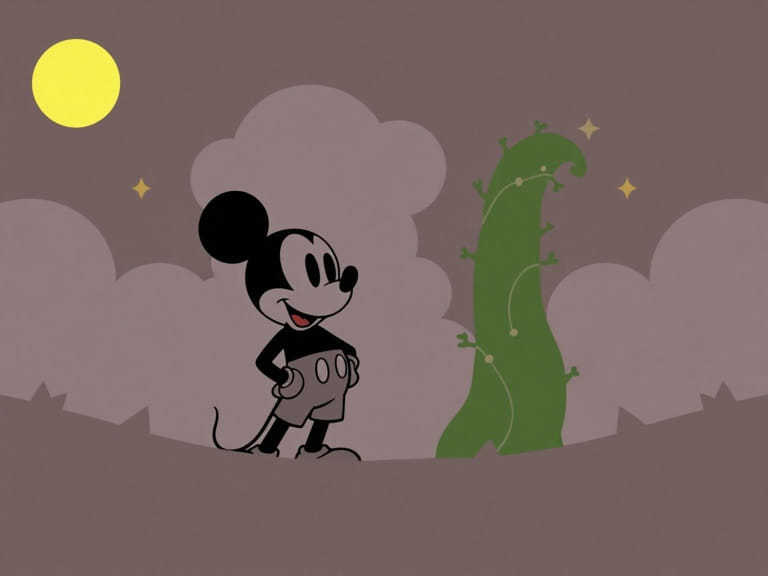
First released as part of the 1947 anthology film Fun and Fancy Free,”Mickey and the Beanstalkis a timeless animated adaptation of the classic fairy tale Jack and the Beanstalk. In this whimsical retelling, Mickey Mouse takes on the lead role alongside his iconic friends Donald Duck and Goofy. The story balances humor, adventure, and moral lessons, all within the magical framework of Disney’s golden age of animation. Over the years,Mickey and the Beanstalkhas remained a beloved favorite for generations, thanks to its unique blend of fairy tale elements and classic Disney charm.
Origin and Background
The Story Behind the Production
Mickey and the Beanstalkwas originally planned as a full-length feature, titled “The Legend of Happy Valley.” However, due to financial constraints during World War II, the project was scaled down and eventually included in the double featureFun and Fancy Free, released in 1947. Despite its shorter format, the film still shines with high-quality animation, catchy music, and strong storytelling.
Part of a Larger Anthology
The film is paired with another segment titledBongo, narrated by Dinah Shore. In contrast,Mickey and the Beanstalkwas famously narrated by Edgar Bergen and his ventriloquist puppets, Charlie McCarthy and Mortimer Snerd. This framing device added a layer of humor and helped make the story accessible to a family audience.
Plot Overview
Happy Valley and the Magic Harp
The story begins in Happy Valley, a peaceful land made prosperous by a magical golden harp. When the harp is stolen, the valley descends into poverty and gloom. Mickey, Donald, and Goofy, portrayed as simple farmers, are affected by the famine and forced to sell their cow for food. Instead, Mickey returns with magic beans.
The Beanstalk and Giant’s Castle
Overnight, the beans grow into an enormous beanstalk that carries their home into the clouds. The trio climbs the stalk and discovers a castle owned by a jovial but greedy giant named Willie. They find the missing harp and realize they must retrieve it to restore happiness to the valley.
Rescue and Escape
In a series of comedic and suspenseful scenes, Mickey and his friends outwit the giant, rescue the harp, and return to their village. The harp’s music restores prosperity to the valley, and the trio is hailed as heroes.
Main Characters and Their Roles
Mickey Mouse
Mickey plays the brave and clever leader of the group. He’s the one who trades the cow for the beans and leads the mission to rescue the harp. His determination and kindness make him the central hero of the tale.
Donald Duck
Donald brings comic tension to the group. At one point, driven by hunger, he tries to chop down the beanstalk. His frustration and short temper add both drama and humor to the story.
Goofy
Goofy plays the lovable sidekick, often stumbling into situations with good-natured clumsiness. His innocence and good heart contribute to the group’s dynamic, providing laughs along the way.
Willie the Giant
Willie is not portrayed as entirely evil but rather as childlike and unaware of the harm he causes. He is powerful but gullible, which the trio uses to their advantage. His character adds depth by blending menace with charm.
Themes and Symbolism
Heroism and Sacrifice
One of the main themes is the courage to stand up against overwhelming odds. Despite their size and circumstances, Mickey and his friends choose to confront the giant rather than run away. This reinforces the message that bravery and unity can overcome adversity.
Greed and Generosity
The film contrasts Willie’s hoarding of the harp with the joy it brings to the people of Happy Valley. It serves as a reminder that sharing and kindness benefit everyone, while greed only leads to misery.
Classic Good vs. Evil
Though simplified for a younger audience, the story retains the essence of good versus evil. The theft of the harp disrupts the natural order, and the heroes’ journey restores balance a theme common in folklore and fairy tales.
Animation Style and Music
Golden Age of Disney Animation
Mickey and the Beanstalkfeatures lush backgrounds, expressive character animation, and beautifully timed sequences. The animation reflects Disney’s meticulous style of the 1940s, combining traditional techniques with emerging innovations.
Memorable Musical Elements
The film’s musical score supports its magical and adventurous tone. The songs, particularly those sung by the harp, convey emotion and help move the story forward. Music is integral to the tale, symbolizing harmony and hope.
Legacy and Cultural Impact
Revived Interest Through Home Releases
Though originally released as part of a feature film,Mickey and the Beanstalkhas been repackaged many times for television and home video. These releases have allowed it to reach new audiences and maintain cultural relevance.
Educational and Inspirational Value
The story continues to be used in classrooms and parenting because of its accessible moral lessons and engaging presentation. It is often praised for introducing children to storytelling, character development, and problem-solving.
Influence on Future Adaptations
Elements fromMickey and the Beanstalkhave influenced other Disney projects. Willie the Giant, for example, reappears in other Disney media, including theme parks and modern cartoons, making him one of the rare Disney villains to have a recurring role outside a major feature.
Fun Facts
- This was the last time Walt Disney personally voiced Mickey Mouse.
- Edgar Bergen’s narration was added to make the story more engaging for post-war audiences.
- Originally, the story was supposed to be darker, but the tone was lightened to suit the family-friendly format.
Mickey and the Beanstalkremains a shining example of Disney’s ability to blend classic storytelling with innovative animation. By adapting a well-known fairy tale through the lens of its most beloved characters, Disney created a version of the story that feels both timeless and uniquely magical. With themes of courage, friendship, and generosity, the tale continues to enchant children and adults alike. Whether viewed as part ofFun and Fancy Freeor on its own,Mickey and the Beanstalkendures as a charming piece of animation history that showcases the power of storytelling in its purest, most whimsical form.