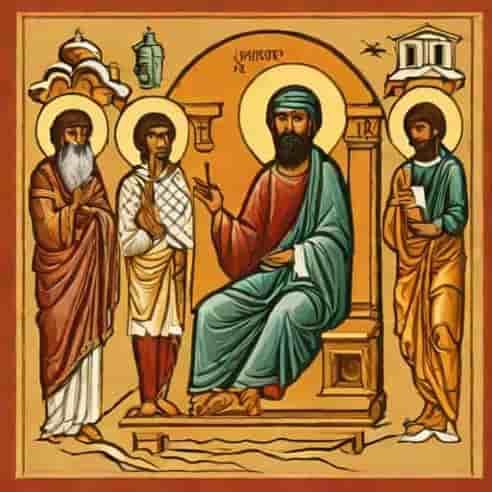
The life of Constantine Eusebius is one of the most remarkable stories of leadership, faith, and political transformation in the history of the Roman Empire. Constantine, often known as Constantine the Great, played a pivotal role in shaping both the political and religious landscape of his time. His reign marked a turning point in history, where Christianity shifted from a persecuted religion to one endorsed by imperial authority. Eusebius, a prominent historian and bishop, chronicled Constantine’s life in detail, offering invaluable insight into the emperor’s achievements, challenges, and the profound impact he had on the Roman world. Understanding the life of Constantine through the works of Eusebius provides a unique perspective on how faith, politics, and personal ambition intertwined in one of history’s most influential figures.
Early Life and Rise to Power
Constantine was born in 272 CE in Naissus, a city in the Roman province of Moesia. He was the son of Constantius Chlorus, a Roman military officer, and Helena, who would later become Saint Helena. From an early age, Constantine was exposed to military and political life, and he received education in both administrative skills and military strategy. His father’s position in the Roman hierarchy paved the way for Constantine’s eventual rise, but it was his own abilities, ambition, and strategic acumen that allowed him to emerge as a dominant figure in the Roman Empire.
Military Career and Consolidation of Power
Constantine’s military career was a critical factor in his rise to power. He gained recognition for his leadership skills and tactical brilliance in various campaigns. After the death of his father in 306 CE, Constantine was proclaimed emperor by his troops, leading to a period of civil wars and rivalries among multiple claimants to the imperial throne. Through a combination of strategic alliances, decisive battles, and political maneuvering, Constantine gradually consolidated power. His military victories were crucial not only for his personal ascent but also for stabilizing the empire during a turbulent period.
Conversion to Christianity
One of the most defining aspects of Constantine’s life, as chronicled by Eusebius, was his conversion to Christianity. According to historical accounts, Constantine experienced a vision before the Battle of the Milvian Bridge in 312 CE, in which he saw a symbol of the Christian cross accompanied by a message suggesting that he would achieve victory under its protection. Following his triumph, Constantine embraced Christianity and began to support the faith openly. This conversion marked a dramatic shift in Roman religious policy and laid the groundwork for the widespread acceptance of Christianity within the empire.
Impact of the Edict of Milan
In 313 CE, Constantine and his co-emperor Licinius issued the Edict of Milan, which granted religious tolerance to all religions in the empire, including Christianity. This decree ended the era of systematic persecution of Christians and allowed them to practice their faith openly. Eusebius portrays the Edict of Milan as a turning point, emphasizing Constantine’s role as a protector and promoter of the Christian faith. The edict not only provided legal recognition to Christianity but also helped integrate the church into the political and social structures of the empire.
Relationship with Eusebius
Eusebius of Caesarea was a prominent church historian and bishop who closely observed Constantine’s reign. His work, Life of Constantine, offers a detailed account of the emperor’s life, achievements, and devotion to Christianity. Eusebius presents Constantine as a divinely guided ruler whose actions were instrumental in the spread of the faith. While some historians critique Eusebius for his overly favorable portrayal, his writings remain a vital source for understanding the life of Constantine, providing insights into his religious motivations, political strategies, and personal character.
Political Reforms and Administrative Achievements
Beyond his religious influence, Constantine implemented significant political and administrative reforms. He reorganized the empire’s structure, strengthening central authority and improving governance. Constantine established a new capital at Byzantium, later known as Constantinople, which became a vital center of administration, trade, and culture. He also reformed taxation, military organization, and legal codes, ensuring greater efficiency and stability across the empire. These reforms not only consolidated his power but also left a lasting legacy that shaped the trajectory of the Roman Empire for centuries.
Legacy in Christian History
Constantine’s support for Christianity had profound implications for the history of the church. He convened the First Council of Nicaea in 325 CE, which addressed theological disputes and helped unify Christian doctrine. The Nicene Creed, formulated during this council, remains a central statement of Christian belief. Eusebius highlights Constantine’s role as a protector and advocate for the church, emphasizing his vision of a society where political authority and faith were intertwined. His reign marked the beginning of a close relationship between church and state, influencing the development of Christian institutions throughout the empire.
Military and Cultural Achievements
Constantine’s life was also marked by notable military and cultural achievements. He successfully defended the empire against external threats, expanded Roman influence, and maintained relative peace within its borders. Additionally, Constantine encouraged the construction of monumental architecture, including churches, basilicas, and public buildings, leaving a lasting imprint on the cultural landscape. His efforts to blend political power with religious devotion helped shape the cultural identity of the empire, reflecting a vision of unity and divine purpose.
Final Years and Death
In his later years, Constantine continued to influence the empire and the church, overseeing administrative matters and supporting Christian institutions. He was baptized on his deathbed in 337 CE, symbolizing his lifelong commitment to Christianity. Constantine’s death marked the end of a transformative era, but his legacy endured through the continued prominence of Constantinople, the integration of Christianity into imperial governance, and the enduring influence of his policies on subsequent generations of rulers.
Historical Significance
The life of Constantine Eusebius provides a unique window into the intersection of faith, politics, and personal ambition in the Roman Empire. Through his military prowess, political reforms, and religious vision, Constantine shaped the course of history, influencing both the secular and spiritual realms. Eusebius’ account immortalizes Constantine as a divinely guided leader whose actions facilitated the rise of Christianity and the stabilization of the empire. His life demonstrates the complex dynamics of leadership, the power of vision and belief, and the enduring impact of historical figures on the cultural and religious landscape.
- Early life and exposure to military and political structures.
- Military campaigns that consolidated power and stabilized the empire.
- Conversion to Christianity and support for religious tolerance.
- Political and administrative reforms, including the founding of Constantinople.
- Legacy in Christian history, including the First Council of Nicaea.
- Military, cultural, and architectural achievements that shaped the empire.
- Death and enduring historical influence documented by Eusebius.
The life of Constantine Eusebius is a testament to the transformative power of leadership, vision, and faith. Constantine’s journey from a provincial military leader to emperor of the Roman Empire illustrates the complex interplay of ambition, strategy, and divine inspiration. Eusebius’ historical account captures both the achievements and the significance of Constantine’s reign, emphasizing his role in shaping the future of Christianity and the empire. Through military victories, political reforms, and religious devotion, Constantine left an enduring legacy that continues to be studied and admired, offering insights into leadership, governance, and the enduring influence of one of history’s most remarkable figures.