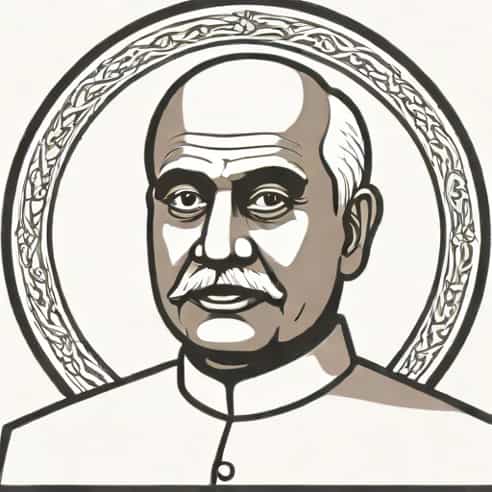
In the history of Indian education, few figures stand as tall as K. Kamarajar, a man who believed that true progress begins with learning. Known as the Kingmaker of Indian politics and the Father of Education in Tamil Nadu, Kamarajar was more than a politician he was a visionary who understood that education is the foundation of a strong and equal society. His reforms, driven by compassion and foresight, transformed millions of lives and laid the groundwork for a modern educational system accessible to all, regardless of caste, wealth, or gender.
The Early Life and Values of Kamarajar
Kumaraswami Kamaraj, born on July 15, 1903, in Virudhunagar, Tamil Nadu, came from a humble background. His early life was shaped by hardship; he lost his father at a young age and had to leave school after the sixth standard to support his family. This personal experience of poverty and lack of education deeply influenced his later dedication to ensuring that no child would be deprived of learning due to financial constraints.
Kamarajar’s early exposure to the freedom struggle inspired him to dedicate his life to the service of the nation. He joined the Indian National Congress and became a close associate of Mahatma Gandhi. His simplicity, honesty, and commitment to social welfare made him one of the most respected leaders in Indian politics. But it was his deep concern for the common people especially children that drove his transformative educational reforms.
Kamarajar’s Vision for Education
Kamarajar firmly believed that education was the most powerful tool to eradicate poverty and social inequality. His vision was rooted in the belief that a nation could only progress when every child, irrespective of background, had the opportunity to learn. When he became the Chief Minister of Tamil Nadu in 1954, he made education his top priority and initiated groundbreaking reforms that changed the face of schooling in the state.
He once said that no child should remain uneducated merely because of hunger or poverty. This idea formed the backbone of his famous Midday Meal Scheme, one of his most enduring contributions. Under his leadership, the government implemented numerous initiatives to make schools accessible, improve the quality of education, and reduce dropout rates among poor children.
The Midday Meal Scheme A Revolutionary Idea
Perhaps Kamarajar’s most iconic educational reform was the introduction of the Midday Meal Scheme in government schools. At a time when poverty forced countless children to work instead of study, he realized that hunger was one of the biggest obstacles to education. His solution was simple yet profound provide free, nutritious meals to students in schools.
This initiative not only encouraged parents to send their children to school but also improved student health and attendance rates. The scheme became so successful that it was later adopted as a national program across India. Kamarajar’s vision demonstrated his understanding of human needs he knew that education could only thrive when children’s basic necessities were met.
Expanding Educational Infrastructure
Under Kamarajar’s leadership, Tamil Nadu witnessed an unprecedented expansion in educational infrastructure. He launched a massive campaign to build schools in every village. During his tenure as Chief Minister, the number of schools in Tamil Nadu increased dramatically, ensuring that no child had to walk miles to access basic education.
He also made education compulsory up to the age of 14 and abolished school fees for primary education. Teachers were recruited and trained in large numbers to ensure quality learning. His government emphasized not just access but also the importance of good teaching, creating an environment where children could learn with interest and dignity.
Focus on Girl’s Education
At a time when women’s education was not widely prioritized, Kamarajar recognized the vital role of girls in nation-building. He believed that an educated woman could uplift her entire family and community. Therefore, his policies included specific measures to promote girls’ education building schools closer to rural communities, providing free uniforms and books, and ensuring safe learning spaces.
This foresight helped reduce gender disparity in education and empowered a generation of women to seek higher education and employment opportunities. Today, Tamil Nadu’s relatively high literacy rate among women can be traced back to the foundations laid by Kamarajar’s vision.
Encouraging Technical and Vocational Education
Kamarajar also understood that academic education alone would not suffice for India’s development. He promoted technical and vocational education to equip students with practical skills. Industrial schools, polytechnics, and technical institutes were established across the state to prepare young people for careers in manufacturing, engineering, and other skilled professions.
By linking education with employability, he provided a model that combined intellectual growth with economic development. His approach anticipated the modern emphasis on skill-based education and workforce readiness.
Educational Reforms and Administrative Simplicity
Kamarajar’s governance style was marked by simplicity and efficiency. He personally visited schools to assess their functioning and interact with teachers and students. His administration was free of corruption and bureaucracy, ensuring that funds allocated for education were used effectively.
One of his most important policies was the merger of small and uneconomical schools, which helped optimize resources and provide better teaching facilities. He also encouraged local communities to participate in managing schools, fostering a sense of responsibility and ownership among citizens.
Kamarajar’s Broader Impact on Indian Education
Kamarajar’s influence extended far beyond Tamil Nadu. His ideas and reforms inspired educational policies across India. The success of the Midday Meal Scheme and free primary education programs proved that progressive governance could transform society through compassion and practicality.
Even after his tenure as Chief Minister, Kamarajar continued to advocate for education at the national level. He served as the President of the Indian National Congress and played a significant role in shaping India’s political and social landscape. His leadership style, focused on service and humility, remains a model for future generations of public servants.
The Legacy of Kamarajar the Visionary
Kamarajar’s legacy as the great visionary of education continues to live on in modern India. His policies laid the foundation for a more inclusive and equitable education system. The ripple effects of his work are evident in Tamil Nadu’s consistently high literacy rates, strong public school system, and reputation as one of India’s most educationally advanced states.
He showed that visionary leadership is not about grand speeches or political ambition but about empathy, simplicity, and unwavering commitment to the welfare of the people. Through his actions, Kamarajar proved that education is not just a government duty it is a moral obligation.
- He abolished school fees for primary education.
- He launched the Midday Meal Scheme to combat hunger and improve school attendance.
- He expanded school infrastructure across rural areas.
- He emphasized technical and vocational education for employment.
- He promoted equal access to education for girls and underprivileged children.
Kamarajar’s Values and Their Relevance Today
In today’s rapidly changing world, Kamarajar’s values remain deeply relevant. His belief in equality, access, and opportunity continues to inspire educational reforms not just in India, but globally. In an age when technology and globalization shape the way people learn, his core idea that education must serve humanity resonates more strongly than ever.
Kamarajar’s vision reminds us that true development begins with the mind. A literate and enlightened society is capable of solving its own problems, maintaining peace, and building prosperity. His dream of universal education is still a work in progress, but it continues to guide policymakers and educators striving for a better future.
Kamarajar, the great visionary of education, dedicated his life to ensuring that every child could dream, learn, and grow. His reforms were not just administrative measures but expressions of compassion, justice, and foresight. By transforming Tamil Nadu’s educational landscape, he changed the destiny of millions of people and set a standard for the entire nation.
His life teaches that true leadership lies in service, and that education is the most powerful instrument for social transformation. Kamarajar’s vision continues to illuminate the path toward equality, opportunity, and progress a legacy that will inspire generations to come.