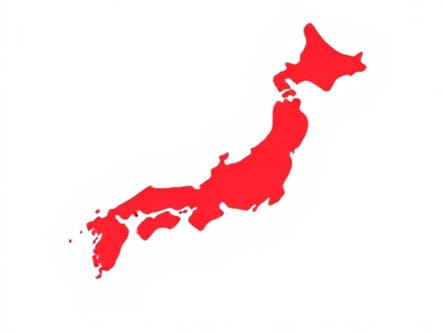
Situated in the northwestern Pacific Ocean, Sakhalin is a large island that has long sparked curiosity due to its unique position between the Russian Far East and the Japanese archipelago. While it is geographically close to the northernmost Japanese islands and shares some cultural and historical ties with Japan, Sakhalin is politically and territorially part of Russia. Understanding the geographical, historical, and geopolitical factors is essential to answer whether Sakhalin can be considered part of the Japanese archipelago.
Geographic Context of Sakhalin
Location and Physical Features
Sakhalin lies just off the eastern coast of Russia, to the north of Japan’s Hokkaido island. It is the largest island in Russia, measuring about 948 kilometers in length. It is separated from the Russian mainland by the narrow Tatar Strait and from Japan by the La Pérouse Strait. The island features a rugged landscape, with mountain ranges, dense forests, and a cold climate typical of subarctic zones.
Although Sakhalin is close to Japan’s Hokkaido, separated by only about 43 kilometers of water, it is not geologically or officially classified as part of the Japanese archipelago. The Japanese archipelago refers specifically to the chain of islands that make up modern Japan Honshu, Hokkaido, Kyushu, Shikoku, and the smaller surrounding islands.
Tectonic and Geological Perspective
From a geological standpoint, Sakhalin is part of the Okhotsk Plate and is more closely associated with the Russian Far East than with the Japanese island chain. The Japanese archipelago was formed by the movement and collision of tectonic plates including the Pacific Plate, Philippine Sea Plate, and the Okhotsk Plate, but the islands of Japan are considered separate from Sakhalin based on their formation history and geologic boundaries.
Historical Ties Between Sakhalin and Japan
Early Encounters and Indigenous Peoples
Historically, both Japanese and Russian explorers had contact with Sakhalin. The island was originally inhabited by indigenous groups such as the Nivkh and Ainu peoples. The Ainu, who also lived in northern Japan, had cultural and migratory connections to Hokkaido and Sakhalin. These indigenous ties helped create early links between Sakhalin and the Japanese islands, though not in the context of modern nation-states.
Imperial Conflicts and Shifting Control
In the late 19th and early 20th centuries, Sakhalin became a focal point of rivalry between Imperial Russia and Imperial Japan. Following the Russo-Japanese War, the Treaty of Portsmouth in 1905 gave Japan control of the southern half of Sakhalin. Japan administered this portion of the island as part of Karafuto Prefecture, treating it as an extension of the Japanese homeland.
This period of Japanese control brought infrastructure development, migration, and the integration of southern Sakhalin into Japan’s imperial system. However, after World War II, the entire island was seized by the Soviet Union. Japan renounced claims to Sakhalin in the 1951 San Francisco Peace Treaty, although the exact sovereignty over some islands remains a point of contention to this day.
Modern Political Status
Russian Sovereignty
Today, Sakhalin is part of the Russian Federation and constitutes the majority of the Sakhalin Oblast, a federal subject of Russia. The region is administered from Yuzhno-Sakhalinsk, a city with a complex history of both Russian and Japanese rule. There is no current dispute between Japan and Russia regarding the main island of Sakhalin, though other nearby islands like the Kuril Islands are still contested.
Sakhalin operates entirely within Russia’s political, legal, and economic systems. While there remains some Japanese cultural influence from its past, modern Sakhalin is firmly integrated into Russia’s Far Eastern development strategies and is no longer connected to Japan in a political sense.
Diplomatic Relations with Japan
Although there are historical grievances and ongoing negotiations over nearby territories, Japan and Russia maintain diplomatic and economic relations. Sakhalin plays a role in energy cooperation between the two nations, particularly through joint projects such as the Sakhalin-1 and Sakhalin-2 oil and gas developments. These partnerships are examples of how economic interests often bridge geopolitical boundaries.
Differences Between Sakhalin and the Japanese Archipelago
Distinct Cultural and Demographic Identity
While there is a history of Japanese presence on the island, the current population of Sakhalin is predominantly Russian, with a small representation of indigenous and minority groups. Japanese culture is no longer prevalent in everyday life. In contrast, the Japanese archipelago is culturally unified, with shared language, customs, and governance across its islands.
Legal and Administrative Boundaries
The Japanese archipelago falls entirely under the jurisdiction of the Japanese government. Sakhalin, on the other hand, is governed as a Russian territory. This distinction is a crucial factor in determining whether a landmass belongs to one archipelago or another. Political control and governance, alongside geographic separation, place Sakhalin outside the Japanese archipelago’s scope.
Why the Confusion Exists
Geographical Proximity
The primary reason for the confusion is geographical closeness. With Sakhalin situated just north of Hokkaido, many assume it is a northern extension of Japan’s islands. Maps often show the two landmasses in close detail, sometimes without clearly indicating international borders.
Shared History
Another source of confusion is the history of Japanese settlement in southern Sakhalin. For about four decades, this region was governed as part of Japan, and older generations may remember this period vividly. As a result, cultural memories and historical narratives may continue to link Sakhalin to the Japanese sphere.
while Sakhalin is geographically close to Japan and has shared parts of its history with the Japanese archipelago, it is not considered a part of it. Geologically, politically, and culturally, Sakhalin belongs to Russia and stands apart from the main Japanese island chain. The notion that Sakhalin is part of Japan may persist in historical or emotional terms, but in modern geography and governance, the island is a distinct entity firmly within Russian territory.
Understanding the difference between proximity and political or geological classification helps clarify questions like this. Sakhalin is an important island in the northwestern Pacific, with a rich past and a complex identity, but it is not part of the Japanese archipelago.