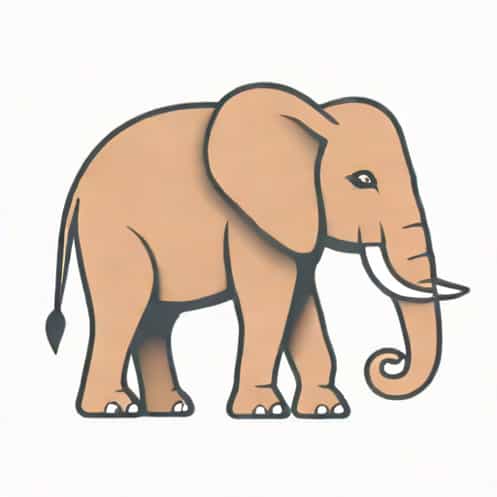
When people think of massive, thick-skinned animals like elephants, rhinoceroses, and hippos, the word pachyderm often comes to mind. The term has been used for centuries to describe these large mammals with seemingly similar body structures. But scientifically speaking, is an elephant really a pachyderm? While the answer depends on whether we’re using historical or modern terminology, exploring this question reveals fascinating details about the elephant’s classification, biology, and evolution.
Understanding the Meaning of Pachyderm
The word pachyderm comes from the Greek wordspachys, meaning thick, andderma, meaning skin. Literally, it means thick-skinned. Historically, this term was used to describe large land mammals that shared certain visible traits-especially their tough, thick skin, herbivorous diets, and large body size. Early naturalists grouped animals such as elephants, rhinoceroses, and hippopotamuses together under the categoryPachydermata.
However, as science advanced and taxonomy became more precise, this old classification fell out of use. Today, biologists no longer recognize pachyderm as a valid scientific group. It’s considered an outdated or informal term. Still, in casual speech, people often use it to refer to elephants because of their thick skin and massive build.
The Historical Classification of Pachyderms
In the early 19th century, French zoologist Georges Cuvier created the orderPachydermatato group animals with thick, nearly hairless skin and hooved feet. This included elephants, tapirs, pigs, and rhinos. Cuvier believed these animals were related because of their shared physical characteristics. However, as biologists began studying genetics and anatomy more deeply, they discovered that many of these animals were not closely related at all.
For instance, elephants are more closely related to manatees and hyraxes than to rhinos or hippos. This discovery reshaped our understanding of mammalian evolution and led to the modern classification systems that group animals based on evolutionary lineage rather than appearance alone.
Modern Classification of Elephants
Today, elephants belong to the familyElephantidaewithin the orderProboscidea. The nameProboscidearefers to their trunk or proboscis, which is one of the most distinctive features of elephants. The order once included many extinct species like mammoths and mastodons, but now only three living species remain
- African bush elephant(Loxodonta africana)
- African forest elephant(Loxodonta cyclotis)
- Asian elephant(Elephas maximus)
Unlike the old pachyderm grouping, this modern classification is based on genetic, skeletal, and evolutionary evidence. Elephants share common ancestry with manatees and rock hyraxes, forming a group known asAfrotheria. This grouping highlights that physical appearance alone can be misleading when determining relationships among animals.
Why Elephants Were Once Considered Pachyderms
Despite the outdated classification, it’s easy to understand why elephants were once grouped as pachyderms. Their skin is about 2 to 4 centimeters thick in some places-one of the thickest among land mammals. It serves as protection against harsh sunlight, insect bites, and injury. This thick skin, combined with their immense size and herbivorous nature, made them appear similar to other large mammals like rhinos and hippos.
However, deeper research revealed that these similarities were only superficial. For example, while rhinos belong to the orderPerissodactyla(odd-toed ungulates), hippos belong to the orderArtiodactyla(even-toed ungulates). Elephants, on the other hand, have no hooves and belong to an entirely separate evolutionary branch. Therefore, calling an elephant a pachyderm today is scientifically inaccurate, though it’s still a commonly used descriptive term in non-scientific contexts.
The Unique Features of Elephants
Elephants possess a range of unique adaptations that set them apart from all other mammals. These characteristics highlight their special evolutionary path and show why they deserve a distinct classification.
- The TrunkThe most defining feature of elephants, their trunk, is a fusion of the nose and upper lip. It contains over 40,000 muscles and serves multiple purposes-breathing, drinking, grasping objects, and communication.
- TusksThese are actually elongated incisor teeth that continue to grow throughout an elephant’s life. Tusks are used for digging, stripping bark, and defense.
- Thick SkinAlthough elephants are sometimes described as having tough skin, their skin is actually sensitive. They can feel insects crawling and often cover themselves with mud to cool down and protect their skin from sunburn.
- Large Brain and IntelligenceElephants have one of the largest brains among land animals, showing remarkable intelligence, emotional depth, and memory.
These features demonstrate how unique elephants are in the animal kingdom and further support their classification underProboscidearather than any generalized term like pachyderm.
Elephants and Their Relatives
Modern science groups elephants with some surprising relatives. Manatees and dugongs, aquatic herbivores known as sea cows, share a distant evolutionary ancestor with elephants. The rock hyrax, a small mammal that resembles a guinea pig, is also part of this extended family. This group, known asAfrotheria, evolved from ancient African mammals that diversified over millions of years.
While these relatives might not look similar today, genetic and fossil evidence shows that they share deep evolutionary ties. This discovery helps scientists understand how elephants evolved their massive bodies and unique features.
The Symbolism and Cultural Use of the Word Pachyderm
Even though pachyderm is no longer used in modern biology, it remains popular in literature, conversation, and art. The word evokes imagery of strength, size, and endurance. Many people still refer to elephants as pachyderms in poetry, children’s books, or casual descriptions. In these contexts, it functions more as a cultural or poetic term than a scientific one.
In zoos, circuses, and old animal catalogs, elephants were commonly labeled as pachyderms alongside rhinos and hippos. The term helped early naturalists and the public categorize animals before the advent of advanced taxonomy. While inaccurate, it played an important role in shaping how people perceived these majestic creatures for centuries.
How Language Evolves with Science
The case of the word pachyderm highlights how language evolves alongside scientific discovery. In the past, humans grouped animals based on physical traits because they lacked the technology to analyze genetics. As science advanced, we learned to classify animals based on DNA, bone structure, and evolutionary history instead of appearance alone. This shift made older terms like pachyderm obsolete in biology, though they still survive in everyday use.
This evolution of terminology reminds us that science is always changing. What was once a fact can later be redefined as knowledge expands. The story of elephants and the term pachyderm perfectly illustrates that progress.
So, is an elephant a pachyderm? Technically, no. The term pachyderm is an outdated classification once used to describe large, thick-skinned mammals. Modern biology now places elephants in the familyElephantidaeand the orderProboscidea, emphasizing their distinct evolutionary lineage. However, in casual conversation, calling an elephant a pachyderm isn’t entirely wrong-it simply reflects an older way of thinking about animal groups.
Elephants are among the most remarkable creatures on Earth, combining strength, intelligence, and emotional depth. Whether we call them pachyderms or proboscideans, they remain symbols of wisdom, endurance, and the beauty of the natural world. Their story also teaches us an important lesson about science and language our understanding of the world continues to evolve, and with it, the words we use to describe it.