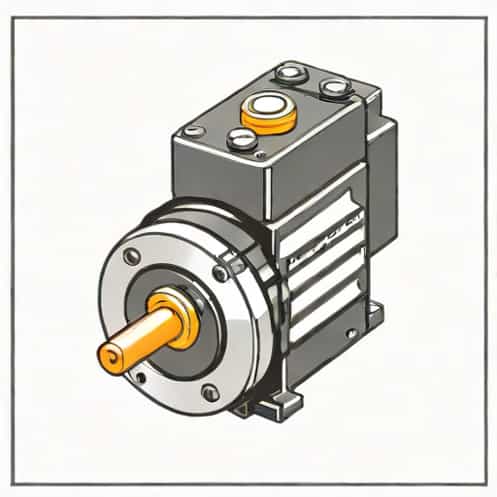
When people hear the term servo motor, they often assume it refers to a specific type of motor, but in reality, the concept is broader. A servo motor is defined more by its function than by its design. This raises an interesting question often asked in engineering and robotics is a servo motor brushless? The answer depends on the type of servo system being discussed, because servo motors can be either brushless or brushed depending on their internal construction and application. Understanding these differences is key to choosing the right type of servo for any motion control project.
Understanding What a Servo Motor Is
A servo motor is a device that precisely controls angular or linear position, velocity, and acceleration. It is part of a closed-loop control system, meaning it continuously receives feedback about its position and speed, adjusting its output accordingly. This makes servo motors essential in robotics, CNC machines, camera systems, and industrial automation where accuracy is critical.
Unlike a simple DC or AC motor, a servo motor is not just about spinning. It includes three main components a motor (either brushed or brushless), a sensor (usually an encoder or resolver), and a control circuit. The sensor feeds position data back to the controller, which adjusts voltage and current to achieve the desired motion. The precision of this system is what distinguishes servo motors from conventional motors.
Brushless vs. Brushed Servo Motors
So, is a servo motor brushless? The short answer is not always. There are both brushed servo motors and brushless servo motors, and each type has its own strengths and weaknesses. To fully understand this distinction, it’s important to look at how each type works.
Brushed Servo Motors
Brushed servo motors use mechanical brushes and a commutator to deliver current to the motor windings. The brushes physically contact the commutator to switch the current direction, allowing the motor to rotate continuously. This design is simple, cost-effective, and widely used in small-scale applications like hobby servos and low-cost automation.
- AdvantagesSimple design, easy to control, inexpensive, suitable for low-speed, low-torque applications.
- DisadvantagesBrushes wear out over time, causing maintenance issues, friction, and electrical noise.
Brushed servo motors are still common in small robotics or older industrial systems where cost and simplicity outweigh long-term efficiency or maintenance concerns.
Brushless Servo Motors
Brushless servo motors, on the other hand, replace the mechanical commutation system with electronic control. Instead of brushes, they use a permanent magnet rotor and electronically controlled stator windings. The current flow is switched electronically based on feedback from sensors like Hall effect sensors or encoders.
- AdvantagesHigher efficiency, longer lifespan, no brush wear, lower maintenance, higher speed capability, and better torque performance.
- DisadvantagesMore expensive, requires more complex control electronics, and can be harder to implement for simple applications.
Because of their superior efficiency and durability, brushless servo motors are commonly used in modern robotics, CNC machines, electric vehicles, and automation systems that require precise and continuous operation.
How Servo Motors Work in a Closed-Loop System
Whether a servo motor is brushed or brushless, both types operate within a closed-loop control system. The feedback loop is what gives the servo motor its name and functionality. Here’s a simple breakdown of how this system works
- ControllerSends a command signal representing the desired position or speed.
- Amplifier/DriverConverts the controller’s command into voltage and current for the motor.
- MotorExecutes the movement based on the electrical input.
- Sensor/EncoderMeasures actual position and speed, sending feedback to the controller.
- Feedback LoopThe controller compares desired and actual positions, correcting errors in real time.
In brushless servo motors, this feedback loop often involves more advanced digital communication, allowing the motor to perform extremely precise movements without mechanical wear.
Why Brushless Servo Motors Are Becoming the Standard
In recent years, brushless servo motors have become the preferred choice in most industrial and commercial applications. This shift is largely due to advancements in electronics and control systems that make brushless motors more affordable and efficient. Their ability to provide smooth torque, high-speed operation, and minimal maintenance makes them ideal for automation and robotics.
In addition, brushless servo motors generate less heat, which improves energy efficiency and extends the motor’s lifespan. This is especially valuable in systems that run continuously, such as robotic arms, conveyor systems, or drone propulsion systems.
Energy Efficiency and Performance
Because brushless motors eliminate the friction and voltage drop caused by brushes, they convert more electrical power into mechanical motion. This increased efficiency means less energy waste, which not only reduces operating costs but also minimizes heat buildup. Additionally, brushless servo motors can achieve higher rotational speeds, making them suitable for precision machining or high-speed automation tasks.
Durability and Maintenance
The absence of brushes in brushless servo motors translates directly to lower maintenance. Brushed motors require regular inspection and replacement of brushes as they wear out, while brushless motors can operate for thousands of hours without significant degradation. This makes them ideal for environments where downtime is costly or difficult, such as factory production lines or aerospace applications.
When Brushed Servo Motors Are Still Useful
Despite their drawbacks, brushed servo motors still hold a place in certain industries and projects. Their lower initial cost and simpler control systems make them ideal for small-scale applications like remote-controlled models, educational robotics, or devices that operate intermittently. In cases where budget constraints are significant and continuous operation is not required, brushed servo motors offer an affordable and practical solution.
In fact, many entry-level servo systems-like those found in hobbyist RC vehicles or basic automation kits-still rely on brushed designs. They’re easy to understand, quick to replace, and can deliver adequate precision for low-performance requirements.
Comparing Brushless and Brushed Servo Motors
To summarize the differences between the two types of servo motors, the following table-like comparison helps highlight the main distinctions
- CommutationMechanical (brushed) vs. electronic (brushless).
- EfficiencyLower (brushed) vs. higher (brushless).
- MaintenanceRegular (brushed) vs. minimal (brushless).
- LifespanShorter (brushed) vs. longer (brushless).
- CostLower upfront (brushed) vs. higher upfront but cost-effective over time (brushless).
- Noise and VibrationMore (brushed) vs. less (brushless).
- Control ComplexitySimpler (brushed) vs. more complex (brushless).
From this comparison, it’s clear that while brushed servo motors have practical uses in specific contexts, brushless servo motors dominate in performance-critical and industrial applications.
Applications of Brushless Servo Motors
Brushless servo motors are used in many modern systems that require smooth, reliable, and efficient motion. Some common examples include
- Robotic arms and automation systems
- CNC and 3D printing machines
- Drones and unmanned vehicles
- Electric vehicles and power steering systems
- Medical devices and laboratory instruments
- High-speed packaging and conveyor systems
These applications benefit from precise speed control, long operational life, and reduced maintenance downtime-all hallmarks of brushless servo motor technology.
To answer the question, Is a servo motor brushless? – it can be, but not always. A servo motor refers to a controlled system that includes feedback, and both brushed and brushless designs can fulfill that role. However, brushless servo motors are now the dominant choice due to their efficiency, reliability, and reduced maintenance needs. While brushed versions still serve well in smaller or budget-limited applications, brushless servo motors represent the future of precision motion control, powering everything from factory automation to advanced robotics with unmatched accuracy and performance.