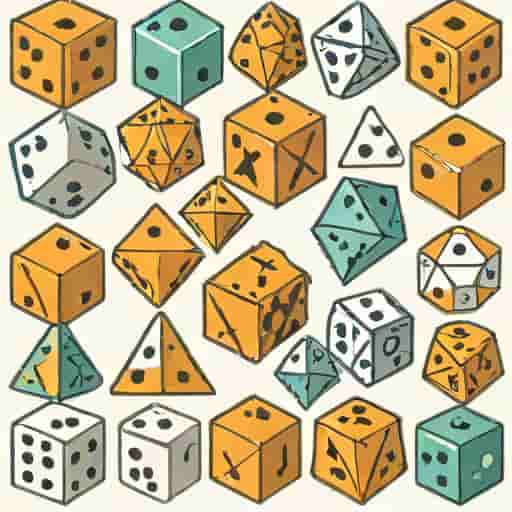
Individual polyhedral dice are an essential part of tabletop gaming, particularly in role-playing games such as Dungeons & Dragons, Pathfinder, and other strategy-based games. Unlike standard six-sided dice, polyhedral dice come in multiple shapes and sizes, including four-sided (d4), six-sided (d6), eight-sided (d8), ten-sided (d10), twelve-sided (d12), and twenty-sided (d20) variants. Each die has a specific purpose in gameplay, often determining outcomes for attacks, skill checks, damage rolls, or other random events. Collecting and using individual polyhedral dice has become increasingly popular, not only for their functional role in games but also for their aesthetic appeal, variety of materials, and customizable designs. Understanding the types, uses, and selection of polyhedral dice is important for both new and experienced gamers who want to enhance their tabletop experience.
Types of Individual Polyhedral Dice
Polyhedral dice come in a variety of shapes, each serving a different purpose in gameplay. Knowing the different types helps players select the right die for each situation. The standard set includes the following
Four-Sided Die (d4)
The d4 is a small, pyramid-shaped die with four triangular faces. It is often used for determining small amounts of damage, minor effects, or resolving certain spells in role-playing games. The d4 is unique because its number layout is typically read from the bottom or the tip, depending on the design.
Six-Sided Die (d6)
The d6 is the most familiar die, commonly used in board games and role-playing games alike. While it can be part of a polyhedral set, it is also frequently used individually for skill checks, attack rolls, and determining random events. Many players enjoy using decorative or custom d6 dice for individual rolls due to their versatility.
Eight-Sided Die (d8)
The d8 has eight triangular faces and is often employed for mid-level damage rolls or for specific abilities in games. Its shape allows for smooth rolling and fair randomness. Some players prefer individual d8 dice for certain weapon attacks or spell damage calculations.
Ten-Sided Die (d10) and Percentile Die (d100)
The d10 is used for a variety of purposes, including percentile rolls, which often involve two d10 dice to generate a number between 1 and 100. Individual d10 dice are particularly valuable for determining probabilities, generating random outcomes, or handling specific mechanics in role-playing games.
Twelve-Sided Die (d12)
The d12 is less commonly used than other dice but still has important applications, especially for large weapon damage or certain spell effects. Its twelve faces provide a wider range of outcomes, making it useful in situations requiring more variability.
Twenty-Sided Die (d20)
The d20 is arguably the most iconic die in role-playing games, primarily used in Dungeons & Dragons for attack rolls, saving throws, and skill checks. Individual d20 dice often become a player’s signature die, as many prefer a particular style, color, or material for critical rolls. The d20’s range from 1 to 20 introduces both excitement and tension in gameplay, especially when rolling for critical hits or failures.
Materials and Design Options
Individual polyhedral dice are available in a wide variety of materials, each with unique aesthetics and tactile qualities. Common materials include
- Plastic or AcrylicLightweight, affordable, and available in countless colors and patterns.
- MetalHeavier, offering a satisfying weight and often featuring etched or engraved numbers.
- ResinCan include swirls, glitter, or embedded objects for artistic appeal.
- WoodProvides a natural texture and unique grain patterns, often hand-carved.
- Stone or GemstoneLuxurious, durable, and visually striking, perfect for collectors.
The design of individual dice can also vary in number font, color scheme, and transparency. Many gamers enjoy collecting dice that reflect personal taste, their character’s theme, or the overall aesthetic of their gaming table. Specialty dice, such as glow-in-the-dark or UV-reactive options, also add a fun and unique element to tabletop sessions.
Uses of Individual Polyhedral Dice
Individual polyhedral dice have many uses in tabletop games. Their primary function is to introduce randomness and fairness into gameplay, ensuring that outcomes are not predetermined. Specific applications include
- Attack RollsDetermining whether a character’s attack hits a target.
- Damage RollsCalculating the damage dealt to enemies or obstacles.
- Skill ChecksResolving actions such as lockpicking, persuasion, or stealth.
- Random EventsGenerating unexpected scenarios or treasure outcomes.
- Character AbilitiesRolling for spell effects, special attacks, or critical moments.
Many players also use individual dice for role-playing or thematic purposes, such as rolling for character decisions or enhancing dramatic moments during a session. Some dice become lucky charms or personalized items, enhancing player enjoyment beyond their mechanical function.
Collecting and Customization
Many gamers collect individual polyhedral dice as both functional tools and aesthetic objects. Collecting allows players to have a variety of dice to match different characters or campaigns. Customization options, such as engraving, color mixing, or embedding materials in resin, make each die unique. Players may also prefer specific dice for certain rolls due to weight, balance, or visual appeal. The collection of individual polyhedral dice can be a hobby in itself, with enthusiasts seeking rare or artistically crafted pieces.
Tips for Choosing Individual Polyhedral Dice
When selecting individual polyhedral dice, consider the following factors to ensure the best experience
- MaterialChoose based on tactile preference and durability.
- ReadabilityEnsure numbers are clear and easy to read during gameplay.
- BalanceLook for dice that roll fairly and consistently.
- Aesthetic AppealSelect dice that reflect personal style or game theme.
- PurposeDetermine if the die is for general use, collection, or a specific character.
Following these tips helps players find individual polyhedral dice that are both functional and enjoyable to use, enhancing the overall tabletop experience.
Maintenance and Care
Proper care of individual polyhedral dice ensures longevity and optimal performance. Keep dice clean, avoid dropping them on hard surfaces to prevent chips or cracks, and store them in protective cases or pouches. Regular inspection helps identify damage or wear, which could affect rolling fairness. Collectors often display dice carefully to maintain aesthetics, while players prioritize functional durability for frequent use in game sessions.
Individual polyhedral dice are more than just gaming tools; they are collectible items, artistic expressions, and essential components of tabletop role-playing games. From the iconic d20 to the less common d12, each die has a unique purpose and adds depth to gameplay. With a wide range of materials, designs, and customization options, individual dice appeal to both players and collectors. Selecting the right dice, understanding their uses, and caring for them properly ensures an enhanced gaming experience. Whether for critical rolls, character-themed collections, or aesthetic enjoyment, individual polyhedral dice remain a beloved and integral part of the tabletop gaming world.