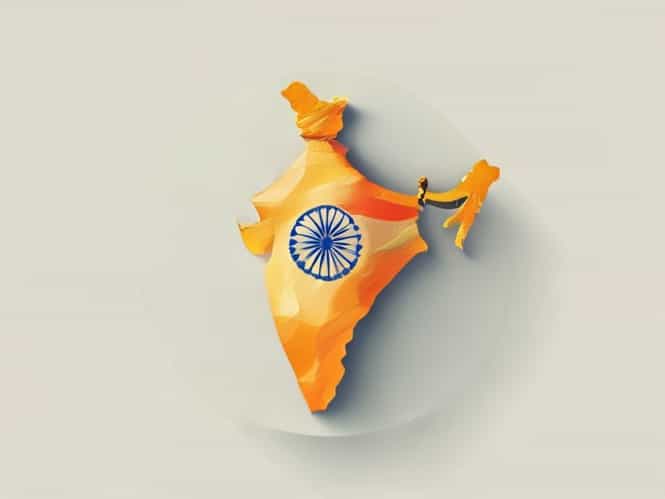
When people learn about geography, one of the most common questions they ask is India is located in which hemisphere? This question may seem simple, but the answer helps us understand not only India’s position on the globe but also how its location affects its climate, seasons, culture, and even daily life. Knowing the hemispheres in which India lies can give us a clearer idea of why the country experiences such a wide range of weather patterns and time zones. India’s unique geographical position makes it an important country in the global landscape, connecting both eastern and western civilizations for thousands of years.
Understanding Hemispheres of the Earth
Before discussing India’s exact location, it’s important to understand what hemispheres are. The Earth is divided into four main hemispheres Northern, Southern, Eastern, and Western. These hemispheres are divided by two imaginary lines the Equator and the Prime Meridian. The Equator divides the Earth into the Northern and Southern Hemispheres, while the Prime Meridian divides it into the Eastern and Western Hemispheres.
- Northern HemisphereThe half of the Earth that lies north of the Equator.
- Southern HemisphereThe half of the Earth that lies south of the Equator.
- Eastern HemisphereThe half of the Earth east of the Prime Meridian (0° longitude).
- Western HemisphereThe half of the Earth west of the Prime Meridian.
Each hemisphere has its own unique features, including differences in climate, seasons, and daylight hours. Understanding which hemispheres a country belongs to helps explain its geography, weather, and cultural practices.
India’s Location by Hemisphere
India is located primarily in theNorthern Hemisphereand theEastern Hemisphere. This means that it lies north of the Equator and east of the Prime Meridian. These hemispheric positions play a major role in shaping India’s natural and cultural characteristics.
India in the Northern Hemisphere
The Equator passes through countries like Indonesia, Kenya, and Brazil, but not through India. All of India’s territory is situated above the Equator, which means it is entirely in the Northern Hemisphere. Because of this, India experiences the same general seasonal pattern as other Northern Hemisphere countries summer, monsoon, autumn, and winter occur at similar times of the year.
In the Northern Hemisphere, summer occurs from around June to August, and winter lasts from December to February. This pattern is exactly what we see in India. For example, most of India’s regions experience hot summers in May and June, followed by the monsoon rains in July and August, and cooler winter months by December and January.
India in the Eastern Hemisphere
The Prime Meridian runs through Greenwich, England, dividing the Earth into Eastern and Western Hemispheres. India is positioned to the east of this line, between longitudes 68°7²E and 97°25²E. This clearly places India in the Eastern Hemisphere. The Eastern Hemisphere includes countries such as China, Australia, Japan, and Indonesia, which share time zones and similar day-night patterns with India.
Because India lies so far east of the Prime Meridian, its standard time is based on the 82.5°E longitude, known as Indian Standard Time (IST). This time zone is 5 hours and 30 minutes ahead of Greenwich Mean Time (GMT+530). India’s position in the Eastern Hemisphere explains why its sunrise and sunset occur earlier compared to countries located in the Western Hemisphere.
Geographical Coordinates of India
To be more specific, India’s geographical coordinates range from approximately 8°4²N to 37°6²N latitude and from 68°7²E to 97°25²E longitude. These coordinates confirm that India lies entirely north of the Equator and entirely east of the Prime Meridian.
- Latitudinal extent8°4²N to 37°6²N (Northern Hemisphere)
- Longitudinal extent68°7²E to 97°25²E (Eastern Hemisphere)
This wide geographical range gives India a great variety of climates from the tropical regions in the south to the temperate and alpine zones in the north. The country’s position between these coordinates also means it stretches over about 3,214 kilometers from north to south and about 2,933 kilometers from east to west.
Effects of India’s Hemispheric Location
India’s position in the Northern and Eastern Hemispheres influences almost every aspect of its geography, from climate to culture. Here are some of the key effects
1. Seasonal Patterns
Because India lies in the Northern Hemisphere, it shares the same general seasonal pattern as other northern countries. When it is summer in India, it is also summer in Europe, North America, and northern Asia. Likewise, when India experiences winter, countries in the Southern Hemisphere like Australia and South Africa experience summer. This alignment of seasons helps explain the timing of India’s agricultural and cultural calendar, such as the harvest festivals that occur after the monsoon season.
2. Climate and Weather
India’s hemispheric position also contributes to its diverse climate zones. The southern part of India, being closer to the Equator, has a tropical climate with warm temperatures year-round. The northern regions, which lie farther from the Equator, have more distinct seasons, including cold winters in areas like Himachal Pradesh and Kashmir.
Additionally, the Northern Hemisphere’s tilt toward or away from the Sun determines India’s variation in daylight and temperature throughout the year. During June, the Northern Hemisphere tilts toward the Sun, bringing long, hot days in India. In December, it tilts away, resulting in shorter, cooler days.
3. Time Zone and Daylight
Being in the Eastern Hemisphere means that India’s time zone is ahead of many Western countries. When it is noon in London, it is already evening in India. This affects not only daily life but also international business and communication. India’s unique time zone of GMT+530 ensures that the entire country operates under one standard time, even though its longitudinal extent covers about two hours of solar time difference from east to west.
4. Cultural and Historical Connections
India’s location has also made it a crossroads of civilizations. Being in the Eastern Hemisphere but close to the Western boundary, India has historically connected the East and West through trade routes such as the Silk Road and maritime links across the Indian Ocean. Its hemispheric location has influenced the blending of cultures, religions, and languages, making India one of the most diverse nations in the world.
Interesting Facts About India’s Location
- India is the seventh-largest country in the world by land area, with a total area of about 3.28 million square kilometers.
- The Tropic of Cancer (23.5°N) passes almost through the middle of India, dividing it roughly into two climatic zones tropical in the south and subtropical in the north.
- The southernmost point of India is Indira Point in the Andaman and Nicobar Islands, located at about 6°45²N latitude.
- Because of its hemispheric position, India experiences the monsoon winds that are crucial for its agriculture and economy.
- India’s time zone (IST) is based on the 82.5°E meridian, which passes near the city of Mirzapur in Uttar Pradesh.
How India’s Hemispheric Position Affects Its Neighbors
India’s neighbors also share similar hemispheric characteristics. Countries such as Nepal, Bhutan, Bangladesh, and Myanmar are also located in the Northern and Eastern Hemispheres. This means they experience similar seasonal patterns and time differences. However, the variation in latitude and elevation causes differences in climate among these countries. For instance, while India’s southern region is tropical, Nepal’s mountainous regions experience colder, alpine climates due to higher elevation.
Global Significance of India’s Position
India’s hemispheric position gives it strategic importance both geographically and geopolitically. Being centrally located in the Eastern Hemisphere allows India to connect easily with other parts of Asia, Africa, and Europe. It serves as a bridge between the Middle East and Southeast Asia, and its location on the Indian Ocean provides access to major global shipping routes. This has made India a key player in international trade, maritime security, and cultural exchange for centuries.
To sum up, India is located entirely in theNorthern Hemisphereand theEastern Hemisphere. Its latitudinal range of 8°4²N to 37°6²N and longitudinal range of 68°7²E to 97°25²E clearly define its hemispheric position. This location influences everything from the nation’s climate and seasons to its time zone and cultural diversity. Understanding that India lies north of the Equator and east of the Prime Meridian not only answers a geographical question but also reveals how deeply location shapes the life and identity of a country. India’s position in these hemispheres continues to play a vital role in its development, making it one of the most dynamic regions of the world.