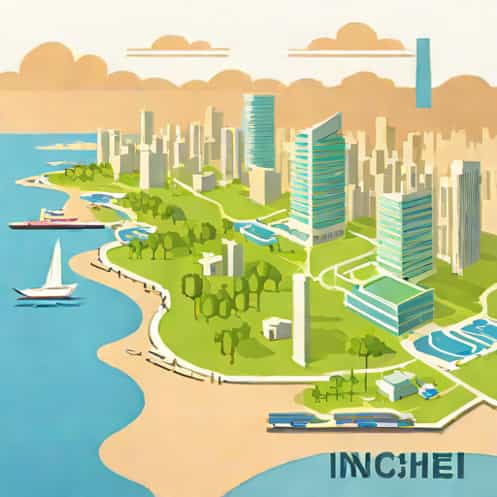
Incheon is often described as an outskirt of Seoul, but this description only captures part of its identity. Located on the western coast of the Republic of Korea, Incheon plays a vital role in the country’s economy, transportation network, and cultural exchange. While it is closely connected to Seoul through infrastructure and daily commuting patterns, Incheon has developed its own character shaped by history, modern urban planning, and coastal geography. Understanding Incheon as an outskirt of Seoul helps explain how the greater Seoul metropolitan area functions as one of the largest and most dynamic urban regions in Asia.
Geographical Position of Incheon Near Seoul
Incheon lies directly west of Seoul, facing the Yellow Sea. Its location makes it a natural gateway between the Korean Peninsula and the outside world. The distance between central Seoul and Incheon is relatively short, allowing the two cities to function almost as a single urban system.
As an outskirt of Seoul, Incheon benefits from easy access to the capital while offering more open coastal areas and reclaimed land. This geographic relationship has shaped its growth, especially in terms of transportation and industrial development.
Part of the Seoul Capital Area
Incheon is officially part of the Seoul Capital Area, which also includes Gyeonggi Province. This metropolitan region is home to nearly half of South Korea’s population. Many residents of Incheon commute daily to Seoul for work or study, reinforcing its role as a functional extension of the capital.
Historical Development of Incheon
Incheon has a long and complex history that predates modern Seoul. Originally a small port settlement, it gained importance during the late nineteenth century when Korea opened its ports to foreign trade. Incheon became one of the first places in the country to experience international influence.
During the Korean War, Incheon gained global recognition due to the famous Incheon Landing in 1950. This event transformed the city into a symbol of strategic importance and resilience, strengthening its connection to national history.
From Port City to Urban Outskirt
As Seoul expanded rapidly after the war, Incheon evolved from an independent port town into an urban outskirt of Seoul. Industrial zones, housing projects, and transportation corridors were developed to support the capital’s growth.
Transportation Links Between Incheon and Seoul
One of the strongest reasons Incheon is considered an outskirt of Seoul is the extensive transportation network connecting the two cities. Subways, highways, and rail lines allow seamless movement between them.
The Seoul Metropolitan Subway system extends deep into Incheon, making daily commuting convenient and affordable. Expressways also link the two cities, supporting both passenger travel and logistics.
Incheon International Airport
Incheon International Airport is one of the busiest and most advanced airports in the world. Although it is located in Incheon, it serves as the primary international airport for Seoul and the entire Republic of Korea.
The airport strengthens Incheon’s identity as an outskirt of Seoul while also giving it global significance. Many travelers associate their arrival in Korea with Incheon before heading into Seoul.
Urban Planning and Modern Development
Incheon showcases modern urban planning, especially in newly developed districts such as Songdo. These areas were designed to relieve population pressure from Seoul while offering high-quality living environments.
As an outskirt of Seoul, Incheon has become a testing ground for smart city concepts, sustainable architecture, and international business zones. This planned development contrasts with the dense and organic growth of central Seoul.
Songdo International Business District
Songdo represents Incheon’s ambition to move beyond the role of a simple suburb. Built on reclaimed land, it combines residential, commercial, and green spaces in a highly organized layout.
Its proximity to Seoul allows businesses to operate internationally while remaining connected to the capital’s economic ecosystem.
Economic Role of Incheon in the Republic of Korea
Incheon plays a crucial role in the national economy. Its port is one of the largest in South Korea, handling a significant portion of the country’s imports and exports.
Being an outskirt of Seoul gives Incheon a strategic advantage. Industries can operate with lower land costs compared to central Seoul while maintaining access to skilled labor and markets.
Key Economic Sectors
- Port and logistics services
- Manufacturing and industrial complexes
- International trade and business services
- Tourism and hospitality
These sectors contribute to Incheon’s growing independence while reinforcing its supportive role to Seoul.
Cultural Identity and Daily Life
Despite its close connection to Seoul, Incheon maintains a distinct cultural identity. Coastal traditions, local markets, and historical neighborhoods give the city its own flavor.
Residents often enjoy a slightly slower pace of life compared to central Seoul, with easier access to the sea and open spaces. This balance attracts families and professionals seeking alternatives to dense urban living.
Multicultural Influences
Incheon has long been a point of contact with foreign cultures. Areas such as Chinatown reflect this history and continue to draw visitors. This multicultural background distinguishes Incheon from many other outskirts of Seoul.
Tourism and Coastal Attractions
As a coastal city, Incheon offers attractions that Seoul cannot. Beaches, islands, and waterfront parks provide recreational options for both locals and tourists.
Many Seoul residents travel to Incheon for short getaways, reinforcing its role as a leisure destination on the edge of the capital.
Popular Places Around Incheon
- Wolmido Island
- Incheon Chinatown
- Muui Island
- Songdo Central Park
These locations highlight how Incheon complements Seoul’s urban experience.
Incheon as a Residential Alternative to Seoul
Housing affordability is a major reason people choose to live in Incheon rather than central Seoul. As an outskirt of Seoul, Incheon offers more spacious housing at relatively lower prices.
Improved infrastructure has made commuting easier, allowing residents to enjoy the benefits of both cities without sacrificing convenience.
Changing Population Patterns
In recent years, population growth in Incheon has been influenced by people moving out of Seoul. This trend has accelerated development and expanded services across the city.
Future Outlook of Incheon and Seoul Relationship
The relationship between Incheon and Seoul continues to evolve. Incheon is no longer just an outskirt but a major city with global ambitions. At the same time, its integration with Seoul remains strong.
Future projects in transportation, technology, and urban development will likely deepen this connection, making the Seoul-Incheon region even more influential in East Asia.
Incheon, as an outskirt of Seoul in the Republic of Korea, represents a unique blend of independence and interdependence. Its strategic location, strong transportation links, and modern development have made it an essential part of the Seoul Capital Area. While it supports Seoul as a gateway and industrial hub, Incheon also maintains its own cultural identity and economic strength. Understanding Incheon’s role helps explain how South Korea’s urban growth has been shaped by cooperation between cities rather than competition.