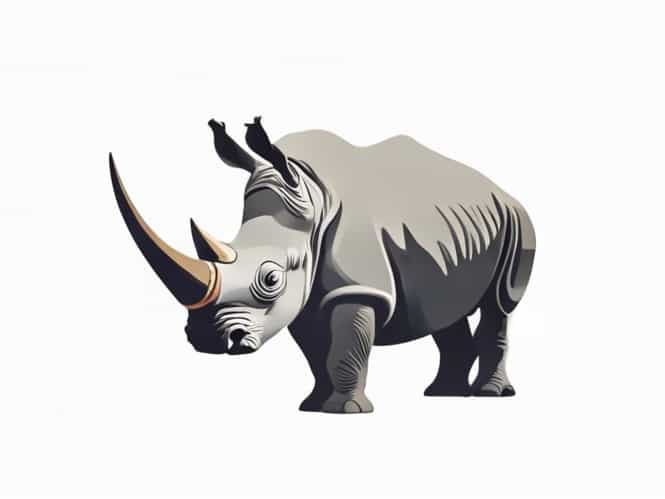
The northern white rhino is one of the rarest animals on Earth, and its story has become a symbol of the urgent need for wildlife conservation. Once roaming across parts of Central Africa, this majestic animal is now functionally extinct. Many people ask how much northern white rhinos there are left, and the heartbreaking truth is that only two individuals remain in the world. These last surviving rhinos are both female, meaning that the species can no longer reproduce naturally. Understanding how the northern white rhino reached this point provides important lessons about human impact, habitat loss, and the future of endangered species.
The Tragic Decline of the Northern White Rhino
The northern white rhinoceros, a subspecies of the white rhinoceros, once lived across regions of Uganda, Chad, Sudan, and the Democratic Republic of Congo. These animals were heavily targeted by poachers for their horns, which were prized in illegal markets for use in traditional medicine and as status symbols. During the 1970s and 1980s, widespread poaching dramatically reduced their numbers from thousands to just a few dozen. Political instability in central Africa also made it nearly impossible to protect them effectively.
The Final Survivors
Today, there are only two northern white rhinos left Najin and Fatu. Both are female and live in the Ol Pejeta Conservancy in Kenya, under 24-hour armed guard to protect them from poachers. The last male, named Sudan, died in 2018 at the age of 45. His death marked the end of natural breeding for the subspecies. Fortunately, scientists had collected genetic material from Sudan and other deceased rhinos, opening the door for potential assisted reproduction techniques in the future.
Najin and Fatu are mother and daughter, both born in captivity. While they cannot carry pregnancies themselves, their eggs are being used in scientific experiments to try and create embryos that might one day restore the population. These efforts combine advanced reproductive technology with the hope that surrogate mothers from the closely related southern white rhino population can help save the species from extinction.
How Much Northern White Rhino Are Left?
As of today, there are only two northern white rhinos in existence. That number just two represents the entire remaining population of this subspecies. Both animals are kept under strict protection and constant monitoring. The population has reached what scientists call a functionally extinct stage, meaning that without human intervention, the species cannot recover naturally.
Conservationists’ Efforts to Save the Species
Even though the numbers are devastatingly low, scientists around the world are working tirelessly to bring the northern white rhino back. Through a combination of in-vitro fertilization (IVF), genetic engineering, and stem cell research, there’s a glimmer of hope that new northern white rhino embryos can be created. These embryos would then be implanted into female southern white rhinos, who would act as surrogate mothers.
Researchers from the BioRescue project, a global collaboration involving scientists from Kenya, Germany, and Japan, have already succeeded in creating several viable embryos using eggs from Najin and Fatu and frozen sperm from deceased males. These embryos are now preserved in liquid nitrogen, awaiting future implantation once the procedures are perfected.
Why the Northern White Rhino Matters
The northern white rhino plays a crucial role in maintaining the balance of ecosystems where it once thrived. Rhinos act as mega-gardeners of their habitats, grazing on grasses and creating open spaces that support other wildlife. Their disappearance has ripple effects that can disrupt entire ecosystems. Losing the northern white rhino also represents the loss of millions of years of evolution a lineage that has survived multiple ice ages, only to be driven to extinction by human activity.
Beyond ecology, the northern white rhino is a symbol of humanity’s responsibility toward nature. Its story is a stark reminder of how quickly species can vanish when conservation fails to keep pace with destruction. Each remaining rhino stands as a living testament to the consequences of greed and neglect but also to the power of hope and science.
Differences Between Northern and Southern White Rhinos
Although they belong to the same species, the northern and southern white rhinos differ in a few key ways. The southern white rhino, native to southern Africa, is much more numerous, with an estimated population of around 16,000 individuals. In contrast, the northern white rhino is almost gone. Their physical and genetic differences are subtle but significant enough to make interbreeding challenging.
- Geographic RangeNorthern white rhinos once lived in Central and East Africa, while southern white rhinos are found mainly in South Africa, Namibia, and Zimbabwe.
- Size and AppearanceThe northern white rhino is slightly smaller and has a lighter gray coat compared to its southern counterpart.
- Genetic MakeupDNA studies have shown distinct genetic differences that make each subspecies unique, complicating efforts to hybridize them completely.
- VocalizationNorthern white rhinos are believed to have had slightly different communication sounds compared to the southern white rhino.
Why Hybridization Is Considered
Since both remaining northern white rhinos are female, scientists have explored the possibility of creating hybrid rhinos using eggs and sperm from both northern and southern subspecies. While this approach may not produce pure northern white rhinos, it could preserve a large part of their genetic heritage and reintroduce similar animals into the wild. Hybrid offspring would help maintain genetic diversity and could, in theory, adapt to the same ecosystems that the northern white rhino once inhabited.
The Cost of Saving the Northern White Rhino
Many people wonder not only how many northern white rhinos are left but also how much it costs to save them. The answer is staggering. Conservation and scientific efforts to protect and potentially restore the species have cost tens of millions of dollars. Maintaining the two remaining rhinos alone requires around-the-clock security, veterinary care, and specialized nutrition. The advanced reproductive research projects cost millions more annually.
However, supporters argue that this investment is worth it not just for the rhinos but for global conservation as a whole. The technologies developed through these efforts could one day help save other critically endangered species facing similar threats. The northern white rhino may be paving the way for a new era in conservation science.
Challenges Ahead
Despite the optimism, many challenges remain. Creating embryos in the lab is one thing; successfully bringing them to term in a surrogate mother is another. There are biological risks, ethical debates, and logistical hurdles that complicate the process. Moreover, even if calves are born successfully, reintroducing them into the wild would require rebuilding secure habitats and long-term management strategies.
Another issue is genetic diversity. With only a handful of genetic samples available, future populations might suffer from inbreeding, reducing their ability to survive and adapt. Scientists are now exploring ways to use stem cell technology to create new reproductive cells, potentially expanding the gene pool.
Lessons from the Northern White Rhino’s Story
The near-extinction of the northern white rhino offers valuable lessons for the world. It demonstrates how quickly human greed can destroy an entire species and how difficult and expensive it is to reverse the damage once done. It also shows the importance of acting early to protect endangered species before they reach the brink of extinction.
Governments, conservation organizations, and individuals must work together to prevent similar tragedies. Stronger laws against poaching, better wildlife education, and global cooperation are key to protecting other threatened species such as elephants, tigers, and orangutans. The story of the northern white rhino is not just about two animals left on Earth it’s about humanity’s relationship with the natural world and our shared duty to protect it.
There are only two northern white rhinos left in the world Najin and Fatu. Their survival depends entirely on human protection and scientific innovation. While the species is functionally extinct, ongoing efforts in biotechnology and conservation offer a glimmer of hope that they may one day return. The question of how much northern white rhino isn’t just about numbers; it’s about the value of life, biodiversity, and the commitment to ensuring that no other animal faces the same fate. The northern white rhino’s story may be tragic, but it also stands as a beacon of hope for the future of conservation worldwide.