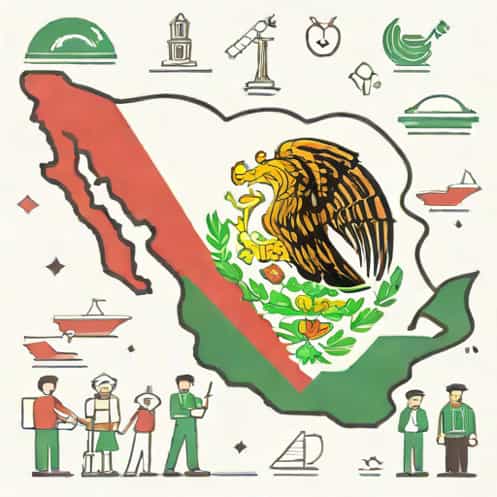
The process of democratization in Mexico represents a significant transformation from decades of authoritarian rule to a more open and competitive political system. For much of the twentieth century, Mexico was dominated by a single party, the Institutional Revolutionary Party (PRI), which maintained political control through a combination of patronage, corporatism, and electoral manipulation. However, social, economic, and political pressures gradually created conditions for democratization. This transition involved complex negotiations, legal reforms, and the emergence of opposition parties capable of challenging PRI dominance. Understanding how Mexico democratized provides insight into the broader processes of political change, the consolidation of democratic institutions, and the role of civic engagement in shaping national governance.
Historical Context of Mexican Politics
Mexico’s political system for much of the twentieth century was characterized by centralized control and limited political competition. Following the Mexican Revolution, the PRI (then known as the National Revolutionary Party) consolidated power, creating a political system that emphasized stability, national integration, and controlled political participation. Although elections were held regularly, they were largely symbolic, with the PRI employing a mix of co-optation, fraud, and influence over the media to maintain dominance. Social organizations, unions, and local elites were incorporated into the state structure, effectively reducing the ability of opposition movements to challenge the regime.
Key Features of Authoritarian Rule
- Single-party dominance under the PRI.
- Controlled electoral processes and limited political competition.
- Co-optation of labor unions and civic organizations.
- Suppression of dissent and opposition through legal and extralegal means.
- Reliance on corporatist structures to maintain social and political order.
Economic and Social Pressures for Change
By the late twentieth century, Mexico faced mounting economic challenges, including financial crises, rising inequality, and stagnating growth. These economic pressures weakened the PRI’s ability to maintain its traditional patronage networks and increased public demand for transparency, accountability, and political participation. Additionally, growing social movements, student activism, and an increasingly informed urban middle class pushed for greater democratic reforms. Economic liberalization policies, such as those associated with NAFTA, also exposed Mexico to international norms that emphasized rule of law, free markets, and democratic governance, further incentivizing political change.
Social Catalysts for Democratization
- Urbanization and the growth of an educated middle class.
- Emergence of grassroots movements advocating for political reform.
- Increased exposure to international democratic norms.
- Media expansion, facilitating information dissemination and political debate.
- Public dissatisfaction with corruption and economic mismanagement.
Legal and Electoral Reforms
Democratization in Mexico was facilitated by a series of legal and electoral reforms that expanded political competition and ensured greater transparency in elections. In the 1980s and 1990s, reforms were introduced to create independent electoral institutions, standardize voting procedures, and prevent election fraud. The establishment of the Federal Electoral Institute (IFE) in 1990 was a landmark development, providing a neutral body to oversee elections, monitor campaign financing, and ensure compliance with electoral law. These reforms gradually increased the legitimacy of the political system and allowed opposition parties to gain meaningful representation in government.
Major Electoral Reforms
- Creation of the Federal Electoral Institute (IFE) to oversee elections.
- Introduction of proportional representation to ensure fairer legislative representation.
- Regulation of political party financing and campaign practices.
- Legal recognition and protection of opposition parties.
- Implementation of transparent vote counting and reporting procedures.
Role of Opposition Parties
Opposition parties played a crucial role in Mexico’s democratization by challenging PRI dominance and providing alternatives to voters. The National Action Party (PAN) and the Party of the Democratic Revolution (PRD) emerged as significant political forces capable of contesting elections at local, state, and national levels. Their persistence, combined with legal reforms and growing public support, culminated in electoral victories that marked a break from decades of single-party rule. The election of Vicente Fox of the PAN as president in 2000 symbolized the success of Mexico’s democratic transition, demonstrating that peaceful, competitive elections could replace authoritarian mechanisms of governance.
Influence of Key Opposition Parties
- National Action Party (PAN) Advocated free-market policies and political transparency.
- Party of the Democratic Revolution (PRD) Promoted social justice and political pluralism.
- Smaller regional parties Increased political competition and representation at state levels.
- Coalitions between opposition parties Strengthened electoral impact against PRI.
- Engagement with civil society to mobilize voter support and awareness.
Challenges During Democratization
Despite significant progress, Mexico’s democratization faced numerous challenges. Political violence, organized crime, corruption, and institutional weaknesses occasionally threatened democratic consolidation. Additionally, unequal economic development and social inequalities created barriers to full political participation for marginalized communities. The transition required careful negotiation among political actors, as well as the continuous strengthening of legal and institutional frameworks to safeguard democracy. Overcoming these challenges was essential to ensure that democratization was sustainable and inclusive.
Persistent Obstacles
- Organized crime and violence undermining public trust in governance.
- Corruption at local and national levels affecting electoral fairness.
- Disparities in political participation among social groups.
- Institutional weaknesses in implementing reforms and laws.
- Resistance from entrenched interests benefiting from prior authoritarian structures.
Impact of Democratization
The democratization of Mexico had profound effects on governance, society, and international relations. Politically, it led to competitive elections, more transparent governance, and greater accountability of public officials. Socially, it empowered citizens to participate in decision-making processes and fostered a culture of political engagement. Internationally, Mexico’s democratic transition enhanced its credibility, trade relations, and participation in global democratic norms. While challenges remain, the democratization process laid the foundation for a more inclusive and accountable political system, demonstrating that long-standing authoritarian regimes can evolve toward democracy under sustained social, political, and legal pressures.
Long-Term Effects
- Competitive multi-party elections at national and local levels.
- Increased civic participation and political awareness among citizens.
- Strengthened institutions capable of upholding rule of law and fairness.
- Greater transparency and accountability in governance.
- Improved international standing and alignment with global democratic standards.
Mexico’s democratization was a complex and multifaceted process shaped by historical, social, economic, and political factors. From decades of PRI dominance to competitive elections and institutional reforms, the country underwent a significant transformation that demonstrated the potential for peaceful political change. Legal reforms, opposition party activism, and civic engagement were instrumental in establishing democratic practices, while challenges such as corruption and inequality required ongoing attention. Mexico’s experience provides a compelling example of how democratization can emerge in a previously authoritarian system, highlighting the importance of legal institutions, political competition, and social pressures in shaping sustainable democracy.