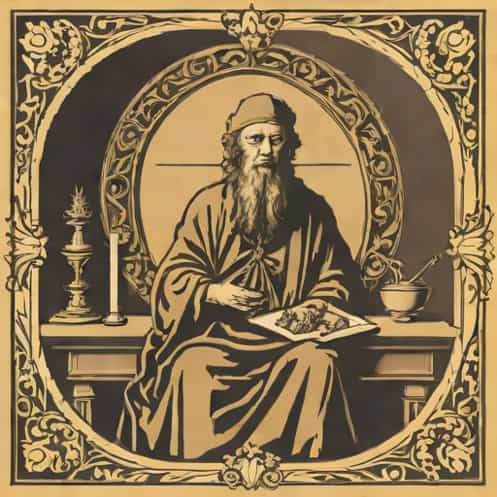
Albrecht Dürer was one of the most influential artists of the German Renaissance, celebrated for his mastery of printmaking, painting, and mathematical precision in art. His detailed woodcuts, engravings, and self-portraits reveal an artist deeply engaged with both science and spirituality. Yet despite his lasting impact on European art, his life ended rather suddenly in 1528, leaving admirers to wonder what illness claimed him in the prime of his creativity. Understanding how Albrecht Dürer died also provides insight into the medical and cultural context of his time, as well as the toll that artistic passion and relentless travel may have taken on his health.
The Final Years of Albrecht Dürer
Albrecht Dürer was born in Nuremberg, Germany, in 1471. By the 1520s, he was already a respected figure across Europe, admired by other artists such as Raphael and Leonardo da Vinci. In 1520-1521, Dürer embarked on a long and exhausting trip to the Netherlands, visiting cities like Antwerp and Brussels to pay homage to Emperor Charles V and to secure his pension as a court artist. During this journey, he reportedly fell ill with a mysterious fever that would continue to trouble him for the rest of his life. Many scholars believe that this illness was the root cause of his eventual death.
The Illness That Never Left Him
Dürer himself documented his declining health in his letters and diary entries. After returning from the Netherlands in 1521, he wrote about suffering from intense fevers, exhaustion, and internal pain. His symptoms were chronic, suggesting that whatever he contracted on that journey was not easily cured. Medical historians have since debated the nature of his illness, offering various theories based on his descriptions and drawings from that time.
Theories About the Cause of His Death
There is no definitive medical record detailing exactly how Albrecht Dürer died, but several leading theories have emerged over the centuries. His symptoms and the historical environment of the early sixteenth century point to a few possible causes
- MalariaMany historians believe Dürer contracted malaria during his travels to the Netherlands. The region’s marshy areas were infested with mosquitoes, which made malaria a common illness. His recurring fevers and fatigue fit well with this diagnosis, as malaria often causes cycles of fever and weakness that can persist for years.
- Typhus or other infectious diseasesAnother possibility is that Dürer was infected with typhus or another bacterial disease common in the early modern period, especially among travelers. Unsanitary conditions, long voyages, and poor nutrition would have made him vulnerable to infection.
- Liver or kidney diseaseSome medical scholars suggest his descriptions of abdominal pain and jaundice could indicate liver or kidney problems, possibly worsened by years of stress, alcohol, or toxic materials used in his artwork.
Dürer’s Own Account of His Condition
In one of his letters, Dürer described the sudden onset of his illness he felt a hot fever while near the Zuiderzee (a coastal region of the Netherlands). He wrote that the fever has so seized me that I am still weak, even after returning to Nuremberg. From then until his death, he often complained of a burning sensation and weakness in his side. This chronic pain suggests a disease that attacked his internal organs rather than a short-term infection.
Medical Understanding in the Renaissance Era
It is important to remember that medical science in Dürer’s time was still heavily influenced by medieval ideas of the four humors-blood, phlegm, yellow bile, and black bile. Illness was often seen as an imbalance of these fluids, and treatment could include bloodletting, herbal remedies, or prayer. Because of this limited understanding, Dürer would not have received effective treatment for a disease like malaria or typhus. He might have endured years of recurring fevers without ever knowing their true cause.
Impact of His Illness on His Work
Despite his poor health, Dürer continued to produce remarkable works in the final years of his life. He focused more on drawings, prints, and theoretical writings rather than large paintings, perhaps because these required less physical exertion. His famous self-portrait from 1522 shows a thinner, paler face, possibly reflecting his deteriorating health. Even so, he remained intellectually active, completing important treatises on geometry and human proportion that solidified his reputation as both an artist and a scientist.
The Death of Albrecht Dürer
Albrecht Dürer died on April 6, 1528, in his hometown of Nuremberg at the age of fifty-six. His death was relatively peaceful, and contemporary accounts suggest that he remained lucid until the end. His wife, Agnes Frey, and close friends were by his side. He was buried in the Johannisfriedhof cemetery, where his tombstone still stands today. The inscription refers to him as the most distinguished painter, a title that reflected the respect he earned across Europe.
Public Reaction and Legacy
News of Dürer’s death spread quickly through artistic circles. His contemporaries mourned the loss of a man who had elevated the status of artists from mere craftsmen to intellectuals. Erasmus of Rotterdam and other scholars praised Dürer for combining art and science, while painters and printmakers studied his methods for generations to come. His influence extended well beyond Germany, shaping the development of Renaissance art across Europe.
Could His Death Have Been Prevented?
In today’s world, Albrecht Dürer’s illness might have been easily diagnosed and treated. If he indeed suffered from malaria, modern antimalarial drugs could have cured him. If it was a bacterial infection, antibiotics would have eliminated it. Unfortunately, in the sixteenth century, such treatments did not exist. Moreover, artists often worked with toxic materials like lead-based pigments and mercury, which could have worsened his condition over time.
The Toll of a Life Dedicated to Art
Constant travel, long hours of work, and exposure to dangerous materials may have weakened Dürer’s immune system. His dedication to his craft, while admirable, came at a personal cost. He was known to work obsessively on fine details, sometimes straining his eyes and body for long hours. This combination of physical exhaustion and chronic illness may have hastened his death.
The Immortality of His Art
Although Albrecht Dürer’s physical life ended in 1528, his influence endures to this day. His engravings such as Melencolia I and Knight, Death and the Devil remain masterpieces of symbolism and technical mastery. His theoretical works on human proportion and geometry also laid the foundation for future studies in art and anatomy. Even in death, his name became synonymous with precision, intellect, and the merging of art with science.
What We Learn from His Life and Death
Dürer’s story reminds us that artistic genius often comes with personal sacrifice. His relentless pursuit of knowledge and perfection may have contributed to his early death, yet it also secured his immortality in the history of art. His life illustrates the fragile balance between human creativity and physical endurance-a theme as relevant today as it was in the Renaissance.
Albrecht Dürer’s death was likely caused by a long-term illness contracted during his travels, possibly malaria or a similar infection. Though the exact cause remains uncertain, his own writings describe persistent pain and fever that lasted for years. Despite his suffering, he continued to create groundbreaking art and scholarship until his final days. His passing marked the end of an era but also cemented his status as one of the greatest artists and thinkers of his time. In the end, while disease may have claimed his body, Albrecht Dürer’s legacy continues to live on through his profound contributions to art, science, and the enduring spirit of human creativity.