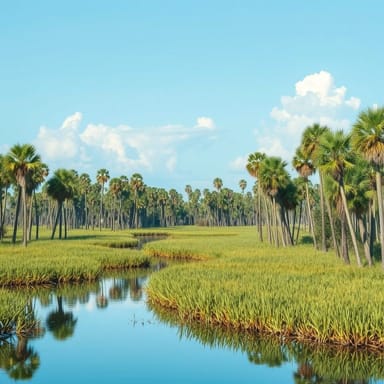
The Everglades in southern Florida is one of the largest and most unique wetlands in the world. Known for its slow-moving water, sawgrass marshes, mangrove forests, and abundant wildlife, this vast region plays a critical role in the ecology of the southeastern United States. Understanding how big the Everglades truly are requires not just numbers but also an appreciation for the diversity of its ecosystems and the importance of its vast, interconnected habitats. The size of the Everglades influences everything from climate patterns to water flow and species conservation across Florida and beyond.
Geographic Scope of the Everglades
Historic Extent of the Ecosystem
Historically, the Everglades covered more than11,000 square miles, stretching from the Kissimmee River near Orlando all the way down to Florida Bay. This slow-moving river of grass once flowed uninterrupted across South Florida, creating a rich and dynamic wetland environment that supported thousands of plant and animal species. The historic boundaries of the Everglades include parts of modern-day Orlando, Lake Okeechobee, the Everglades Agricultural Area, Big Cypress Swamp, Everglades National Park, and the Florida Keys.
Current Size of the Protected Area
Today, due to urban development, agricultural expansion, and canal construction, the Everglades ecosystem has been reduced in size. However, the core protected area still spans a massive region.Everglades National Park alone covers approximately 1.5 million acres, making it the third-largest national park in the continental United States. When you include adjacent protected lands like Big Cypress National Preserve and Water Conservation Areas, the current footprint of preserved Everglades wetlands exceeds2.5 million acres.
Understanding the Scale
Comparison with Other Landmarks
To grasp just how big the Everglades are, consider these comparisons
- The Everglades are larger than the state of Delaware.
- The area is over three times the size of Rhode Island.
- It is larger than Yellowstone National Park.
This comparison helps illustrate why the Everglades is not just a regional feature, but a national ecological treasure with global significance.
Watershed Coverage
The Everglades functions as a vast watershed. Its water flows from Lake Okeechobee through a broad, shallow, and slow-moving river system that stretches southward. This freshwater is essential for recharging aquifers, sustaining agriculture, and protecting biodiversity in South Florida. The hydrological system that supports the Everglades spans about18,000 square mileswhen considering the full watershed, including rainfall collection, recharge zones, and flow paths.
Major Regions Within the Everglades
Sawgrass Marshes
The most iconic part of the Everglades is the endless sea of sawgrass. These marshes dominate much of the central region and can stretch for dozens of miles in every direction. The slow, sheet-like flow of water through the sawgrass supports nesting birds, reptiles, amphibians, and fish.
Mangrove Forests
Along the southern edge, the Everglades transitions into dense mangrove forests. These salt-tolerant trees form one of the largest continuous mangrove ecosystems in the Western Hemisphere, covering over100,000 acres. They provide crucial habitat for fish nurseries, birds, and protect the coastline from storm surges.
Cypress Swamps and Hardwood Hammocks
In the western regions, particularly near Big Cypress National Preserve, cypress domes and strands dominate the landscape. These areas flood seasonally and host a variety of tree species. Interspersed throughout the Everglades are also hardwood hammocks raised islands of trees that support unique flora and fauna.
Florida Bay
The final destination for much of the Everglades’ freshwater is Florida Bay, a vast and shallow estuary with over850 square milesof seagrass beds, mudflats, and coral communities. It serves as a critical transition between freshwater wetlands and the Gulf of Mexico and Atlantic Ocean ecosystems.
Ecological Importance of Its Size
Biodiversity and Habitat Range
The sheer size of the Everglades allows for diverse ecosystems to coexist within one massive landscape. Species like the Florida panther, American alligator, West Indian manatee, and hundreds of bird species rely on the unbroken expanse for breeding, feeding, and migration. If the Everglades were any smaller, these wide-ranging species might not survive.
Climate and Water Balance
The Everglades acts as a natural water filtration system and a carbon sink. Its size allows it to filter rainwater, trap pollutants, and store carbon in its peat-rich soil. By regulating the water cycle and moderating temperatures, the Everglades contributes to regional climate stability.
Flood Control and Storm Protection
Because of its wide area, the Everglades plays a significant role in buffering extreme weather. During hurricanes or heavy rains, its wetlands absorb floodwaters and slow runoff. This protects urban areas in South Florida from costly and dangerous flooding.
Challenges in Maintaining the Ecosystem’s Size
Urban Development
South Florida’s growing population has led to the construction of roads, neighborhoods, and canals that have altered the natural flow of water. Urban expansion continues to pressure the edges of the Everglades and reduces the total area of wetland habitats.
Drainage and Canals
Since the early 20th century, large-scale canal systems were built to drain portions of the Everglades for agriculture and development. While they provided economic benefits, these structures have significantly reduced the size and health of the natural wetlands.
Restoration Efforts
Recognizing the importance of preserving the Everglades, the Comprehensive Everglades Restoration Plan (CERP) was initiated to restore, preserve, and protect the South Florida ecosystem. The plan involves rehydrating parched wetlands, removing barriers to natural water flow, and expanding protected lands. If successful, these efforts could help recover much of the Everglades’ former size and function.
The Everglades is immense not just in terms of physical size, but also in ecological impact and cultural importance. From its current protected area of over 1.5 million acres to its historical footprint that once exceeded 11,000 square miles, this wetland is one of the largest of its kind in the world. Its size enables it to support rich biodiversity, regulate water systems, and withstand environmental challenges. As we continue to face the pressures of climate change and population growth, preserving the full scale of the Everglades becomes even more essential. Understanding how big the Everglades really are is the first step in recognizing their irreplaceable role in Florida’s natural heritage and future.