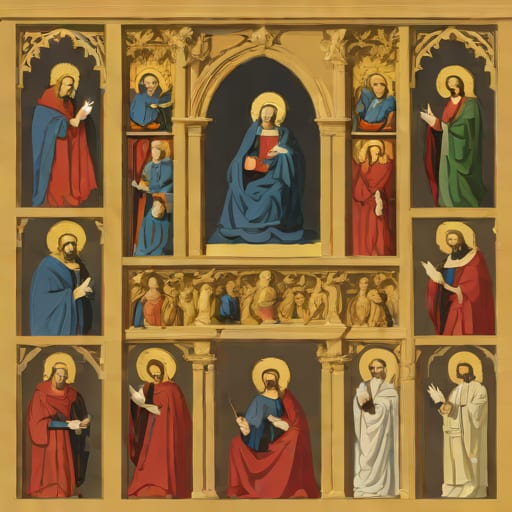
The Ghent Altarpiece stands as one of the most remarkable masterpieces of early Northern Renaissance art, captivating viewers for centuries with its intricate detail, vibrant colors, and profound religious symbolism. Created in the early 15th century, this polyptych has not only influenced generations of artists but also serves as a significant cultural and historical artifact. Commissioned for the Saint Bavo Cathedral in Ghent, Belgium, the altarpiece reflects the skill and innovation of the Van Eyck brothers, Jan and Hubert, whose pioneering use of oil paints and realistic depiction of figures brought a new level of sophistication to European painting. The Ghent Altarpiece’s history encompasses artistic genius, religious devotion, political intrigue, and wartime survival, making it a fascinating subject for art historians, collectors, and visitors from around the world.
Origins and Commission
The Ghent Altarpiece, also known as The Adoration of the Mystic Lamb, was commissioned in the early 1430s by the wealthy merchant and mayor of Ghent, Jodocus Vijd, and his wife, Elisabeth Borluut. The couple intended the work to serve as a centerpiece for their chapel in Saint Bavo Cathedral. Initially, the commission was entrusted to Hubert van Eyck, who began the work, but it was later completed by his younger brother Jan after Hubert’s death. This collaboration resulted in a work that combines meticulous attention to detail with symbolic complexity, reflecting both the devotional purpose and the artistic innovation of the time.
Artistic Innovations
One of the defining features of the Ghent Altarpiece is the Van Eyck brothers’ revolutionary use of oil paint. Unlike tempera, which was commonly used in the 15th century, oil allowed for richer colors, subtle shading, and an unprecedented level of realism. The altarpiece showcases lifelike human figures, intricate drapery, and carefully rendered natural landscapes. The realism of the textures such as the softness of skin, the sheen of fabrics, and the reflective surfaces of jewels was groundbreaking and influenced countless artists in Northern Europe. The work also demonstrates early mastery of perspective, light, and spatial organization, creating a vivid and immersive visual experience for viewers.
Structure and Composition
The Ghent Altarpiece is a large polyptych consisting of multiple panels, with both interior and exterior sections. When closed, the altarpiece presents painted images of the Annunciation, the donors, and saints. When opened, it reveals the central panel depicting the Adoration of the Mystic Lamb, flanked by scenes of prophets, apostles, and angels. The composition is carefully balanced, with a combination of horizontal and vertical alignments that guide the viewer’s eye across the narrative and symbolic elements. The panels are rich in iconography, illustrating theological concepts such as the sacrifice of Christ, the unity of the Church, and the heavenly hierarchy.
Symbolism and Themes
The altarpiece is renowned for its layered symbolism and theological depth. The central Mystic Lamb represents Christ and his sacrificial role in salvation, surrounded by angels, saints, and worshippers from heaven and earth. Various panels depict the prophets and evangelists, illustrating the continuity of divine revelation. Detailed imagery, such as the instruments of the Passion, lush landscapes, and intricate flora and fauna, adds layers of meaning that invite careful contemplation. Each element is designed to communicate spiritual truths, moral lessons, and the glory of God, making the altarpiece a visual sermon as well as an artistic masterpiece.
Historical Challenges and Preservation
The Ghent Altarpiece has faced numerous challenges throughout its long history. During the Protestant Reformation and subsequent periods of religious conflict, the altarpiece was at risk of damage or destruction. It was looted multiple times, including during the French Revolution and both World Wars. In the 20th century, Nazi forces stole parts of the altarpiece, and extensive efforts were required to recover and restore the panels. Modern conservation techniques have helped preserve the vivid colors and delicate details, ensuring that the altarpiece can be appreciated by contemporary audiences while maintaining its historical authenticity.
Restoration and Modern Analysis
Restoration efforts have been essential in maintaining the Ghent Altarpiece’s condition. Experts have carefully cleaned, stabilized, and repaired damaged panels while retaining as much of the original paint as possible. Advanced technologies such as infrared reflectography, X-ray imaging, and pigment analysis have allowed scholars to study the Van Eyck brothers’ techniques and identify underdrawings, revealing insights into the creative process. These analyses have not only enhanced understanding of the altarpiece’s construction but also contributed to the broader field of art history and conservation science.
Cultural and Artistic Impact
The Ghent Altarpiece has had a profound influence on art and culture. Its innovative use of oil paint and realism inspired generations of Northern Renaissance painters, including Rogier van der Weyden, Hans Memling, and Albrecht Dürer. Beyond its technical achievements, the altarpiece has become a symbol of European cultural heritage, reflecting the spiritual and artistic values of 15th-century Flanders. It continues to attract scholars, art enthusiasts, and tourists, who marvel at its intricate details, masterful composition, and profound symbolism. Its presence in Saint Bavo Cathedral also underscores the enduring relationship between art and devotional practice.
Legacy and Continued Relevance
The legacy of the Ghent Altarpiece extends beyond art history. It represents the intersection of religion, politics, and culture, providing insights into the social and spiritual life of medieval Europe. The altarpiece demonstrates how visual art can convey complex theological ideas while engaging viewers emotionally and intellectually. Today, it remains a centerpiece of study in art history courses and a source of inspiration for contemporary artists. Its story of creation, survival, and restoration exemplifies the enduring power of artistic expression and human ingenuity.
The history of the Ghent Altarpiece is a testament to the enduring power of art to convey spiritual and cultural values. From its commission by Jodocus Vijd and Elisabeth Borluut to its creation by the Van Eyck brothers, the altarpiece embodies innovation, devotion, and artistic mastery. Its intricate panels, vibrant colors, and rich symbolism continue to captivate audiences, while its survival through periods of conflict and restoration highlights the resilience of cultural heritage. The Ghent Altarpiece is not only a masterpiece of the Northern Renaissance but also a symbol of the lasting impact of art on human history and consciousness.
By studying the Ghent Altarpiece, we gain more than an appreciation for technical skill and aesthetic beauty; we understand the ways in which art reflects societal values, religious beliefs, and historical circumstances. This polyptych continues to inspire research, admiration, and reflection, ensuring that its story, both visual and historical, remains relevant for generations to come.