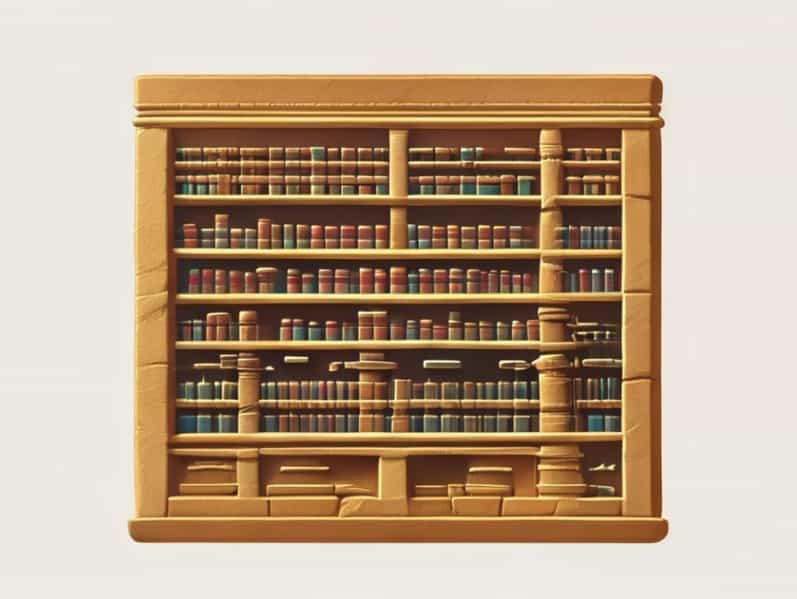
Long before the Library of Alexandria became famous, another great collection of knowledge existed in ancient Mesopotamia the Great Library of Ashurbanipal. Located in the Assyrian capital of Nineveh, this library is considered the world’s oldest known organized library. Built by King Ashurbanipal in the 7th century BCE, it contained thousands of clay tablets inscribed with cuneiform script, preserving an enormous range of texts on science, literature, religion, and politics. The discovery of this ancient library provided modern historians with invaluable insight into early human civilization, including the epic tales that shaped Mesopotamian culture.
Who Was Ashurbanipal?
Ashurbanipal was the last great king of the Neo-Assyrian Empire, ruling from around 668 to 627 BCE. He was not only a skilled military leader but also an intellectual and scholar. Unlike many rulers of his time, Ashurbanipal could read and write both Sumerian and Akkadian, the main languages of Mesopotamia. This literacy gave him a deep appreciation for written knowledge and inspired him to gather texts from across his empire.
He saw his library as more than just a collection of records it was a repository of wisdom meant to preserve the cultural and intellectual achievements of his people. The Great Library of Ashurbanipal was his way of ensuring that the knowledge of ancient civilizations would not be lost to time.
The Creation of the Great Library
During his reign, Ashurbanipal sent scribes and scholars throughout Mesopotamia and neighboring regions to collect important writings. They were instructed to copy or acquire works from temples, archives, and royal libraries. These tablets were brought back to Nineveh and carefully cataloged for storage in the royal palace complex.
The library grew rapidly, housing texts from various fields such as mathematics, medicine, astronomy, law, and literature. It also included religious hymns, historical chronicles, and royal decrees. Each clay tablet was written in cuneiform script and often labeled with the title and author. Some even contained detailed notes by Ashurbanipal himself, showing his personal engagement with the material.
Organization and Structure
The Great Library of Ashurbanipal was meticulously organized a remarkable achievement for its time. Tablets were grouped by subject and stored on shelves within the palace. Many of them bore inscriptions indicating which section they belonged to, similar to modern library cataloging systems. The library’s layout demonstrated a sophisticated approach to information management, centuries before the invention of paper or printed books.
In addition to its scholarly organization, the library served both practical and spiritual purposes. The Assyrians believed that preserving written knowledge pleased the gods and maintained cosmic order. Thus, the library was not only a center of learning but also a sacred space.
Contents of the Library
Archaeologists have uncovered over 30,000 clay tablets and fragments from the ruins of Nineveh, many of which came from Ashurbanipal’s library. These texts covered nearly every aspect of Assyrian life and thought. Some of the most significant discoveries include religious myths, administrative records, and medical texts that demonstrate the advanced understanding of ancient Mesopotamian society.
- The Epic of GilgameshThe most famous text found in the library, this epic poem tells the story of a legendary king’s search for immortality. It is one of the oldest known works of literature in the world.
- Enuma ElishThe Babylonian creation myth, which describes how the world and gods came into being, offering insights into early cosmology and theology.
- Astrological and Astronomical TextsThese include charts, predictions, and observations that show how Mesopotamian scholars studied the heavens to understand divine will and predict events.
- Medical and Herbal ManualsDetailed records of illnesses, symptoms, and treatments that combined both science and religion.
- Legal Codes and Administrative RecordsDocuments outlining laws, taxes, and royal decrees, reflecting the bureaucratic sophistication of the Assyrian Empire.
Preserving Ancient Knowledge
Many of the texts stored in the Great Library of Ashurbanipal were copies of even older Sumerian and Babylonian works. Ashurbanipal’s scribes took great care to duplicate ancient writings accurately, ensuring that the knowledge of previous civilizations survived. This preservation effort makes the library a crucial link between the earliest human writings and later historical periods.
The tablets also contained bilingual texts that translated Sumerian into Akkadian, which helped modern scholars decode the cuneiform system. Without these materials, our understanding of Mesopotamian history, religion, and language would be far more limited today.
The Destruction of Nineveh
In 612 BCE, the city of Nineveh fell to a coalition of Babylonians and Medes, marking the end of the Assyrian Empire. During the siege, much of the city was burned and destroyed. The library, located within the royal palace, suffered heavy damage as well. Many of the clay tablets were shattered or buried under rubble.
Ironically, the fire that destroyed the palace helped preserve the library’s contents. The intense heat from the flames baked the clay tablets, hardening them and making them more durable. This accidental preservation allowed thousands of these ancient documents to survive for over two millennia until their rediscovery in the 19th century.
Rediscovery and Archaeological Excavation
The ruins of Nineveh were rediscovered in the mid-1800s by British archaeologist Austen Henry Layard. His excavations unearthed large numbers of clay tablets from what was once the royal library. Many of these artifacts were transported to the British Museum, where they remain today. Scholars have spent decades translating and studying the texts, unlocking details about ancient Assyrian life and thought.
The discovery of the Great Library of Ashurbanipal was one of the most important archaeological findings in history. It revealed that even thousands of years ago, humans had a strong desire to collect, organize, and preserve knowledge for future generations.
The Legacy of the Great Library
The Great Library of Ashurbanipal is often regarded as the intellectual ancestor of all later libraries. Its influence can be traced to the establishment of other famous centers of knowledge, such as the Library of Alexandria and the great archives of the Greek and Roman worlds. The concept of gathering written works for preservation and study began with efforts like Ashurbanipal’s.
Beyond its historical importance, the library symbolizes humanity’s enduring quest for understanding. It shows that even in an age of kings and empires, learning and scholarship were deeply valued. Ashurbanipal’s dedication to knowledge contrasts sharply with the violence and conquest often associated with his reign, revealing a complex ruler who sought both power and enlightenment.
What the Library Teaches Us Today
The story of the Great Library of Ashurbanipal carries lessons that remain relevant in the modern world. It reminds us of the fragility of knowledge and the importance of preservation. Just as fire and war nearly destroyed the wisdom of Mesopotamia, modern societies face their own challenges in safeguarding information in the digital age.
It also demonstrates how curiosity and scholarship can transcend time. The tablets from Nineveh continue to teach us about humanity’s earliest attempts to understand the universe, record laws, and express imagination through literature and myth.
The Great Library of Ashurbanipal stands as one of humanity’s most remarkable achievements in the preservation of knowledge. Founded by a king who valued intellect as much as power, it became a cornerstone of ancient scholarship and an enduring symbol of civilization’s thirst for wisdom. Through thousands of clay tablets buried beneath the ruins of Nineveh, the voices of Mesopotamian scribes and thinkers still speak to us today. The story of this ancient library not only connects us to the dawn of written history but also reminds us of the timeless human desire to learn, record, and remember.