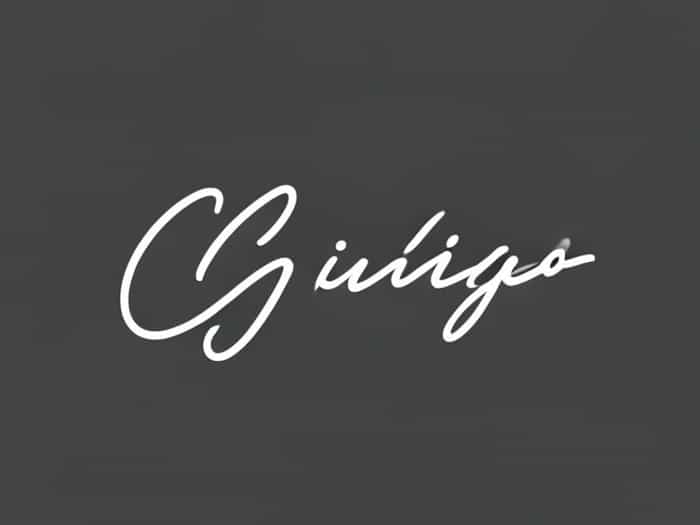
The letter G in cursive writing often stands out as one of the most unique and challenging letters to master. Unlike its print version, which is simple and straightforward, cursive G has a flowing, artistic form that can look quite different depending on the handwriting style being used. Many people who are learning cursive for the first time struggle with this letter, especially the lowercase version, because it combines loops, curves, and connections in a way that requires control and practice. Understanding how to write the cursive G properly helps improve overall penmanship and adds elegance to one’s handwriting.
Understanding Cursive Writing
Cursive writing is a style of penmanship in which letters are connected to one another in a flowing manner. The purpose of cursive is to make writing faster and more efficient, especially when writing long sentences or paragraphs by hand. Each letter has its own design that allows it to join smoothly with others, creating a continuous motion across the page.
The cursive alphabet is typically divided into two parts uppercase and lowercase letters. While some cursive letters look similar to their print versions, others like the letter G are quite distinct. Learning cursive G involves understanding its structure, how it connects to other letters, and how to make it look balanced and legible.
The Appearance of the Uppercase Cursive G
The uppercase G in cursive has a beautiful, decorative form. It resembles a looped shape with an open curve at the top and a tail that swings outward or inward, depending on the writer’s style. This version of G often looks similar to a figure eight that has been slightly opened on one side. It starts with a large loop that curves downward, then connects into a smaller tail or stroke.
Because of its complexity, uppercase cursive G can vary significantly between writing systems. For instance, in some traditional cursive styles, it looks almost like a fancy number 2. In other variations, it appears rounder and more fluid. No matter which version you use, the key is maintaining consistent proportions and smooth movements so that the letter looks elegant rather than forced.
Steps to Write an Uppercase Cursive G
To form a neat uppercase cursive G, follow these steps
- Begin just below the top line of your writing area.
- Make a large loop curving left and upward, then curve back around to the right to form an oval shape.
- Bring the line down and to the left, crossing slightly through the loop.
- Finish with a small tail that curves outward to the right, ready to connect with the next letter if needed.
It may take several attempts to perfect the motion, so practicing slowly at first is recommended. Over time, your hand will develop the muscle memory needed to form the letter smoothly and quickly.
The Lowercase Cursive G
The lowercase cursive g is known for its distinctive loop that extends below the writing line. It’s a combination of a circular shape (like the cursive a) and a descending tail that loops back upward. This letter is elegant but can be tricky for beginners because of its intricate lower loop.
Lowercase cursive g typically begins with a small oval similar to a cursive o. The stroke then descends below the baseline, forming a loop that curves back toward the right before finishing with a gentle exit stroke. This movement requires coordination and even pressure to make the loops look consistent.
Steps to Write a Lowercase Cursive G
Here’s how to write the lowercase cursive g correctly
- Start on the midline and make a small counterclockwise loop, similar to a cursive a or o.
- Once the loop is closed, bring the line down below the baseline.
- Form a rounded loop to the left and curve it back up to the baseline.
- End with a small stroke to the right, allowing the letter to connect to the next one.
When practiced carefully, this form of g becomes one of the most graceful letters in cursive writing. It flows naturally when written correctly and connects seamlessly to letters like e, i, or r.
Common Mistakes When Writing Cursive G
Because the cursive G involves several curves and loops, it’s easy to make small errors that affect its appearance. Some of the most common mistakes include
- Making the loops too large or uneven, which can make the letter look messy.
- Failing to keep consistent slant or alignment with other letters.
- Connecting strokes too abruptly, causing breaks in the flow.
- Applying too much pressure, leading to uneven lines or shaky curves.
These mistakes are normal for beginners, and the best way to fix them is through repetition and patience. Writing slowly while paying attention to shape and proportion will help create smoother, more natural cursive Gs over time.
Different Styles of Cursive G
There are several cursive handwriting styles, and each has its own version of the letter G. The most common are the traditional, modern, and italic cursive styles. While the fundamental structure remains the same, the details can vary slightly depending on the aesthetic of the writing system.
Traditional Cursive
In traditional cursive, the uppercase G is ornate, with large sweeping curves, while the lowercase version has a clear loop below the line. This style emphasizes elegance and formality, making it common in older handwriting guides and formal writing.
Modern Cursive
Modern cursive simplifies the traditional loops and flourishes. The uppercase G may look more like the printed version with only a slight curve, while the lowercase g often features a single-loop tail. This version is easier for everyday writing and is often taught in modern schools.
Italic Cursive
Italic cursive combines slanted, narrow strokes with minimal looping. The uppercase G is more geometric, and the lowercase g often avoids the full lower loop, resulting in a cleaner appearance. This style is favored for its readability and simplicity.
Tips for Improving Your Cursive G
Improving your cursive G requires consistent practice and attention to detail. Here are a few practical tips to help refine your handwriting
- Practice dailyWrite the letter repeatedly to develop muscle memory and fluid motion.
- Use guidelinesLined paper helps maintain consistent letter height and slant.
- Focus on rhythmCursive writing should flow naturally. Avoid stopping abruptly between strokes.
- Watch your pressureKeep pen pressure even to produce smooth, elegant lines.
- Study examplesLook at samples of cursive alphabets to understand proportions and angles.
The Importance of Learning Cursive G
Learning how to write G in cursive isn’t just about handwriting it’s also about developing fine motor skills, hand-eye coordination, and artistic expression. The letter G is particularly useful for practicing control and consistency because it involves both upper and lower loops, along with smooth transitions between strokes.
In addition, cursive writing fosters creativity and personal style. Once you’ve mastered the standard form of the cursive G, you can adapt it to reflect your own handwriting preferences. Whether you prefer rounded, sharp, or flowing forms, each variation contributes to your unique penmanship identity.
Writing the letter G in cursive is both an art and a skill. Its graceful loops and flowing lines make it one of the most distinctive letters in the cursive alphabet. By understanding its structure, practicing the correct strokes, and maintaining steady rhythm and pressure, anyone can master this beautiful letter. Whether you’re learning cursive for the first time or refining your technique, focusing on the cursive G will not only enhance your writing but also deepen your appreciation for the timeless elegance of cursive handwriting.