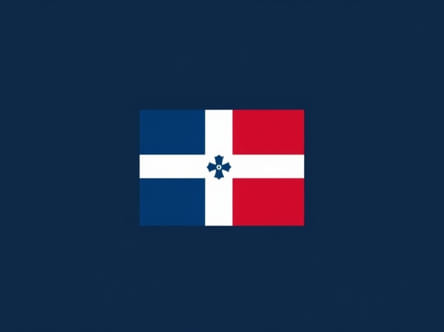
The flag of the Dominican Republic is more than just a symbol of national pride it’s a representation of history, independence, and cultural identity. With its bold colors and distinctive cross design, this flag captures the spirit of a resilient Caribbean nation that has navigated colonial struggles, battles for sovereignty, and a strong sense of unity. The flag is instantly recognizable and plays a prominent role in national celebrations, education, and daily life. From schools and government buildings to festivals and international events, the flag is a constant presence that unites Dominicans both at home and abroad.
Design and Colors of the Flag
Structure and Layout
The flag of the Dominican Republic consists of a centered white cross that divides the flag into four rectangles. The upper left and lower right quarters are blue, while the upper right and lower left are red. This symmetrical pattern is balanced and visually striking, drawing immediate attention and standing out among other national flags.
Symbolic Meaning of the Colors
Each color on the Dominican Republic’s flag holds deep meaning, reflecting the nation’s values and history
- BlueRepresents liberty, the ideals of freedom, and the sky that covers the nation.
- RedSymbolizes the blood shed by patriots in the struggle for independence and the courage of the people.
- WhiteStands for salvation, peace, and unity among Dominicans.
These elements come together to form a flag that reflects both a rich history and a hopeful vision for the future.
The Coat of Arms at the Center
National Emblem Features
One of the most distinctive aspects of the Dominican Republic flag is the inclusion of the national coat of arms in the center, resting at the intersection of the cross. The coat of arms is small but highly detailed, and it includes the following elements
- A shield with the same red, blue, and white colors as the flag
- Two spears with Dominican flags on each side
- Green laurel and palm branches surrounding the shield
- A Bible, traditionally believed to be open to the Gospel of John 832 (And the truth shall make you free)
- A golden cross above the Bible, representing faith and Christian values
- The national motto, Dios, Patria, Libertad (God, Homeland, Liberty), displayed above the coat of arms
The coat of arms is a spiritual and patriotic statement that anchors the flag’s design with strong national identity.
Historical Origins of the Flag
Influence of the Haitian and French Revolutions
The history of the Dominican Republic’s flag is deeply connected to the broader political movements in the Caribbean and Latin America. The initial independence from Haiti in 1844 was a crucial turning point. Dominican leaders wanted to emphasize their cultural and political separation, leading to the development of a distinct flag that would represent the new republic.
Creation by Juan Pablo Duarte
Juan Pablo Duarte, one of the founding fathers of the Dominican Republic, is credited with designing the first version of the flag. His vision was to include symbols of Christianity, freedom, and justice. The original version included elements that still exist in the modern design, including the white cross and the tri-color rectangles.
First Appearance and Adoption
The flag was first raised on February 27, 1844, during the declaration of independence from Haiti. Since then, it has undergone minor modifications, especially to the coat of arms, but the core design has remained consistent. It has been officially recognized as the national flag and is protected by Dominican law.
Flag Etiquette and National Pride
How the Flag Is Displayed
The Dominican Republic has specific protocols regarding how the flag should be treated and displayed. These guidelines are taught in schools and followed during official ceremonies
- The flag must always be flown with the blue quadrant on the upper left.
- It should never touch the ground or be displayed in a torn or worn condition.
- When raised with other flags, it should be placed in the position of honor.
- It must be displayed on national holidays and during important civic events.
Flag Day is celebrated every February 27 to honor the flag and commemorate the country’s independence. Citizens participate by wearing the national colors, singing the anthem, and raising the flag across cities and towns.
Use in Education and Culture
Students in Dominican schools are often required to memorize the history of the flag and recite patriotic oaths. The flag appears on textbooks, government documents, and classroom walls. It also features heavily in parades, festivals, and sporting events, symbolizing unity and national pride.
International Significance
Representation Abroad
The flag of the Dominican Republic is flown proudly at embassies, consulates, and during international sports competitions. It represents not only the country but also the large Dominican diaspora community, especially in the United States and Europe. For many, the flag is a symbol of home, identity, and heritage.
Dominican Flag in Art and Media
In popular culture, the flag often appears in music videos, street murals, and fashion. Artists use it to highlight national pride and to celebrate Dominican culture. It is common to see it displayed during Caribbean heritage events and in communities with strong Dominican presence.
Legal Protection and Modifications
Official Status
The flag is protected under the Dominican Constitution and various national laws. Any misuse, defacement, or disrespect toward the flag can result in penalties. The government has an official office responsible for overseeing the correct use of national symbols.
Changes Over Time
Though the overall layout has remained the same, small changes to the details of the coat of arms have occurred over the years. These have primarily involved adjustments to the size and placement of design elements to maintain balance and clarity. The essence of the flag, however, has remained faithful to its 19th-century origins.
Symbol of Unity and Identity
More Than Just a Flag
To many Dominicans, the flag represents more than governmental authority or national territory it stands for sacrifice, independence, culture, and hope. The combination of red, blue, and white is deeply embedded in the nation’s consciousness. Whether waved at parades, flown from balconies, or stitched onto clothing, the flag is a living part of Dominican identity.
Role in Modern Society
Today, the Dominican flag continues to evolve in its role. It bridges generational gaps and serves as a point of connection among diverse communities. In times of crisis or celebration, the flag brings people together. Its presence affirms that the Dominican Republic is a nation built on courage, faith, and a shared commitment to progress.
With its powerful colors, religious symbolism, and historical weight, the flag of the Dominican Republic remains one of the most meaningful national emblems in the Caribbean. Its story continues to unfold with each new generation, carrying forward the legacy of freedom and unity that it so boldly represents.