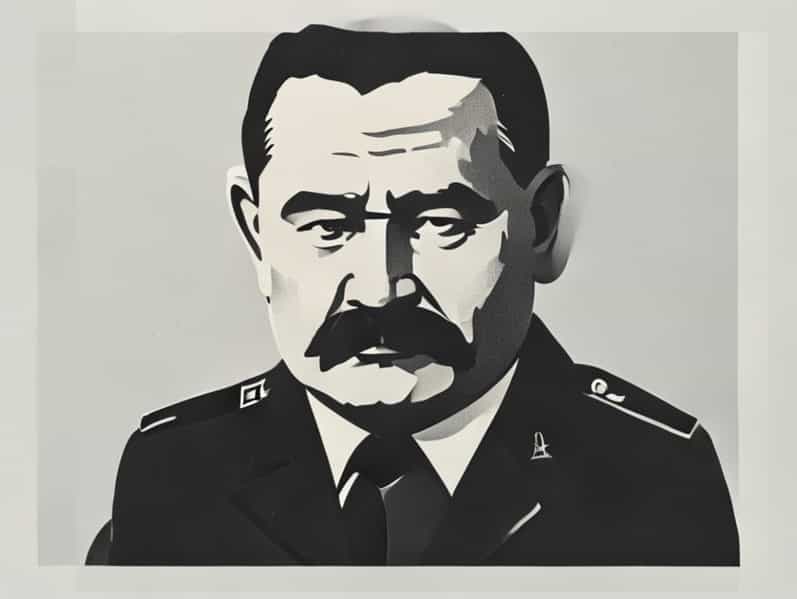
Joseph Stalin remains one of the most controversial and significant figures of the 20th century, shaping the course of Soviet history and global politics. Known for his ruthless leadership and authoritarian control, Stalin’s influence extended across economics, culture, military affairs, and international relations. While his policies helped transform the Soviet Union into a global superpower, they also resulted in widespread suffering and oppression. Learning key facts about Joseph Stalin provides insight into his rise to power, governance strategies, and the lasting impact of his rule on both the Soviet people and the world.
Early Life and Background
Joseph Stalin was born as Ioseb Besarionis dze Jughashvili on December 18, 1878, in Gori, Georgia, then part of the Russian Empire. His early life was marked by poverty and hardship, which shaped his worldview and determination. Stalin’s father was a cobbler, and his mother was a devoutly religious woman who hoped her son would become a priest. Despite this, Stalin rebelled against strict religious education and developed an early interest in revolutionary politics.
Education and Early Influences
Stalin attended a church school and later a theological seminary in Tiflis, where he began reading Marxist literature and engaging in radical politics. His exposure to revolutionary ideas led him to join underground groups that opposed the Tsarist regime. By his early twenties, Stalin was involved in organizing strikes, distributing pamphlets, and engaging in acts of political agitation.
Revolutionary Activity and Arrests
Stalin’s early revolutionary activity brought him into conflict with authorities, resulting in multiple arrests and exiles to Siberia. These experiences hardened his resolve and helped him develop skills in clandestine organization, which later contributed to his rise within the Bolshevik Party. His reputation as a disciplined and ruthless revolutionary began to grow during this period.
Rise to Power
After the 1917 Russian Revolution, Stalin positioned himself strategically within the Bolshevik Party. While others were more publicly recognized, Stalin worked behind the scenes to build alliances, control party structures, and consolidate influence.
Role in the Bolshevik Party
Stalin initially served as the People’s Commissar for Nationalities and later as General Secretary of the Communist Party. The General Secretary position, which he assumed in 1922, gave him control over party appointments and bureaucracy. This administrative power became a key tool for consolidating authority and outmaneuvering rivals like Leon Trotsky.
Consolidation of Authority
Following Vladimir Lenin’s death in 1924, Stalin gradually eliminated opposition within the party through political maneuvering, alliances, and purges. By the late 1920s, he had become the undisputed leader of the Soviet Union, using both propaganda and coercion to strengthen his position. His rise demonstrated his strategic intelligence and ability to manipulate party structures.
Economic and Industrial Policies
One of the defining aspects of Stalin’s rule was his aggressive approach to economic modernization. He implemented policies designed to rapidly transform the Soviet Union from a largely agrarian society into an industrial power.
Collectivization of Agriculture
Stalin introduced collectivization in the late 1920s, forcing peasants to join collective farms. The goal was to increase agricultural productivity and provide surplus food for urban workers. However, this policy led to widespread resistance, famine, and millions of deaths, especially in Ukraine during the Holodomor. Collectivization remains one of the most tragic episodes of his leadership.
Five-Year Plans
The Soviet Union’s first Five-Year Plan, launched in 1928, focused on heavy industry, infrastructure, and energy production. Subsequent plans continued these efforts, aiming to modernize the economy quickly. While industrial output grew significantly, the plans relied on harsh labor practices, forced mobilization, and severe penalties for those who failed to meet quotas.
Political Repression and Purges
Stalin’s rule is also infamous for its political repression. He maintained power through fear, surveillance, and the elimination of perceived enemies within the party, military, and broader society.
The Great Purge
Between 1936 and 1938, Stalin conducted the Great Purge, targeting political rivals, intellectuals, military leaders, and ordinary citizens. Thousands were executed or sent to labor camps known as gulags. This period of mass repression reinforced Stalin’s control but created a climate of paranoia and mistrust across the country.
Secret Police and Surveillance
The NKVD, Stalin’s secret police, played a central role in enforcing loyalty and eliminating dissent. Surveillance, informants, and show trials became common, ensuring that any opposition, real or imagined, could be swiftly punished.
World War II and Leadership
Stalin’s leadership during World War II was pivotal in shaping both the conflict and the postwar world. His role as commander-in-chief of the Red Army had a profound impact on the outcome of the war and on Soviet society.
Initial Challenges and German Invasion
Stalin initially miscalculated Hitler’s intentions, signing a non-aggression pact in 1939. However, in 1941, Nazi Germany launched Operation Barbarossa, invading the Soviet Union. Stalin’s leadership during this crisis involved both military strategy and severe discipline within the army.
Victory and Aftermath
The Soviet Union eventually repelled German forces and played a key role in the Allies’ victory. Postwar, Stalin expanded Soviet influence over Eastern Europe, establishing communist governments across the region and shaping the early stages of the Cold War. His wartime leadership cemented his status as a global power figure but also reinforced authoritarian practices at home.
Impact on Society and Culture
Stalin’s policies transformed Soviet society in many ways, affecting culture, education, and public life. Propaganda glorified his leadership, while censorship controlled artistic and intellectual expression.
State-Controlled Culture
The Soviet state promoted socialist realism in literature, film, and art, ensuring that cultural output reflected party ideals. Education emphasized loyalty to the state, Marxist-Leninist ideology, and technical skills needed for industrial growth.
Legacy of Fear and Control
The extensive use of repression, labor camps, and propaganda created a society marked by fear. Generations lived under surveillance, and dissent was often met with severe punishment, leaving a lasting imprint on the national psyche.
Death and Legacy
Joseph Stalin died on March 5, 1953, from a stroke. His death marked the end of an era characterized by extreme centralization of power, mass repression, and rapid industrialization. The legacy of his rule is complex, combining elements of modernization and development with severe human cost.
Historical Evaluation
Historians continue to debate Stalin’s achievements and failures. He transformed the Soviet Union into a global superpower, yet his methods caused immense suffering. Understanding facts about Joseph Stalin provides insight into the balance between power, ideology, and human consequences in 20th-century history.
Global Influence
Stalin’s policies and leadership style influenced communist movements worldwide, shaping the geopolitical landscape for decades. His rule offers lessons in authoritarian governance, economic planning, and the consequences of unchecked political power.
Interesting Facts
- Stalin’s birth name was Ioseb Besarionis dze Jughashvili.
- He was involved in bank robberies and revolutionary activities before rising to power.
- Stalin spoke Georgian as his first language and learned Russian later.
- He survived several assassination attempts during his leadership.
- Stalin cultivated a personality cult, presenting himself as the father of the nation.
Joseph Stalin’s life and career illustrate both the potential and dangers of concentrated power. From revolutionary beginnings to totalitarian rule, he left a complex legacy that continues to influence historical analysis, political science, and cultural memory. Studying his life highlights the interplay between leadership, ideology, and the human cost of ambition.