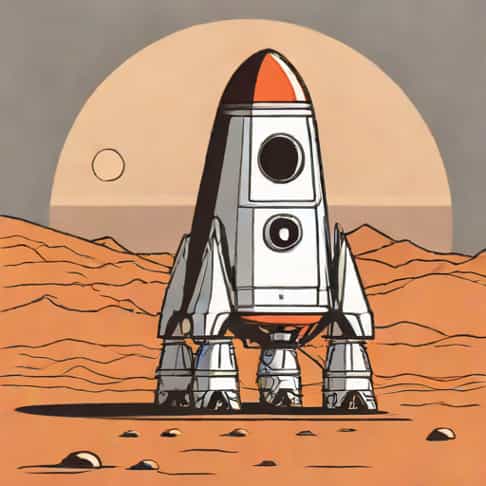
Elon Musk’s plan to colonize Mars has captured global attention, blending visionary thinking with bold engineering goals. Many people view the idea of building a human settlement on another planet as science fiction, yet the steady progress of reusable rockets and long-term space exploration strategies has made the topic increasingly realistic. Musk often describes Mars as humanity’s next frontier, a place where people could build a self-sustaining city capable of surviving independently from Earth. This topic explores the major elements of his vision, the technology behind it, and the challenges that lie ahead, presented in an accessible way for general readers.
The Vision Behind Mars Colonization
At the center of Musk’s plan is the belief that humanity should become a multiplanetary species. The motivation is both inspirational and practical. He argues that expanding beyond Earth increases the chances of long-term survival by protecting humanity from natural disasters, asteroid impacts, or other global risks. In addition, the idea of exploring a new world sparks curiosity, innovation, and progress, much like historical exploration eras on Earth.
Mars is the chosen destination because it has certain similarities to Earth. It has seasons, frozen water, and a day length close to our own. Although living conditions are harsh, scientists and engineers believe that with adequate technology, humans could one day thrive there.
The Role of Starship
One of the main tools in Musk’s plan to colonize Mars is Starship, a fully reusable spacecraft designed to carry large numbers of passengers and cargo. Its development represents a major shift from traditional space travel, which has long relied on expendable rockets. Reusability lowers costs, increases launch frequency, and makes long-term space missions more practical.
Key Features of Starship
- Large capacityDesigned to carry over 100 people per launch.
- Heavy cargo capabilityEssential for transporting supplies, equipment, and building materials to Mars.
- ReusabilityAims to dramatically reduce the cost of traveling to space by reusing both the booster and the spacecraft.
- Interplanetary travelBuilt to handle long-duration missions beyond Earth orbit.
With these features, Starship is envisioned as the backbone of future Mars missions, transporting astronauts, habitats, and machinery needed to establish a permanent settlement.
Phases of the Colonization Plan
The journey to creating a city on Mars involves several phases. Musk outlines a progression from initial scouting missions to large-scale habitation, each step building on previous accomplishments.
Phase 1 Robotic and Uncrewed Missions
The first phase focuses on sending uncrewed Starship missions to Mars. Their purpose is to deliver equipment, test landing procedures, study the environment, and locate essential resources. Machines may begin preparing the site before humans arrive.
Phase 2 First Human Missions
Once the technology proves reliable, the next step involves sending the first crews. These early settlers would set up habitats, deploy life-support systems, install solar panels, and begin the initial infrastructure needed for a long-term base. Safety and sustainability would be top priorities.
Phase 3 Building a Self-Sustaining Settlement
The ultimate goal is to create a self-sustaining Mars city. This includes food production, resource extraction, advanced manufacturing, and local energy generation. A settlement becomes self-sustaining when it can survive without constant supply missions from Earth.
Resources Needed for Survival
Living on Mars requires careful planning because the environment is extremely harsh. Musk’s plan includes strategies for securing essential resources such as air, water, and energy.
Water Sources
Water can be extracted from underground ice or pulled from the atmosphere in small amounts. Once purified, it supports drinking, agriculture, and the production of oxygen and rocket fuel.
Oxygen Production
Oxygen can be generated through electrolysis of water or by using chemical processes that extract oxygen from the carbon dioxide-rich Martian atmosphere. This technology has already been tested in small-scale experiments on Mars rovers.
Food Production
Musk envisions large greenhouses powered by renewable energy. Martian soil may be used after careful treatment, or hydroponic systems could grow crops without relying on traditional soil.
The Transportation Infrastructure
Establishing a colony requires ongoing transport between Earth and Mars. Musk’s plan includes regular launch windows, typically occurring every 26 months when Earth and Mars are closest. This schedule allows fleets of Starships to travel together, carrying settlers and supplies.
Starship’s reusability means the vehicles could make repeated trips, reducing costs and enabling the steady growth of the settlement.
Challenges and Obstacles
While Musk’s plan is ambitious, numerous challenges must be addressed before a Mars colony becomes reality.
Radiation Exposure
Space radiation is one of the greatest threats to human health during interplanetary travel. Musk’s plan includes shielding within Starship and possibly constructing underground habitats to protect settlers from cosmic rays.
Psychological and Social Factors
Living on Mars involves isolation, limited access to Earth, and the stress of surviving in an unfamiliar environment. Communities will need strong support systems, routines, and opportunities for recreation to maintain mental well-being.
Technological Reliability
Every system-from life-support to energy production-must operate continuously and reliably. Failures on Mars can be far more dangerous than those on Earth, making redundancy and maintenance essential.
Cost and Public Support
Colonizing Mars requires enormous investment. Although private funding and commercial launches help reduce costs, long-term support from governments, industries, and the public will influence the pace of progress.
Potential Benefits of Mars Colonization
The concept of a Mars colony offers several possible benefits beyond survival.
Scientific Discovery
Settlements on Mars could dramatically expand our understanding of planetary science, geology, climate, and the possibility of past life.
Technological Innovation
The challenge of building a Mars colony encourages advances in robotics, energy systems, medicine, and materials science-innovations that can also benefit life on Earth.
Long-Term Survival of Humanity
A permanent colony on another planet acts as a safeguard for civilization, preserving human knowledge and culture in the event of global catastrophe.
The Future Outlook
Musk often emphasizes that colonizing Mars will take decades, not years. The plan is not limited to a handful of astronauts; instead, it envisions thousands of people building a functioning city. Whether the timeline is optimistic or realistic remains open to debate, but the steady progress of reusable rockets and Starship prototypes shows that the project continues moving forward.
As technology evolves, the dream of humans living on Mars becomes increasingly possible. While enormous challenges remain, the idea continues to inspire discussion, exploration, and innovative thinking.
Elon Musk’s plan to colonize Mars represents one of the most expansive and daring visions of human exploration in modern history. With Starship as the primary vehicle, the strategy includes phased missions, resource utilization, sustainable living systems, and long-term settlement development. Although significant obstacles remain-ranging from radiation to psychological challenges-the dream of a self-sustaining Mars colony continues to motivate engineers, scientists, and enthusiasts around the world. Whether it happens within our lifetime or further in the future, the pursuit of Mars colonization has already reshaped the goals of space exploration and expanded our sense of what is possible.