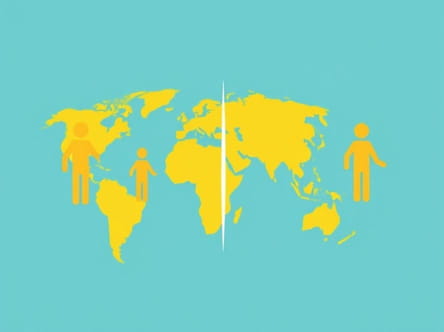
People have been moving from one place to another for centuries, driven by the search for better opportunities, safety, or a new beginning. In discussions about population movement, the terms immigration” and “emigration” frequently appear. Although they are closely related, these terms describe movement from two different perspectives. Understanding the difference between immigration and emigration is essential for grasping broader topics such as demographics, international relations, labor markets, and cultural integration. These concepts are fundamental in geography, economics, and global studies, helping us make sense of the complex patterns of human migration today.
Understanding the Basics of Migration
What Is Migration?
Migration refers to the movement of people from one geographical location to another, often across political or national boundaries. It can be temporary or permanent, voluntary or forced, and it affects both the place people leave and the place they move to. Migration includes both immigration and emigration, which are two sides of the same process.
Types of Migration
- Internal migrationMovement within the same country.
- External migrationMovement across national borders.
- Voluntary migrationChosen freely, often for better opportunities.
- Forced migrationCaused by conflict, disaster, or persecution.
Definition of Immigration
What Does Immigration Mean?
Immigration is the act of entering and settling in a country other than one’s native country. From the perspective of the destination country, individuals are called immigrants. People may immigrate to escape difficult conditions, seek better jobs, obtain education, or reunite with family members. The term focuses on the arrival and integration of newcomers into a host country.
Examples of Immigration
- A person from India moves to Canada to work and live permanently.
- Families fleeing war in Syria arrive in Germany to seek asylum.
- A student from Brazil enters France to study and later gains residency.
Impact of Immigration
Immigration can bring significant benefits to the host country. It may fill labor shortages, diversify culture, and support population growth. However, it can also present challenges such as pressure on public services or cultural tensions, especially if immigration policies are not well managed.
Definition of Emigration
What Does Emigration Mean?
Emigration is the act of leaving one’s home country to settle permanently in another. From the viewpoint of the country being left behind, these individuals are called emigrants. Reasons for emigration can include economic hardship, lack of opportunity, political instability, or environmental factors. The term emphasizes the departure and loss of people from the origin country.
Examples of Emigration
- A young graduate from Nigeria moves to the United Kingdom to start a new career.
- Thousands of citizens leave Venezuela in search of better living conditions abroad.
- A family relocates from the Philippines to the United States for permanent residence.
Impact of Emigration
Countries losing large numbers of citizens may face labor shortages, brain drain, and decreased population growth. However, emigration can also bring positive effects, such as remittances sent back by emigrants and reduced unemployment pressures.
Key Differences Between Immigration and Emigration
Conceptual Perspective
The primary difference between immigration and emigration lies in perspective. Immigration focuses on entering a new country, while emigration refers to exiting one’s homeland. They are two parts of the same process, described from opposite viewpoints destination versus origin.
Simple Comparison
| Aspect | Immigration | Emigration |
|---|---|---|
| Direction | Into a country | Out of a country |
| Perspective | From the host country’s point of view | From the home country’s point of view |
| Term for the Person | Immigrant | Emigrant |
| Common Reasons | Opportunities, safety, family reunification | Escape from hardship, better future elsewhere |
Why the Difference Matters
In Policy and Law
Governments create immigration laws to control who enters their country and under what conditions. These policies influence population demographics, labor markets, and international relations. Emigration, on the other hand, affects the policies of the sending country, especially in managing its workforce and diaspora relations.
In Economic Analysis
Economists distinguish between immigration and emigration to assess impacts on labor supply, income distribution, and economic growth. Countries receiving immigrants often benefit from increased productivity, while countries with high emigration may depend on remittances to support their economy.
In Social Understanding
The terms help describe different experiences and emotions. Immigrants may face challenges of assimilation and identity in their new country. Emigrants often deal with nostalgia and the challenges of starting over. Recognizing the difference enhances empathy and informed discussion about migration issues.
Migration Trends Around the World
High Immigration Countries
- United States
- Canada
- Germany
- Australia
- United Arab Emirates
High Emigration Countries
- India
- Mexico
- Philippines
- Syria
- Ukraine
These trends shift over time based on economic conditions, conflicts, climate change, and government policies. Accurate terminology is vital when analyzing migration data or crafting effective solutions to global population shifts.
The terms immigration and emigration are closely linked but carry different meanings depending on the perspective taken. Immigration refers to the act of arriving and settling in a new country, while emigration focuses on leaving one’s home nation to live elsewhere. Both processes are part of the larger phenomenon of migration and play critical roles in shaping societies, economies, and cultures around the world. Understanding the difference between immigration and emigration not only improves communication and education but also contributes to informed policy-making and global awareness. Whether you’re a student, policymaker, or curious observer, distinguishing these terms helps build a clearer picture of human movement across our ever-changing planet.