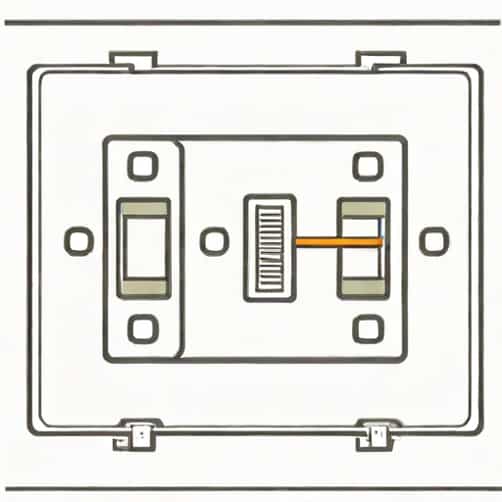
Electrical safety is a critical aspect of any home, office, or industrial setup. Two of the most common devices used to protect electrical circuits are fuses and circuit breakers. Both serve the purpose of preventing damage caused by overcurrent, short circuits, or electrical faults, but they operate differently and have distinct characteristics. Understanding the difference between a fuse and a circuit breaker is essential for electricians, engineers, and homeowners who want to maintain safe and efficient electrical systems. This topic explores the principles, types, advantages, disadvantages, and applications of fuses and circuit breakers in detail.
What Is a Fuse?
A fuse is a protective device designed to break an electrical circuit when the current exceeds a specific limit. It contains a thin metal wire or strip that melts when the current surpasses the rated capacity, thereby interrupting the flow of electricity. Fuses are simple, inexpensive, and widely used for basic electrical protection in residential and small commercial applications.
How a Fuse Works
- The fuse wire is rated for a certain current. If the current exceeds this rating, the wire heats up and melts.
- Melting of the wire opens the circuit, stopping the flow of electricity and preventing damage to appliances or wiring.
- Once a fuse blows, it must be replaced with a new one of the same rating to restore the circuit.
Types of Fuses
- Cartridge Fuse Cylindrical fuse used in household or industrial circuits.
- Blade Fuse Commonly used in automobiles and low-voltage applications.
- Glass Fuse Transparent fuse allowing visual inspection of the fuse wire.
- Fast-Acting Fuse Responds quickly to sudden overcurrents, protecting sensitive electronics.
- Time-Delay Fuse Allows temporary current surges without blowing, suitable for motors or inductive loads.
Advantages of Fuses
- Simple and cost-effective
- No maintenance required besides replacement after blowing
- Reliable for preventing overcurrent damage
- Fast response for sudden surges
Disadvantages of Fuses
- Single-use; must be replaced after blowing
- Cannot be reset like a circuit breaker
- Inconvenient for frequent faults or in critical applications
What Is a Circuit Breaker?
A circuit breaker is an automatically operated electrical switch designed to protect an electrical circuit from damage caused by overcurrent, short circuit, or overload. Unlike a fuse, a circuit breaker does not melt but mechanically interrupts the circuit. Circuit breakers can be reset after tripping, either manually or automatically, without the need for replacement. They are widely used in modern residential, commercial, and industrial installations due to their convenience and reliability.
How a Circuit Breaker Works
- Circuit breakers detect excess current using thermal, magnetic, or electronic mechanisms.
- When the current exceeds the rated capacity, the breaker trips, opening the circuit.
- After the fault is cleared, the breaker can be reset manually or automatically to restore power.
Types of Circuit Breakers
- Miniature Circuit Breaker (MCB) Protects low-voltage residential circuits from overload and short circuits.
- Molded Case Circuit Breaker (MCCB) Suitable for medium voltage applications and higher current ratings.
- Earth Leakage Circuit Breaker (ELCB) Detects leakage current to protect against electric shocks.
- Air Circuit Breaker (ACB) Used in industrial settings with high current requirements.
- Hydraulic Magnetic Breaker Uses magnetic and hydraulic principles for tripping, common in sensitive electrical equipment.
Advantages of Circuit Breakers
- Can be reset without replacement
- Provides reliable protection for both overload and short circuits
- Offers additional features like ground fault protection
- Convenient for repeated tripping situations
- Enhances safety and reduces downtime
Disadvantages of Circuit Breakers
- Higher initial cost compared to fuses
- More complex construction may require maintenance
- Slower response to very short, sudden surges in some designs compared to fast-acting fuses
Key Differences Between Fuse and Circuit Breaker
While fuses and circuit breakers serve the same primary function-protecting electrical circuits-their mechanisms, usability, and applications differ significantly.
Operation
- Fuse Melts the metal wire to break the circuit during overcurrent.
- Circuit Breaker Mechanically opens the circuit using thermal, magnetic, or electronic detection.
Reusability
- Fuse Single-use; must be replaced after blowing.
- Circuit Breaker Can be reset multiple times without replacement.
Response Time
- Fuse Responds very quickly to sudden surges or short circuits.
- Circuit Breaker Slightly slower, depending on type and mechanism, but provides adjustable protection.
Cost
- Fuse Low initial cost, cheap to replace.
- Circuit Breaker Higher upfront cost but more convenient in the long term.
Applications
- Fuse Used in simple household circuits, small appliances, and automotive applications.
- Circuit Breaker Common in modern residential wiring, commercial buildings, and industrial setups requiring repeated use.
Maintenance
- Fuse Minimal maintenance; only requires replacement after failure.
- Circuit Breaker Requires occasional inspection and testing for mechanical and electrical integrity.
Both fuses and circuit breakers play vital roles in protecting electrical systems from overcurrent and short circuits. Fuses are simple, cost-effective, and fast-acting devices that are ideal for basic applications and situations where replacement is not frequent. Circuit breakers, on the other hand, offer resettable, reliable, and versatile protection, suitable for modern residential, commercial, and industrial environments. Understanding the differences in operation, reusability, cost, response time, and applications helps users and professionals choose the right protective device for each electrical system. Selecting the appropriate device enhances safety, prevents equipment damage, and ensures continuity of power supply, making electrical systems safer and more efficient.