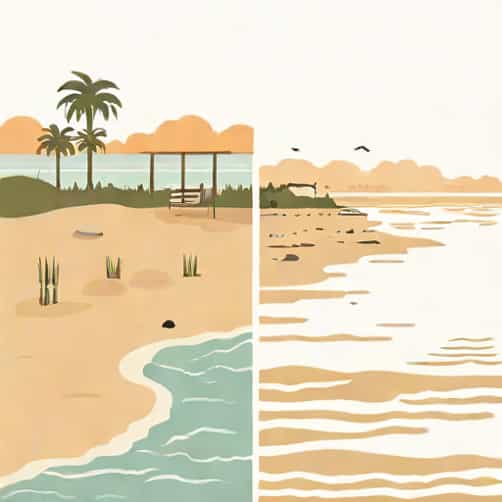
The dynamic interface between land and sea is a fascinating area of study in coastal geography, and understanding the different zones along a shoreline is essential for both environmental management and scientific research. Two key zones often discussed are the foreshore and the backshore. While these terms may appear technical, they play an important role in explaining how coastlines develop, how waves interact with the land, and how human activity can impact these fragile environments. The foreshore and backshore each have distinct characteristics, functions, and ecological significance, making them crucial for anyone interested in coastal studies, beach management, or environmental conservation.
Defining the Foreshore
The foreshore is the area of a beach that lies between the high tide mark and the low tide mark. This zone is regularly exposed to tidal actions, meaning it is alternately submerged under water and revealed to the air depending on the tides. Because of its constant interaction with waves, the foreshore experiences continuous erosion and deposition, which shapes the beach profile and influences sediment distribution. The foreshore is generally sloping and can vary in width depending on tidal ranges, wave energy, and coastal topography.
Characteristics of the Foreshore
- Regularly submerged and exposed due to tidal cycles.
- Subject to wave action, erosion, and deposition of sediments.
- Typically sloped, with sediment size often coarser near the low tide mark and finer toward the high tide mark.
- Supports specific flora and fauna adapted to frequent water coverage, such as crabs, sand hoppers, and certain seaweeds.
- Highly dynamic and changes seasonally depending on weather and tidal patterns.
Defining the Backshore
The backshore is the area of the beach that lies above the high tide mark and is only affected by waves during exceptionally high tides, storms, or tsunamis. Unlike the foreshore, the backshore remains dry under normal tidal conditions, making it less dynamic and more stable. This zone often contains dunes, berms, and vegetation, which serve as natural barriers against coastal erosion. Because the backshore is not regularly submerged, it is also commonly used for human recreational activities such as sunbathing, walking, and picnicking.
Characteristics of the Backshore
- Typically remains dry except during extreme weather events or storm surges.
- Contains sand dunes, berms, and other depositional features.
- Often stabilized by vegetation that prevents erosion and supports biodiversity.
- Provides a buffer zone protecting inland areas from wave action.
- More accessible and frequently used for recreational purposes.
Key Differences Between Foreshore and Backshore
While the foreshore and backshore are both parts of the beach environment, they differ significantly in their exposure to water, sediment characteristics, ecological roles, and human usage. These differences are essential for coastal management, erosion control, and environmental planning.
1. Exposure to Water
The most fundamental difference is water exposure. The foreshore is regularly inundated with seawater, while the backshore remains dry under normal tidal conditions. This distinction affects not only the physical processes but also the types of organisms that can thrive in each zone.
2. Sediment and Beach Profile
The foreshore often has finer, wet sediments closer to the high tide line and coarser, wetter sand near the low tide mark due to wave sorting. The backshore, being less affected by waves, usually has drier and more stable sand, and it often supports features like dunes and berms, which are less common in the foreshore.
3. Ecological Significance
The foreshore is a highly dynamic habitat supporting marine and intertidal species. In contrast, the backshore supports terrestrial plants and animals that rely on more stable conditions. Vegetation in the backshore, such as beach grasses, plays a crucial role in stabilizing sand dunes and preventing erosion, contributing to overall coastal resilience.
4. Human Use and Management
The foreshore is less suitable for human recreation due to its regular submersion and shifting sands. In contrast, the backshore is more stable and commonly used for recreational activities. Coastal managers often focus on protecting the backshore from development or excessive trampling to maintain its protective and ecological functions.
Importance of Understanding Foreshore and Backshore
Recognizing the differences between foreshore and backshore is not just an academic exercise; it has practical implications for coastal management. By understanding how these zones function, planners can implement effective measures to prevent erosion, preserve biodiversity, and balance human usage with environmental conservation. For example, protecting vegetation in the backshore can significantly reduce the impact of storm surges on inland areas, while monitoring sediment movement in the foreshore can inform beach nourishment projects.
Applications in Coastal Management
- Erosion ControlUsing natural features like dunes and vegetation in the backshore to mitigate erosion.
- Beach NourishmentUnderstanding sediment movement in the foreshore helps plan artificial replenishment projects.
- Habitat ConservationProtecting intertidal species in the foreshore and terrestrial species in the backshore.
- Recreational PlanningAllocating safe areas for tourism and beach activities while minimizing ecological impact.
- Risk ManagementPreparing for storm surges and extreme weather events by recognizing vulnerable zones.
The foreshore and backshore are two distinct yet interconnected zones of the coastal environment, each with unique characteristics, ecological significance, and roles in coastal processes. While the foreshore is regularly exposed to tidal action and supports dynamic marine habitats, the backshore remains mostly dry and provides stability, protection, and space for vegetation and human activities. Understanding these differences is essential for environmental management, urban planning, and sustainable use of coastal areas. Effective management and conservation strategies rely on detailed knowledge of both zones to protect shorelines, support biodiversity, and maintain the balance between natural processes and human needs.