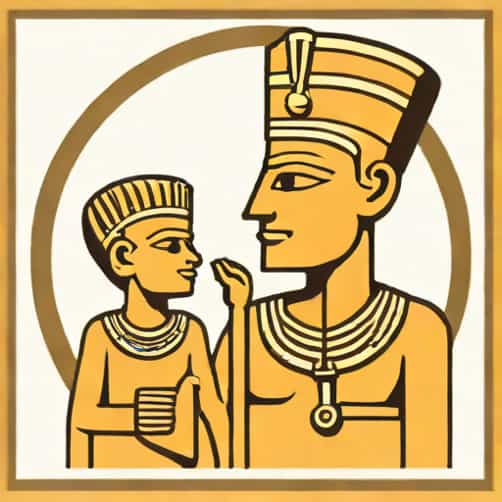
Amenhotep II, the seventh pharaoh of Egypt’s Eighteenth Dynasty, was known not only for his military strength and athletic abilities but also for his role in maintaining Egypt’s stability during one of its most prosperous periods. However, many people are curious about his personal life, particularly his family and children. The question Did Amenhotep II have kids? opens a fascinating window into the royal family dynamics of ancient Egypt, where succession, lineage, and divine inheritance were central to the identity of a ruler. Understanding his descendants helps historians trace the continuity of the Thutmosid dynasty and the political power that defined the New Kingdom era.
The Royal Lineage of Amenhotep II
Amenhotep II was the son of Thutmose III, one of Egypt’s greatest warrior kings, and Queen Merytre-Hatshepsut. As the heir to a powerful dynasty, Amenhotep II inherited a strong and established empire. His reign, which lasted approximately from 1427 to 1401 BCE, was marked by stability and continuity. Pharaohs of this era considered their bloodline sacred, as kingship was believed to be divinely ordained. This made the existence of heirs not just a personal matter but a political necessity to ensure Egypt’s future and preserve divine legitimacy.
Marriage and Family Life
Although not much is known about Amenhotep II’s queen or wives, historical evidence suggests that he likely had multiple consorts, as was customary among Egyptian kings. Royal marriages were often strategic, intended to secure alliances and strengthen dynastic claims. Some records indicate that Amenhotep II may have been married to a woman named Tiaa, who later became known as the mother of his successor. This relationship was crucial because it continued the royal bloodline into the next generation.
Children of Amenhotep II
Yes, Amenhotep II had children, and among them, one son would become one of Egypt’s most famous rulers Thutmose IV. Historical inscriptions, tomb carvings, and archaeological findings provide insights into the lives of his children, though complete details are limited. Egyptian royal families often kept detailed records of lineage and divine succession, but over the centuries, many have been lost or damaged.
Thutmose IV – The Heir and Successor
The most well-known child of Amenhotep II was Thutmose IV. He succeeded his father as Pharaoh and ruled during a period of peace and prosperity. Thutmose IV is perhaps best remembered for the famous Dream Stele, which stands between the paws of the Great Sphinx at Giza. According to this inscription, the young prince fell asleep at the base of the Sphinx and dreamed that the great statue promised him the throne of Egypt if he would clear away the sand that buried it. This story not only legitimized his rule but also hinted at possible struggles for succession, suggesting that Thutmose IV might not have been the first in line originally.
Other Possible Sons and Daughters
While Thutmose IV is the most clearly identified child, historians believe that Amenhotep II likely had several other sons and daughters. Ancient Egyptian records occasionally mention king’s sons and king’s daughters without specific names, making it difficult to determine their exact identities. Some tomb inscriptions refer to princes or princesses who might have been his children, though none achieved the prominence of Thutmose IV. It was common for royal sons to serve in priestly or military roles, while daughters often became priestesses or were married into influential families to secure alliances.
The Role of Royal Children in Ancient Egypt
Children of pharaohs like Amenhotep II were not ordinary citizens-they were symbols of divine continuity. Sons of the king were educated in religion, administration, and warfare, preparing them for potential leadership. Daughters, on the other hand, often held ceremonial titles and played important roles in temple rituals. In some cases, royal women wielded significant influence in court politics. Therefore, the children of Amenhotep II would have been raised with immense expectations, each carrying the responsibility of upholding the dynasty’s power and prestige.
Education and Training of the Royal Heirs
From an early age, royal sons were trained in the arts of leadership. They learned to read and write hieroglyphs, studied mathematics, and were taught religious doctrines that reinforced their divine connection to the gods. Physical training was also essential-Amenhotep II himself was renowned for his athleticism, particularly his skills in archery and chariot driving. It is very likely that his sons were expected to follow in his footsteps, excelling in strength and strategy to demonstrate their worthiness as heirs to the throne.
Thutmose IV’s Rule and the Legacy of Amenhotep II
When Thutmose IV ascended to the throne, he carried forward many of his father’s traditions. His reign is often seen as a continuation of Amenhotep II’s policies, with an emphasis on diplomacy rather than conquest. The strong foundation laid by Amenhotep II allowed his son to focus more on internal development and monumental construction. Temples and inscriptions from Thutmose IV’s era show reverence toward his father, indicating a respectful and stable succession. This smooth transition of power demonstrates that Amenhotep II’s legacy lived on through his children, ensuring the dynasty’s endurance.
Possible Descendants Beyond Thutmose IV
Though direct records are scarce, it is believed that Amenhotep II’s bloodline continued beyond Thutmose IV. Some scholars trace connections between Amenhotep II and later pharaohs, including Amenhotep III, who would go on to preside over one of Egypt’s most glorious periods. This continuity underscores the strength of the Thutmosid line and its importance in shaping Egypt’s cultural and political history.
The Importance of Heirship in the Eighteenth Dynasty
For Amenhotep II and other pharaohs of his time, having children-especially sons-was vital for maintaining dynastic stability. Egypt’s belief in divine kingship made it essential for each ruler to produce an heir capable of preserving both political and spiritual order. The royal lineage was not merely a matter of inheritance; it was considered part of the cosmic balance known as Ma’at, the principle of harmony that governed Egyptian life. Failure to produce an heir could lead to chaos, civil conflict, or the rise of rival claimants.
Religious Symbolism of the Pharaoh’s Family
In Egyptian religion, the king was seen as the earthly representative of the gods, particularly Horus, the son of Osiris. Therefore, the relationship between father and son within the royal family carried deep spiritual significance. Amenhotep II, as Horus on earth, passed his divine essence to Thutmose IV, ensuring the eternal cycle of kingship. This religious symbolism reinforced the political legitimacy of each successive ruler.
The Legacy of Amenhotep II’s Children
Amenhotep II did have children, with Thutmose IV standing out as his most prominent and historically significant son. While the names and details of his other children remain uncertain, their existence was vital to maintaining the strength of Egypt’s royal house. Through his heirs, Amenhotep II’s influence extended well beyond his own reign, shaping the future of the Eighteenth Dynasty and contributing to the cultural richness of ancient Egypt. His descendants carried forward his legacy of leadership, faith, and continuity, ensuring that the golden age of the New Kingdom would endure for generations to come.
Summary of Key Points
- Amenhotep II was the son of Thutmose III and father of Thutmose IV.
- His queen was likely Tiaa, who played a key role in royal succession.
- He had several children, though most remain unidentified.
- Thutmose IV’s Dream Stele connects his rule to divine promise and legitimacy.
- Amenhotep II’s children helped secure the stability and continuity of the Eighteenth Dynasty.
Through his offspring, Amenhotep II’s royal line continued to guide Egypt’s destiny, symbolizing the enduring power of heritage, faith, and leadership that defined one of the greatest civilizations in human history.