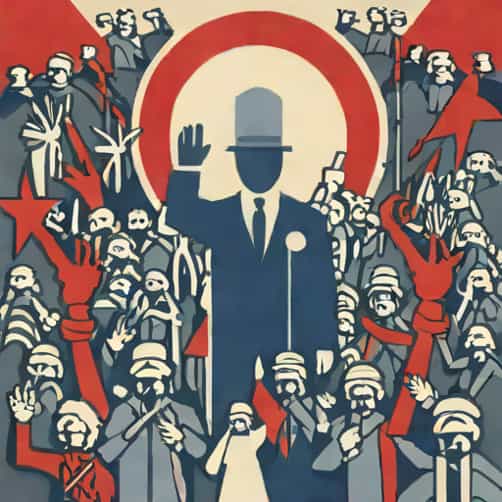
The 1989 revolution in Czechoslovakia stands as one of the most remarkable examples of a peaceful transition from a totalitarian regime to democracy. Often referred to as the Velvet Revolution, this period of social and political upheaval transformed the country without the widespread violence that characterized many other uprisings around the world. Citizens, students, and intellectuals came together to demand freedom, justice, and democratic governance, ultimately ending more than four decades of communist rule. The revolution’s nonviolent approach, strategic demonstrations, and emphasis on dialogue highlight its unique place in modern history, demonstrating the power of peaceful civic action in shaping political change.
Background Czechoslovakia Under Communist Rule
After World War II, Czechoslovakia fell under Soviet influence, and by 1948, a communist government was firmly established. For over forty years, the state tightly controlled political life, media, and economic systems. Citizens faced censorship, limited personal freedoms, and a lack of political representation. While the regime promoted industrial growth and social programs, these came at the cost of civil liberties and human rights. Discontent simmered under the surface, particularly among students, intellectuals, and workers who were increasingly frustrated by economic inefficiencies and political repression. By the late 1980s, the momentum for change began to build as reform movements and broader societal dissatisfaction grew stronger.
The Spark of the Velvet Revolution
The immediate trigger of the Velvet Revolution came in November 1989, inspired by broader changes in Eastern Europe and the fall of communist regimes in neighboring countries. The visit of students and intellectuals to public gatherings, along with protests sparked by the treatment of dissidents, galvanized citizens across the country. Demonstrations began in Prague, the capital, with tens of thousands of people demanding political reform and the resignation of the communist leadership. The movement quickly gained momentum, spreading to other cities and drawing people from all walks of life, united by a desire for freedom and democracy.
Key Figures and Organizations
The Velvet Revolution was marked by the leadership of prominent figures and organizations that advocated for peaceful change. Civic Forum, led by playwright and dissident Václav Havel, became the primary organization coordinating protests and dialogue with the government. Havel’s leadership emphasized nonviolent resistance, clear demands for democratic reforms, and strategic negotiation with the existing authorities. Alongside Civic Forum, student organizations played a critical role in mobilizing citizens, organizing marches, and communicating the goals of the movement. Their coordination ensured that demonstrations remained peaceful, avoiding the violent confrontations seen in other revolutions.
Nonviolent Strategies and Methods
The success of Czechoslovakia’s 1989 revolution largely stemmed from its commitment to nonviolent methods. Unlike armed uprisings or coups, citizens relied on civil disobedience, mass demonstrations, and symbolic acts to pressure the government. Some of the key strategies included
- Mass demonstrationsCrowds gathered in public squares, chanting slogans, singing patriotic songs, and displaying banners advocating for democracy.
- Student strikesUniversities and schools were central hubs for organizing protests, with students refusing to attend classes in solidarity.
- Media engagementDissident groups and independent journalists circulated information to counter state propaganda and educate the public about political alternatives.
- Negotiation and dialogueCivic Forum engaged with government officials to negotiate reforms, demonstrating that peaceful communication could yield political concessions.
Government Response
Initially, the communist regime attempted to suppress protests through intimidation, including arrests and threats. However, the sheer scale of demonstrations and the nonviolent discipline of the protesters limited the government’s options. Security forces were reluctant to use lethal force against peaceful demonstrators, particularly as international attention focused on the events unfolding in Prague and other cities. Over several weeks, the government gradually acknowledged the legitimacy of the movement, agreeing to engage in negotiations and eventually resigning key leaders, paving the way for democratic transition.
The Role of Václav Havel
Václav Havel, a renowned playwright and outspoken critic of the communist regime, emerged as the symbolic and political leader of the Velvet Revolution. His commitment to nonviolence, human rights, and democratic principles inspired both domestic and international support. Havel’s speeches and writings articulated the aspirations of the Czech people, providing moral guidance and strategic direction for the movement. In December 1989, following the resignation of President Gustáv Husák, Havel was elected as the first non-communist president of Czechoslovakia in over four decades, symbolizing the triumph of the revolution and the beginning of a new democratic era.
Impact on Czechoslovakia and Eastern Europe
The Velvet Revolution had profound effects on Czechoslovakia, both politically and socially. It restored civil liberties, allowed free elections, and enabled the formation of new political parties. Economically, the country began transitioning from a state-controlled system to a market economy, introducing reforms to stimulate growth and investment. Culturally, the revolution revived freedom of expression, encouraging literature, arts, and public discourse that had been suppressed under communist rule. Additionally, Czechoslovakia’s peaceful transition served as a model for other Eastern European countries undergoing similar transformations, demonstrating the effectiveness of nonviolent civic movements.
Lessons from the Velvet Revolution
The 1989 revolution in Czechoslovakia provides important lessons for understanding the dynamics of peaceful political change. These include
- Nonviolent strategies can successfully challenge entrenched regimes when combined with organization, leadership, and widespread public support.
- Dialogue and negotiation, even with authoritarian governments, can lead to meaningful reform without bloodshed.
- Grassroots movements, including students, intellectuals, and civic organizations, play a crucial role in mobilizing society for democratic change.
- Symbolic acts and cultural expression, such as literature and public speeches, can reinforce the legitimacy and moral authority of a movement.
Czechoslovakia’s nonviolent 1989 revolution, or Velvet Revolution, remains a powerful example of how citizens can achieve political change without resorting to violence. Through strategic organization, committed leadership, and widespread civic participation, the people of Czechoslovakia peacefully dismantled decades of authoritarian rule and ushered in a democratic era. The revolution’s success highlighted the effectiveness of nonviolent resistance, the importance of dialogue, and the capacity of ordinary citizens to shape the course of history. Today, the Velvet Revolution is remembered not only for its historical impact but also as a testament to the enduring power of peaceful civic action in transforming societies.