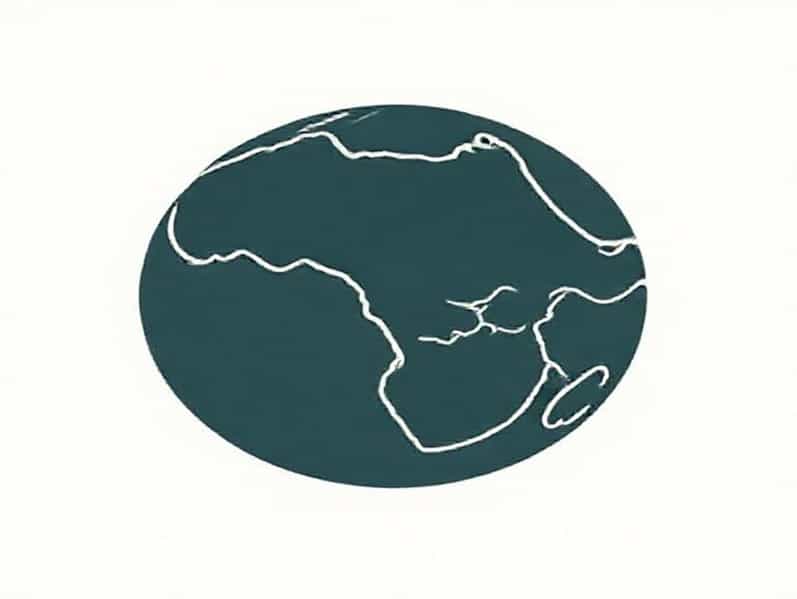
Millions of years ago, long before the continents we know today existed, the Earth’s surface was dominated by two massive supercontinents Gondwana and Laurasia. These ancient landmasses played a crucial role in shaping the planet’s geological, biological, and climatic history. Understanding Gondwana and Laurasia gives us valuable insights into continental drift, plate tectonics, and the evolution of life on Earth. Their story is one of movement, transformation, and the incredible power of natural forces that continue to shape our world.
The Origins of Gondwana and Laurasia
The story of Gondwana and Laurasia begins with Pangaea, a single supercontinent that existed around 335 million years ago during the late Paleozoic era. Pangaea brought together almost all of Earth’s landmasses into one giant continent surrounded by a vast ocean called Panthalassa. However, Pangaea did not last forever. Around 200 million years ago, during the Jurassic period, the immense forces of plate tectonics began to break it apart.
The process of continental drift led to the division of Pangaea into two large landmasses Gondwana in the south and Laurasia in the north. This split marked a turning point in Earth’s history, influencing the distribution of species, the formation of new oceans, and the future arrangement of continents as we know them today.
Gondwana The Southern Supercontinent
Gondwana, also known as Gondwanaland, was the southern supercontinent that included what are now South America, Africa, Antarctica, Australia, the Indian subcontinent, and the Arabian Peninsula. It began forming around 600 million years ago during the late Precambrian era, long before it became part of Pangaea. The name Gondwana comes from the Gondwana region in India, where some of the earliest rocks that identified the supercontinent were found.
Geological Features of Gondwana
Gondwana was home to vast mountain ranges, deserts, and shallow seas. The collision of its continental plates produced major geological formations that still exist today. For example, the Transantarctic Mountains in Antarctica and the Drakensberg Mountains in South Africa are remnants of the Gondwanan landscape.
Gondwana was also known for its rich coal deposits and fossil records, including evidence of early plants like Glossopteris. These fossils are significant because they have been found on several continents that were once part of Gondwana, providing strong evidence for the theory of continental drift proposed by Alfred Wegener in the early 20th century.
Climate and Ecosystems
Gondwana’s climate varied greatly over time. During the early Paleozoic era, much of Gondwana was located near the South Pole, resulting in extensive glaciation. Later, as the landmass drifted northward, it experienced warmer, more tropical climates that allowed lush vegetation to flourish. The presence of similar plant fossils across different continents today confirms that these regions once shared the same environmental conditions.
Laurasia The Northern Counterpart
Laurasia was the northern supercontinent that included present-day North America, Europe, and Asia (excluding India). Like Gondwana, it formed after the breakup of Pangaea and played a crucial role in shaping the geography of the modern world. The name Laurasia comes from a combination of Laurentia (the ancient geological core of North America) and Eurasia.
Geological Characteristics of Laurasia
Laurasia was dominated by vast mountain systems and shallow inland seas. The collision and separation of its plates led to the formation of major geological features such as the Appalachian Mountains in North America and the Ural Mountains in Russia. These ancient structures serve as reminders of the immense forces that shaped Laurasia over millions of years.
Laurasia also experienced significant volcanic activity and shifts in sea levels, which contributed to the development of diverse environments. Its landmasses supported a wide range of ecosystems, from coniferous forests to warm coastal regions, providing ideal conditions for the evolution of dinosaurs and early mammals.
Climate and Life on Laurasia
The climate of Laurasia varied depending on its position on the globe. During the Mesozoic era, much of Laurasia had a warm, temperate climate, allowing forests and large reptiles to thrive. Fossil evidence from North America, Europe, and Asia shows that similar species once roamed across these continents, highlighting their ancient connection.
As Laurasia continued to drift northward, ice sheets began to form during cooler periods, influencing global climate patterns. These shifts played a major role in the evolution and migration of species between continents.
The Breakup of Gondwana and Laurasia
Both Gondwana and Laurasia eventually began to fragment around 150 million years ago, continuing the process of continental drift that had started with Pangaea’s breakup. This separation was driven by the movement of tectonic plates and the formation of new ocean basins.
- Gondwana’s breakupled to the creation of the Atlantic, Indian, and Southern Oceans. Africa separated from South America, India drifted northward toward Asia, and Australia and Antarctica moved southward.
- Laurasia’s breakupgave rise to the North Atlantic Ocean as North America split from Eurasia. Over time, these landmasses drifted to their current positions.
The breakup of these supercontinents reshaped the planet’s geography, altering global climate systems, ocean currents, and the distribution of life. This dynamic process continues today as continents slowly move across the Earth’s surface.
Evidence Supporting the Existence of Gondwana and Laurasia
Modern science provides extensive evidence supporting the existence of Gondwana and Laurasia through geology, paleontology, and climatology.
- Fossil EvidenceIdentical plant and animal fossils found on continents now separated by oceans indicate they were once connected. For instance, the Glossopteris plant and Mesosaurus reptile fossils are found in regions that were part of Gondwana.
- Rock FormationsSimilar rock layers and mountain ranges across continents, such as between Africa and South America, provide strong geological links.
- PaleomagnetismThe alignment of magnetic minerals in ancient rocks shows that continents have shifted positions over time, supporting the theory of continental drift.
These findings collectively confirm that Gondwana and Laurasia once existed and played a crucial role in shaping the modern continents.
The Impact of Gondwana and Laurasia on Modern Continents
The remnants of Gondwana and Laurasia are visible in the arrangement of continents today. Gondwana’s breakup produced the Southern Hemisphere continents, while Laurasia’s fragmentation led to those in the Northern Hemisphere. The movements of these landmasses continue to influence earthquakes, volcanic activity, and mountain formation worldwide.
Furthermore, the biological legacies of these ancient supercontinents can still be seen in the distribution of plants and animals. Species that share evolutionary roots but now live on different continents reflect their shared Gondwanan or Laurasian ancestry.
Examples of Gondwanan Heritage
- The marsupials of Australia and South America share a common Gondwanan ancestor.
- Protea plants found in South Africa and Australia reflect their ancient link through Gondwana.
- Fossils in Antarctica reveal that it was once a warm, forested part of the supercontinent.
The story of Gondwana and Laurasia is a fascinating chapter in Earth’s geological history. These two supercontinents were not just massive landmasses they were living laboratories for the evolution of life, climate, and geography. Their formation and eventual breakup demonstrate the power of plate tectonics and the ever-changing nature of our planet.
From the vast deserts of Africa to the snow-covered peaks of the Himalayas, traces of Gondwana and Laurasia remain imprinted in the Earth’s crust. Understanding their history helps us appreciate the deep connections between continents and the dynamic forces that continue to shape our world. The Earth we live on today is a product of these ancient supercontinents reminders that our planet is always in motion, evolving through time and transformation.