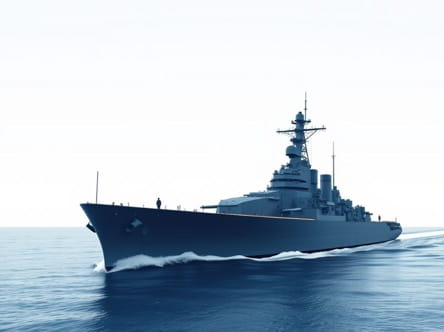
The concept of the biggest battleship in the world” has fascinated naval historians, military enthusiasts, and the general public for decades. Battleships, once the ultimate symbol of maritime power, played a pivotal role in naval warfare from the late 19th century through World War II. These massive vessels were engineered to project power across the oceans, combining immense firepower, thick armor, and formidable speed to dominate any adversary at sea. While modern naval warfare has shifted toward aircraft carriers and submarines, the sheer scale and engineering marvel of the largest battleships continue to captivate imaginations. Examining their history, design, and legacy provides insight into why these ships earned their legendary status.
Historical Context of Battleships
Battleships emerged as the backbone of naval fleets during a time when nations were competing for global influence and colonial dominance. The term “battleship” generally refers to large, heavily armed warships designed for high-seas combat against other major vessels. From the late 1800s, nations like Britain, Germany, Japan, and the United States invested heavily in battleship construction, each striving to outdo the other in size, armor, and armament.
The Role of Battleships in Naval Warfare
Battleships served multiple strategic purposes. They acted as symbols of national strength, deterrents against enemy aggression, and decisive tools in fleet engagements. Their long-range artillery allowed them to bombard enemy ships and coastal targets, while their thick armor provided protection against incoming shells. Battleships like these dominated conflicts during World War I and World War II, proving that control of the seas often meant control of global trade and military advantage.
Design and Specifications of the Largest Battleships
The quest to build the largest battleship led to incredible engineering feats. Battleships combined massive displacement, heavy armor, and multiple large-caliber guns into a single vessel. Among the largest ever constructed, the Japanese Yamato-class battleships hold the record for being the biggest in the world in terms of displacement and firepower.
Yamato-Class Battleships
The Yamato-class battleships, commissioned by the Imperial Japanese Navy during World War II, were unmatched in size and firepower. Two ships of this class were completed the Yamato and Musashi. Their key specifications include
- DisplacementApproximately 72,000 tons fully loaded, making them the heaviest battleships ever built.
- LengthAround 263 meters (862 feet), longer than most modern aircraft carriers of the time.
- Main ArmamentNine 46 cm (18.1-inch) guns, the largest caliber ever mounted on a battleship, capable of firing shells over 40 kilometers.
- ArmorUp to 410 mm thick in critical areas, providing exceptional protection against enemy shells and torpedoes.
- SpeedMaximum speed of approximately 27 knots, remarkable for a ship of its immense size.
Engineering Challenges
Constructing the Yamato-class battleships involved significant technical challenges. The enormous weight required reinforced hulls and advanced propulsion systems. Transporting, assembling, and testing such massive components pushed Japanese shipyards to the limits of their engineering capabilities. Despite these challenges, the Yamato-class ships represented the pinnacle of battleship design and symbolized Japan’s naval ambitions.
Operational History
Although the Yamato and Musashi were engineering marvels, their operational history highlighted the changing nature of naval warfare. Both ships were primarily designed for decisive fleet battles, yet their actual combat experience was limited.
The Musashi
The Musashi saw action in the Pacific Theater but was sunk during the Battle of Leyte Gulf in 1944 after being attacked by multiple waves of U.S. aircraft. Its immense size and firepower could not compensate for the vulnerability to aerial assault, demonstrating a shift in naval combat strategies.
The Yamato
The Yamato participated in several naval operations but was ultimately lost during Operation Ten-Go in 1945. Sent on a one-way mission to defend Okinawa, it was sunk by overwhelming air attacks before reaching its target. The fate of Yamato and Musashi illustrated that battleships, no matter how massive, were increasingly vulnerable in an era dominated by aircraft carriers and submarines.
Legacy of the Largest Battleships
Even though modern navies no longer deploy traditional battleships, the legacy of the world’s largest battleships remains significant. They pushed the boundaries of naval engineering, influenced naval strategy, and left an indelible mark on military history. Museums and memorials preserve remnants and artifacts, allowing future generations to appreciate the scale and ambition of these extraordinary vessels.
Impact on Modern Naval Strategy
The lessons learned from the era of battleships shaped contemporary naval doctrine. Emphasis shifted from sheer size and armor to versatility, speed, and air power. Aircraft carriers and missile-equipped ships now dominate naval fleets, but battleship design principles influenced hull construction, armor placement, and weapons integration in modern warships.
Other Notable Large Battleships
While the Yamato-class holds the record, other battleships also captured attention for their size and capability
- Bismarck (Germany)Famous for its engagement with British forces in 1941, it displaced around 50,000 tons and carried eight 38 cm (15-inch) guns.
- HMS Vanguard (United Kingdom)The last battleship commissioned by the Royal Navy, displacing about 44,500 tons with 15-inch guns.
- Iowa-class (United States)Fast, heavily armed battleships used in World War II and beyond, demonstrating a balance between speed, firepower, and armor.
Comparison and Records
Compared to other battleships, the Yamato-class remains unmatched in overall displacement and main gun size. Its design reflects the peak of battleship construction, representing both technological prowess and the strategic mindset of its era. The enormous size, advanced engineering, and devastating armament made it an unparalleled symbol of naval ambition.
The title of “biggest battleship in the world” belongs to the Yamato-class battleships of the Imperial Japanese Navy. These massive vessels were not only engineering feats but also strategic symbols that reflected the ambitions of their time. While they ultimately became obsolete in the face of air power and modern naval tactics, their legacy continues to captivate historians and enthusiasts alike. Studying the largest battleships provides valuable insight into naval history, technological innovation, and the evolution of maritime warfare. Their story reminds us that power at sea is not only about size and firepower but also about adaptability and strategic foresight.