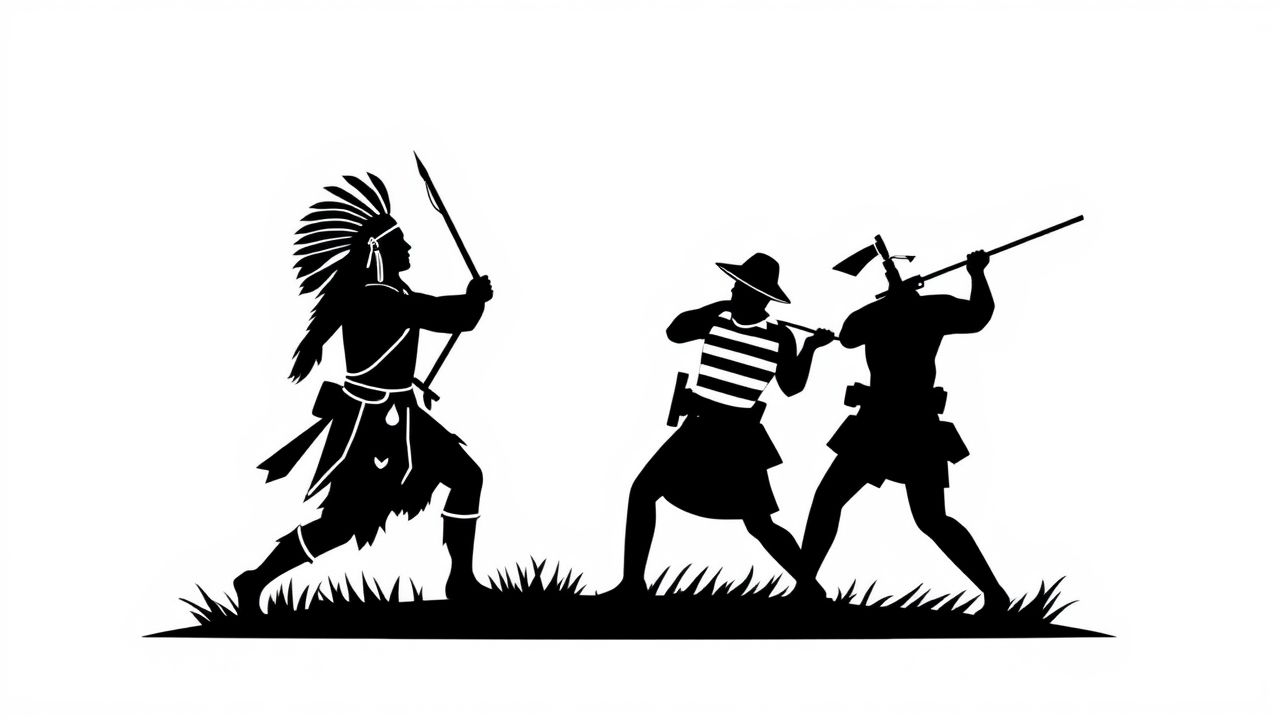
The Battle of Tippecanoe stands as one of the most significant confrontations in early American history, taking place in 1811 in what is now Indiana. It was not only a clash between U.S. forces and Native American warriors but also a symbol of the broader conflict over land, cultural survival, and political influence in the early nineteenth century. This battle shaped the future of Native American resistance movements, strengthened the reputation of American military leaders, and contributed to the larger tensions that would soon erupt into the War of 1812. To understand its full importance, one must look at the causes, the key figures, the events of the battle itself, and its long-lasting consequences.
Background of the Conflict
The Battle of Tippecanoe was rooted in long-standing disputes over territory and sovereignty. As American settlers expanded westward, they increasingly encroached on lands held by Native American tribes in the Ohio Valley and Indiana Territory. This created growing resentment among Native communities, who sought to defend their land and way of life against U.S. expansion.
The Rise of Tecumseh and Tenskwatawa
Central to the conflict were two Shawnee brothers, Tecumseh and Tenskwatawa, also known as The Prophet.” Tecumseh was a charismatic leader and skilled warrior who envisioned a confederation of tribes united against American encroachment. His brother, Tenskwatawa, inspired followers through his religious teachings, which called for a return to traditional Native practices and rejection of European-American influences such as alcohol and manufactured goods.
Together, they established a settlement called Prophetstown near the Tippecanoe River. Prophetstown quickly became a gathering place for Native warriors and families from various tribes, strengthening Tecumseh’s dream of a pan-tribal alliance.
The United States’ Response
American leaders viewed the growing influence of Tecumseh and his brother as a direct threat. William Henry Harrison, governor of the Indiana Territory, feared that the confederation would block settlement and weaken U.S. control of the region. He believed that decisive action was needed before Tecumseh’s influence spread further.
Tensions Escalate
By 1811, tensions had reached a breaking point. Tecumseh was away traveling to recruit more allies, leaving Tenskwatawa in charge of Prophetstown. Harrison gathered a force of roughly 1,000 soldiers, including militia and regular U.S. troops, and marched toward the Native settlement. His goal was to intimidate the confederation and secure a peace agreement, but he was also prepared for conflict if necessary.
The Battle of Tippecanoe
The battle occurred on November 7, 1811. Harrison’s forces encamped near Prophetstown, and despite negotiations, hostilities broke out in the early morning hours. Native warriors, likely encouraged by Tenskwatawa’s assurances of spiritual protection, launched a surprise attack on the American camp.
The Surprise Assault
At dawn, hundreds of Native warriors attacked Harrison’s encampment, catching many soldiers off guard. However, the Americans quickly regrouped. Harrison’s disciplined troops formed defensive lines and repelled repeated charges. The fighting was intense, lasting several hours, with both sides suffering heavy casualties.
Outcome of the Battle
Ultimately, Harrison’s forces held their ground and forced the Native warriors to retreat. Prophetstown was soon abandoned and later burned by American soldiers. The U.S. declared the battle a victory, though losses were significant on both sides. Around 60 Americans were killed or wounded, while Native casualties were also high, though exact numbers remain uncertain.
Consequences of the Battle
The Battle of Tippecanoe had far-reaching consequences that extended beyond the immediate conflict.
Impact on Native Resistance
The defeat weakened Tenskwatawa’s authority, as many followers questioned his spiritual promises of protection. However, Tecumseh continued to build alliances and resisted American expansion. The battle marked a setback for his confederation but did not completely destroy it. In fact, it fueled Native determination to resist, especially with support from the British in Canada.
Political and Military Effects in the United States
For Americans, the victory at Tippecanoe became a source of pride and propaganda. William Henry Harrison, who commanded the troops, gained national fame and earned the nickname “Old Tippecanoe.” His reputation from this battle later helped him secure the presidency in 1840, when his campaign slogan Tippecanoe and Tyler Too became one of the most famous in U.S. political history.
Connection to the War of 1812
The Battle of Tippecanoe also intensified suspicion that the British were aiding Native resistance by supplying weapons and support. These suspicions contributed to the growing hostility between the United States and Britain, which ultimately erupted into the War of 1812. Many of Tecumseh’s warriors would later join the British in fighting against the United States during that war.
Analysis of the Battle’s Significance
Looking at the broader picture, the Battle of Tippecanoe was more than just a single skirmish. It represented the clash between two visions of North America one in which Native peoples retained their lands and cultures, and another in which the United States pursued relentless expansion. The outcome underscored the imbalance of power but also demonstrated the determination of Native tribes to resist despite overwhelming odds.
Military Lessons
From a military standpoint, the battle highlighted the effectiveness of organized, disciplined troops against surprise attacks. Harrison’s leadership was praised, though critics argued that his forces nearly suffered disaster due to lack of preparedness. For Native warriors, the battle reinforced the challenges of fighting a well-armed and numerically strong opponent without consistent supplies or external support.
Cultural and Symbolic Importance
Culturally, the battle became symbolic of Native resistance to U.S. expansion. Prophetstown, though destroyed, lived on in memory as a center of defiance and unity among tribes. For Americans, the victory became a symbol of progress and expansion, fitting into the broader narrative of manifest destiny that would dominate later decades.
Legacy of the Battle of Tippecanoe
The legacy of the battle continues to be remembered in U.S. history and popular culture. It helped launch the political career of William Henry Harrison, shaped public opinion about Native Americans, and played a role in the chain of events leading to the War of 1812.
Modern Reflections
Today, the Battle of Tippecanoe is studied not only as a military conflict but also as a moment of cultural confrontation. It reveals the struggles of Native peoples to preserve their sovereignty and the determination of the United States to expand westward at any cost. Commemorations and historical studies of the battle often reflect on both perspectives, acknowledging the courage and tragedy on both sides.
The Battle of Tippecanoe was a pivotal moment in the early history of the United States, symbolizing the clash between Native resistance and American expansion. While Harrison and his men claimed victory, the conflict highlighted the resilience of Tecumseh’s vision and the deep divisions shaping the frontier. Its political, cultural, and military consequences echoed far beyond the battlefield, influencing the War of 1812 and shaping the legacy of leaders like William Henry Harrison. Remembering the events at the Battle of Tippecanoe provides valuable insight into the struggles, ambitions, and transformations of early America.