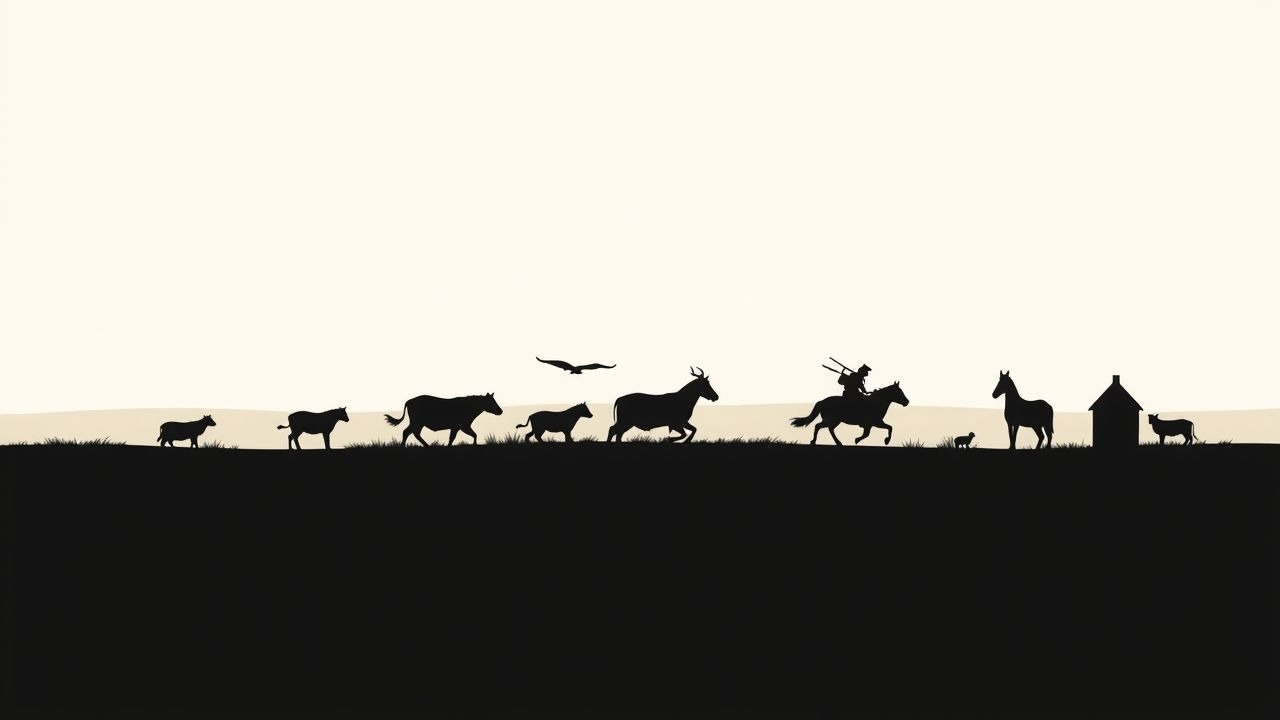
The Battle of the Cowshed in George Orwell’sAnimal Farmis one of the most significant events in the novel, symbolizing the animals’ unity and determination to protect their newfound freedom from human control. Taking place after the Rebellion, this battle serves as a turning point where the animals prove their ability to defend the farm against outside threats. Through careful planning, bravery, and collective action, the animals succeed in defeating Mr. Jones and his men. However, like many victories in history, it carries complex consequences that foreshadow the power struggles and corruption that will follow. The Battle of the Cowshed is both a literal and symbolic representation of revolutionary struggle, its triumphs, and its inevitable aftermath.
Background to the Battle
Following the Rebellion, when the animals overthrow Mr. Jones and take control of Manor Farm renaming it Animal Farm they begin building a new society based on the principles of Animalism. However, their victory threatens the human farmers in the area. Mr. Jones, angry and humiliated, seeks to reclaim his farm. He gathers men from neighboring farms, all eager to crush the animals’ rebellion before it inspires similar uprisings elsewhere. This looming threat sets the stage for the Battle of the Cowshed.
Snowball’s Role as a Military Leader
Snowball, one of the most intelligent and charismatic pigs on the farm, takes the lead in organizing the defense. Drawing inspiration from Julius Caesar’s military campaigns, Snowball studies old military manuals and develops a strategic battle plan. He positions the animals carefully, assigning roles based on their strengths. His preparation demonstrates not only his leadership skills but also the importance of strategy and unity in achieving victory.
The Defense Plan
- First Line of Defense– Small animals like pigeons and geese are sent ahead to harass and distract the men.
- Second Line– The sheep and other animals draw the humans deeper into the farm.
- Main Attack– Larger animals, including horses and cows, launch a direct assault once the humans are within striking distance.
- Final Ambush– Snowball himself leads the decisive charge to push the humans back.
The Battle Unfolds
When Mr. Jones and his men arrive, the first phase of Snowball’s plan goes into action. The pigeons swoop down, pecking and distracting the attackers, while the geese nip at their ankles. Although the humans easily swat them away, the tactic serves its purpose to confuse and slow them down. As they move further into the farm, the sheep and other animals retreat strategically, luring the humans toward the main ambush point.
Once the humans are deep enough, Snowball and the larger animals charge. Horses rear up, cows butt with their horns, and pigs bite and push. The sudden and forceful attack catches the men off guard. In the chaos, Snowball personally engages Mr. Jones, who fires his gun and injures Snowball. Despite the wound, Snowball continues fighting with determination, rallying the animals to press the attack.
Turning the Tide
The humans, unable to withstand the combined force and ferocity of the animals, begin to retreat. Some are knocked over, others flee in panic. Within moments, the attackers are driven out of the farm and forced to run across the fields, leaving behind their weapons and some of their dead. The animals have successfully defended Animal Farm.
The Aftermath of the Battle
In the immediate aftermath, the animals celebrate their hard-won victory. They name the event the Battle of the Cowshed and declare it a major holiday. The farm holds a ceremony to honor the fallen and recognize acts of bravery. Snowball and Boxer, the strong workhorse, receive medals for their heroism. The animals bury their dead and vow to remember their sacrifice.
Symbolism of the Battle
The Battle of the Cowshed is rich in symbolism. It represents the defense of revolutionary ideals against reactionary forces. The unity of the animals reflects the early solidarity found in many revolutions, while the humans represent the old ruling order trying to reassert control. Snowball’s leadership symbolizes revolutionary vision and courage, even if later events in the novel will cast a shadow over his fate.
Foreshadowing Future Conflict
While the Battle of the Cowshed is a moment of triumph, Orwell uses it to foreshadow darker times ahead. In later chapters, the pigs, especially Napoleon, will manipulate the story of the battle for political purposes. Snowball’s heroism will be rewritten and smeared, serving as propaganda to consolidate Napoleon’s power. This distortion of history mirrors the way real-world governments often rewrite past events to fit their agendas.
The Shift from Truth to Propaganda
- Snowball’s bravery is eventually denied, and he is accused of being a traitor.
- Napoleon uses fear of supposed human conspiracies to control the animals.
- The original unity of the battle is replaced by mistrust and division.
Lessons from the Battle
The Battle of the Cowshed offers several lessons, both within the context of the novel and in a broader historical sense.
Unity and Collective Action
The animals win because they work together. Each plays a role, no matter how small, contributing to the overall victory. This unity stands in stark contrast to the divisions that will later undermine the farm’s ideals.
The Importance of Strategy
Snowball’s careful planning proves crucial. Rather than relying solely on strength, he uses tactics to exploit the weaknesses of the enemy. This mirrors the idea that revolutions require not just passion but also organization and foresight.
The Fragility of Revolutionary Victories
Even a great victory can be undone by internal corruption, manipulation, and the rewriting of history. The animals’ eventual loss of the ideals they fought for is a reminder that defending freedom requires constant vigilance.
Historical Parallels
Orwell’s depiction of the Battle of the Cowshed has clear parallels with real-world events. It mirrors the Russian Civil War following the 1917 Bolshevik Revolution, where revolutionary forces defended their new government against counter-revolutionary armies. Just as in the novel, early victories were later overshadowed by internal power struggles, propaganda, and the betrayal of original ideals.
The Battle’s Place in the Novel
Within the structure ofAnimal Farm, the Battle of the Cowshed serves as a high point of unity and purpose. It is one of the few moments when all the animals are truly aligned in their goals. The victory reinforces their belief in the possibility of a better life free from human oppression. Sadly, the optimism it generates will fade as the pigs begin to mirror the very humans they once overthrew.
Memorializing the Victory
In the early days after the battle, its memory is preserved faithfully, with stories of bravery passed down among the animals. But as Orwell shows, memory itself can be reshaped, and the meaning of the battle will be twisted over time to serve those in power.
The Battle of the Cowshed inAnimal Farmis both a gripping moment of action and a deeply symbolic episode in George Orwell’s allegory. It captures the optimism and unity of revolutionary beginnings, the necessity of strategy, and the courage required to defend new freedoms. Yet it also foreshadows the corruption and manipulation that will erode those very ideals. In celebrating the victory, Orwell reminds readers that revolutions are fragile, and the true challenge lies not only in winning freedom but in preserving it against the slow erosion of truth and solidarity. The Battle of the Cowshed stands as a lasting reminder of both the potential and the perils of collective struggle.