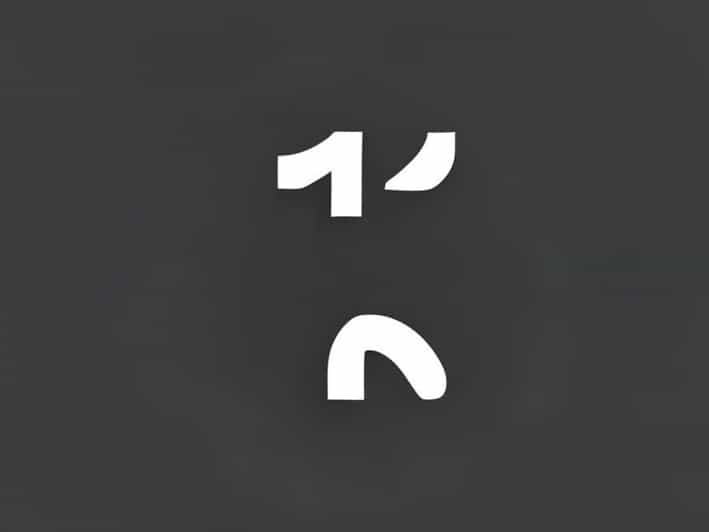
Fractions are one of the most fundamental parts of mathematics, helping us express parts of a whole in a simple and consistent way. Among them, one of the most commonly used fractions is1/3, which represents one part out of three equal portions. Understanding how to find an equivalent fraction to 1/3 is not only useful in mathematics classes but also in real-life scenarios such as cooking, dividing objects, or dealing with ratios. In this topic, we will explore what equivalent fractions mean, how to find fractions equal to 1/3, and how these concepts build a deeper understanding of numbers and proportions.
Understanding the Concept of Equivalent Fractions
An equivalent fraction is one that represents the same value or portion of a whole, even though the numerator and denominator may be different. The simplest example is 1/3, which can be transformed into other fractions by multiplying or dividing both the numerator and denominator by the same number. These fractions may look different, but they all describe the same part of a whole object or quantity.
For instance, 2/6, 3/9, and 4/12 are all equivalent to 1/3. Although the numerators and denominators are larger, they all represent one-third of the same total. The key rule to remember is that if you multiply or divide both parts of the fraction by the same nonzero number, the fraction’s value remains unchanged.
How to Find a Fraction Equivalent to 1/3
To find fractions that are equivalent to 1/3, you can use multiplication or division. The process involves multiplying the numerator and denominator by the same number. Let’s go through a few examples to illustrate this rule
- Multiply both numerator and denominator by 2 (1 Ã 2) / (3 Ã 2) = 2/6
- Multiply both numerator and denominator by 3 (1 Ã 3) / (3 Ã 3) = 3/9
- Multiply both numerator and denominator by 4 (1 Ã 4) / (3 Ã 4) = 4/12
- Multiply both numerator and denominator by 5 (1 Ã 5) / (3 Ã 5) = 5/15
Each of these fractions 2/6, 3/9, 4/12, and 5/15 is equivalent to 1/3. This means that no matter how large the numbers become, the fraction represents the same quantity as long as the ratio between the numerator and denominator remains constant.
Visualizing Equivalent Fractions
It can be helpful to visualize fractions to understand why they are equivalent. Imagine a pizza divided into three equal slices. Taking one slice means you have 1/3 of the pizza. Now, if you cut each of those three slices in half, you will have six slices in total. Taking two of these smaller slices gives you 2/6, which still equals one-third of the pizza. Visually, you haven’t gained or lost any pizza you’ve just changed the way you divide it.
This idea works the same way with other fractions equivalent to 1/3. Whether you cut the object into 9, 12, or 15 parts, as long as the number of parts you take maintains the same proportion, the fraction remains equivalent.
Real-Life Applications of Equivalent Fractions
Equivalent fractions are not just mathematical exercises; they have many practical applications. For example, in cooking, if a recipe calls for 1/3 of a cup of sugar and you only have a 1/6 measuring cup, you can use two scoops of 1/6 to get the same amount. This demonstrates how equivalent fractions make it easier to measure, divide, and compare quantities in everyday situations.
Similarly, equivalent fractions are essential in fields like construction, design, and finance. They allow workers and professionals to scale measurements, create proportional models, or adjust quantities without changing their overall value. Understanding that 1/3 equals 2/6 or 4/12 helps ensure accuracy and consistency across different contexts.
Converting Equivalent Fractions to Decimals and Percentages
Another useful way to understand the value of 1/3 and its equivalents is by converting them into decimals or percentages. The fraction 1/3 can be written as a decimal by dividing the numerator by the denominator
1 ÷ 3 = 0.3333…. (a repeating decimal).
To express this as a percentage, multiply by 100
0.3333 Ã 100 = 33.33% (approximately).
All fractions equivalent to 1/3, such as 2/6 or 3/9, will also convert to the same decimal and percentage. This reinforces the idea that equivalent fractions hold the same value, no matter how the numbers appear.
Common Mistakes When Working with Equivalent Fractions
While learning about equivalent fractions, students sometimes make mistakes that lead to incorrect results. Some of the most common include
- Multiplying only the numerator or only the denominator by a number, which changes the value of the fraction.
- Confusing equivalent fractions with simplified fractions. For example, 3/9 simplifies to 1/3, but 1/3 and 3/9 are equivalent not different fractions.
- Forgetting to reduce fractions to their simplest form. Although 4/12 equals 1/3, writing it in simplest terms helps make comparisons easier.
Understanding these potential mistakes helps build a stronger foundation for working with fractions in general.
Equivalent Fractions in Education
Teachers often use equivalent fractions as a bridge between basic arithmetic and more complex mathematical concepts like ratios, proportions, and algebra. Learning how to find an equivalent fraction to 1/3 helps students understand patterns and relationships in numbers. It also improves their problem-solving and logical reasoning skills, which are vital for success in higher-level math.
Visual aids like fraction bars, pie charts, and number lines are often used to teach these concepts effectively. Through practice and visualization, students can see that fractions like 1/3, 2/6, and 3/9 all occupy the same place on a number line, reinforcing their equivalence.
The Importance of Simplifying Fractions
Although there are many fractions equivalent to 1/3, it is important to remember that 1/3 itself is the simplest form. Simplifying fractions means dividing both the numerator and denominator by their greatest common factor (GCF). For example, 4/12 simplifies to 1/3 because both 4 and 12 can be divided by 4. Writing fractions in their simplest form makes calculations easier and results clearer.
Understanding what makes a fraction equivalent to 1/3 is a foundational skill in mathematics. Equivalent fractions such as 2/6, 3/9, and 4/12 show that fractions can take different forms while still representing the same value. By multiplying or dividing both parts of a fraction by the same number, you maintain its true worth. Whether used in school, cooking, or measurement, this concept plays an essential role in problem-solving and real-life applications. Learning to recognize and create equivalent fractions like those equal to 1/3 deepens one’s mathematical understanding and strengthens confidence in working with numbers.