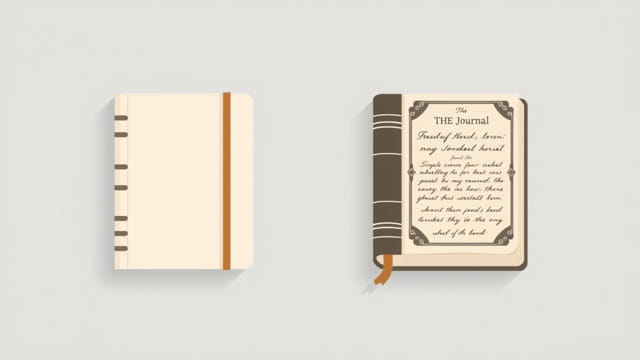
For centuries, people have recorded their thoughts, experiences, and knowledge through writing. Two popular methods of doing this are by keeping a journal and maintaining a commonplace book. Although they may seem similar at first glance, each serves a distinct purpose and has its own unique style. Understanding the differences between a journal and a commonplace book can help individuals choose the best method for organizing their inner reflections and external inspirations. This topic explores the key contrasts between a journal vs commonplace book, offering insights into their origins, functions, and modern-day applications.
Understanding the Journal
Definition and Purpose
A journal is a personal record that captures the thoughts, emotions, and experiences of the writer. It is often used as a tool for self-reflection and emotional expression. Journals are deeply private and are usually written in the first person, offering an intimate view of the author’s internal world.
What People Include in Journals
- Daily experiences and events
- Emotional responses and reflections
- Dreams and personal goals
- Struggles and victories
- Plans, worries, and hopes for the future
Benefits of Keeping a Journal
Keeping a journal has been shown to improve mental clarity, reduce stress, and help with emotional processing. Writing in a journal provides a safe outlet to release thoughts that may not be expressed elsewhere. Over time, journals can also become valuable tools for self-discovery and personal growth.
What Is a Commonplace Book?
Origins and History
The commonplace book dates back to the Renaissance and Enlightenment periods, when scholars would collect quotes, proverbs, ideas, and pieces of wisdom in one place. Unlike journals, commonplace books are less about self-reflection and more about compiling knowledge and insights from various sources.
Contents of a Commonplace Book
- Quotes from books and speeches
- Interesting facts or historical references
- Personal interpretations of ideas
- Poetry, aphorisms, or philosophical concepts
- Notes from lectures, podcasts, or topics
Purpose and Usefulness
A commonplace book serves as a reference library for its owner. Rather than being written chronologically like a journal, entries are added based on topics or themes. Writers, students, and thinkers use commonplace books to gather and revisit important ideas that inspire or educate them.
Main Differences Between Journal and Commonplace Book
Focus and Intention
The primary difference lies in focus. A journal focuses inward on the self while a commonplace book focuses outward on knowledge and inspiration. One records personal feelings; the other collects valuable information.
Structure and Organization
- Journals: Often organized by date with sequential entries.
- Commonplace Books: Organized by themes, categories, or topics, not necessarily chronologically.
Writing Style
Journal entries are typically freeform, written in prose, and sometimes unstructured. Commonplace books may feature bullet points, citations, and carefully curated content with minimal personal commentary.
Privacy and Audience
- Journals: Usually private and not meant for sharing.
- Commonplace Books: May be shared, published, or passed down as educational tools.
Why Keep a Journal?
Self-Reflection and Growth
Journaling promotes mindfulness by encouraging individuals to slow down and evaluate their thoughts. It allows the writer to track patterns over time and witness personal development.
Emotional Release
Writing in a journal provides a space to vent frustrations or express gratitude, which can positively affect mood and mental health.
Goal Tracking
Journals can also be used to monitor progress toward goals, making them ideal tools for planning and accountability.
Why Keep a Commonplace Book?
Organizing Knowledge
Commonplace books help organize and store valuable information that might otherwise be forgotten. They serve as personalized encyclopedias of what matters most to the writer.
Creative Inspiration
By reviewing insightful passages or fascinating ideas, writers and creators often find new inspiration for their own work.
Improved Retention
Writing down quotes and ideas can reinforce memory and deepen understanding, especially when studying complex subjects.
Combining Both Practices
Two Different Books
Some individuals choose to keep both a journal and a commonplace book. This method separates emotional introspection from knowledge collection, allowing each tool to serve its unique role.
One Hybrid System
Others merge the two practices into a single notebook, using different sections or tags to differentiate personal reflection from idea gathering. This blended approach can offer convenience and flexibility.
Digital vs Analog
Handwritten Options
Many prefer physical notebooks for both journaling and commonplace books because writing by hand can aid in memory retention and feels more personal. Popular choices include Moleskine, Leuchtturm1917, and bullet journals.
Digital Tools
For tech-savvy individuals, apps like Evernote, Notion, or Obsidian can be used to create searchable, taggable commonplace books and journals. These tools make it easy to embed links, organize content, and sync across devices.
Famous Figures Who Used Each Method
Journal Keepers
- Anne Frank Her diary gave a voice to millions and remains one of the most important historical journals.
- Virginia Woolf Used her journal as a creative space for developing ideas for her novels.
Commonplace Book Users
- Marcus Aurelius The Roman emperor’s ‘Meditations’ began as a form of personal note-taking based on Stoic philosophy.
- John Milton The author of Paradise Lost kept a detailed commonplace book full of notes from books he read.
While journals and commonplace books may both involve writing and reflection, their purposes diverge significantly. A journal provides a personal sanctuary for emotional clarity and growth, while a commonplace book serves as a treasure chest for ideas, wisdom, and insight gathered from the outside world. Each has its value, and the best choice depends on the user’s intention. Some may prefer the intimate expression of a journal, while others gravitate toward the intellectual catalog of a commonplace book. Still, many find benefit in keeping both, using one for heart and the other for mind. Whether analog or digital, the tools we use to document our lives and learnings help us make sense of the world and ourselves.