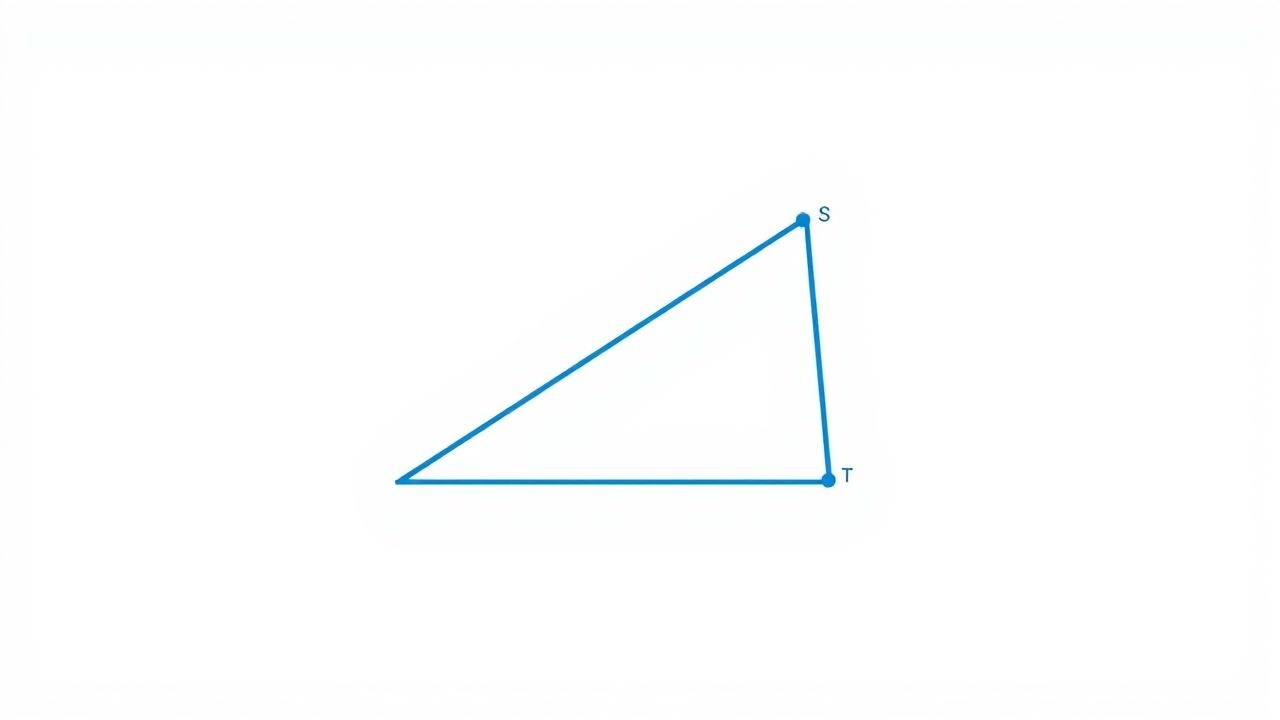
Trigonometry in Class 10 is an important topic in mathematics that introduces students to the relationship between the sides and angles of triangles. This subject plays a crucial role in enhancing problem-solving skills and lays the foundation for higher studies in mathematics, physics, engineering, and architecture. Understanding trigonometry helps students apply mathematical concepts to real-world situations, such as navigation, construction, and astronomy. With practical applications and conceptual clarity, this topic becomes both interesting and useful for future academic and career pursuits.
Introduction to Trigonometry
Trigonometry is derived from the Greek words trigonon (triangle) and metron (measure), which means the measurement of triangles. It deals with the relationships between angles and sides in right-angled triangles. In Class 10, students learn the basics of trigonometric ratios, identities, and their applications in solving mathematical problems.
Importance of Trigonometry in Class 10
The significance of trigonometry goes beyond exams. It is widely used in various fields, including:
- Architecture and Engineering: For designing buildings and structures.
- Astronomy: To calculate the distance between celestial bodies.
- Navigation: For determining directions and distances on maps.
- Physics: In the study of waves, oscillations, and mechanics.
By mastering trigonometry in Class 10, students develop strong analytical and logical thinking skills, which are essential for future studies and professions.
Key Concepts in Trigonometry for Class 10
The Class 10 syllabus covers several important concepts in trigonometry. These include:
Trigonometric Ratios
Trigonometric ratios are the foundation of trigonometry. They express the relationship between the sides of a right-angled triangle concerning one of its acute angles. The six main trigonometric ratios are:
- Sine (sin): Opposite side / Hypotenuse
- Cosine (cos): Adjacent side / Hypotenuse
- Tangent (tan): Opposite side / Adjacent side
- Cosecant (csc): Hypotenuse / Opposite side
- Secant (sec): Hypotenuse / Adjacent side
- Cotangent (cot): Adjacent side / Opposite side
Trigonometric Ratios of Standard Angles
Students also learn the values of trigonometric ratios for standard angles such as 0°, 30°, 45°, 60°, and 90°. These values are essential for solving problems and are often presented in a table format for easy memorization.
Trigonometric Identities
Class 10 introduces students to basic trigonometric identities, which are equations involving trigonometric ratios that are true for all values of the involved variables. The most common identities include:
- sin²θ + cos²θ = 1
- 1 + tan²θ = sec²θ
- 1 + cot²θ = csc²θ
These identities are frequently used in solving trigonometric equations and proving mathematical statements.
Heights and Distances
One of the most practical applications of trigonometry in Class 10 is in calculating heights and distances. This involves using trigonometric ratios to find unknown measurements by applying the concepts of angles of elevation and depression. Such problems are highly relevant in real-life scenarios, such as determining the height of a tower or the distance across a river.
Applications of Trigonometry in Daily Life
Trigonometry is not just a theoretical concept; it has multiple practical applications. Some of the real-life uses include:
- Surveying land and measuring distances that are difficult to measure physically.
- Designing buildings, bridges, and other structures in civil engineering.
- Navigation and aviation, where pilots and sailors use trigonometric principles for safe travel.
- Predicting the position of planets and stars in astronomy.
- Creating computer graphics and animation in the entertainment industry.
How to Prepare for Trigonometry in Class 10
Preparation for trigonometry requires a strong understanding of basic concepts and consistent practice. Here are some tips to excel in this topic:
- Learn the Basics: Understand the meaning of trigonometric ratios and their relationships.
- Memorize Standard Values: Keep the table of standard angles and their trigonometric values handy.
- Practice Identities: Solve plenty of problems based on trigonometric identities to gain confidence.
- Work on Word Problems: Focus on height and distance problems to learn practical applications.
- Use Visual Aids: Draw diagrams for each problem to understand angles and sides clearly.
Common Mistakes to Avoid
While learning trigonometry, students often make errors that can be avoided with careful attention:
- Confusing between sine and cosine ratios.
- Incorrectly applying trigonometric identities.
- Ignoring the unit of measurement, such as degrees and radians.
- Not drawing diagrams, which leads to misinterpretation of the question.
Avoiding these mistakes ensures accuracy and better performance in exams.
Trigonometry and Future Learning
The concepts learned in Class 10 form the foundation for advanced mathematics in higher classes. In subjects like calculus, algebra, and physics, trigonometry plays an integral role. Students who understand this topic well find it easier to grasp future concepts such as trigonometric functions, inverse trigonometric functions, and differential equations.
Trigonometry in Class 10 is more than a mathematical topic; it is a gateway to numerous applications in science, technology, and everyday life. By understanding trigonometric ratios, identities, and practical problems involving heights and distances, students build strong analytical skills that benefit them in academics and beyond. Consistent practice, conceptual clarity, and real-life applications make this subject both interesting and essential. Mastering trigonometry at this stage ensures a solid mathematical foundation for higher education and professional careers.