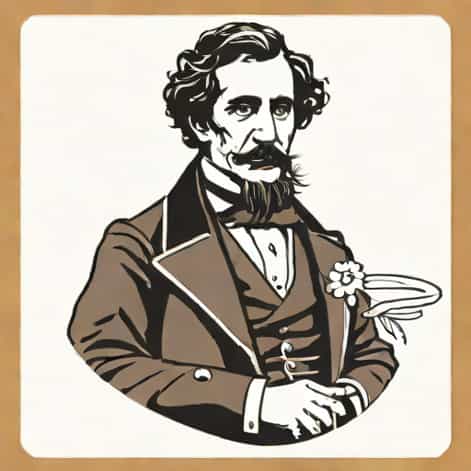
David Copperfield is one of the most celebrated novels by Charles Dickens, first published as a serial from 1849 to 1850 and later released as a book in 1850. The novel is often considered semi-autobiographical, reflecting Dickens’ own experiences, struggles, and triumphs during his youth and early adulthood. Through its rich narrative, memorable characters, and intricate plot, David Copperfield explores themes such as personal growth, social injustice, love, and perseverance. For readers around the world, it remains an enduring classic of English literature, showcasing Dickens’ skill in storytelling and his keen observation of human nature.
Charles Dickens The Author
Charles Dickens was an English novelist born on February 7, 1812, in Portsmouth, England. He grew up in a family that experienced financial instability, which greatly influenced his writing. Dickens’ early exposure to hardship, child labor, and poverty provided him with deep insight into social inequality, which he vividly depicted in his novels. Known for his sharp social critique, humor, and complex characters, Dickens became one of the most important literary figures of the Victorian era.
Early Life and Influences
Dickens’ childhood was marked by both familial love and significant adversity. His father’s imprisonment for debt forced Dickens to leave school at a young age and work in a blacking factory. These formative experiences deeply affected him and inspired many of the struggles faced by characters in David Copperfield. Dickens’ early work as a journalist also honed his skills in observation, characterization, and narrative style, which he later applied to his novels.
Overview of David Copperfield
David Copperfield tells the story of the life of its titular character, from his troubled childhood to his eventual success as a writer. The novel begins with David’s early life under the care of his widowed mother and his cruel stepfather, Edward Murdstone. As the story progresses, David faces numerous challenges, including child labor, poverty, and betrayal, yet he also experiences friendship, love, and professional achievement. Dickens uses David’s journey to explore the complexities of human relationships and the moral growth of individuals.
Main Characters
- David CopperfieldThe protagonist and narrator, whose experiences reflect Dickens’ own life. David grows from a vulnerable child into a resilient and successful man.
- Clara CopperfieldDavid’s loving and gentle mother, whose kindness contrasts with the harshness of Murdstone.
- Edward MurdstoneDavid’s cruel stepfather, representing the oppressive forces of authority and control.
- Betsey TrotwoodDavid’s eccentric but caring great-aunt, who supports his education and personal growth.
- Uriah HeepA scheming and deceitful clerk, representing the dangers of manipulation and hypocrisy.
- Agnes WickfieldDavid’s loyal friend and eventual love interest, symbolizing virtue and moral guidance.
The Semi-Autobiographical Nature of the Novel
David Copperfield is widely regarded as Dickens’ most autobiographical work. The character of David shares many similarities with Dickens, including his experiences with child labor, his early career as a writer, and his encounters with social inequality. By embedding his own life experiences into the narrative, Dickens creates an intimate and emotionally resonant story. Readers can feel the authenticity in David’s struggles, triumphs, and reflections, making the novel a deeply personal yet universally relatable tale.
Thematic Elements
The novel explores several key themes that contribute to its enduring relevance
- Personal GrowthDavid’s journey from a vulnerable child to a mature adult highlights the importance of resilience, self-discovery, and moral development.
- Social InjusticeDickens critiques the harsh treatment of children, the poor, and marginalized individuals, reflecting the inequalities of Victorian society.
- Love and FriendshipThe novel emphasizes the importance of supportive relationships and the impact of positive influences on personal development.
- Betrayal and DeceitCharacters like Uriah Heep showcase the dangers of manipulation and dishonesty in social and professional settings.
- Perseverance and SuccessDespite adversity, David’s determination and moral integrity lead him to achieve personal and professional fulfillment.
Literary Style and Techniques
Charles Dickens is known for his vivid storytelling, intricate plots, and memorable characters. In David Copperfield, he employs a first-person narrative, allowing readers to experience David’s thoughts, emotions, and perspectives directly. This narrative style creates intimacy and empathy between the reader and the protagonist. Dickens also uses humor, satire, and social commentary to critique Victorian society while engaging readers with compelling storytelling. His detailed descriptions and distinctive characterizations make each individual in the novel memorable and multidimensional.
Impact on Literature
David Copperfield has had a profound influence on literature, both in its own time and for generations that followed. The novel’s exploration of personal growth, social issues, and human relationships has inspired countless writers and remains a model for character-driven storytelling. Its semi-autobiographical approach influenced the development of the Bildungsroman, or coming-of-age novel, a genre that emphasizes the psychological and moral growth of the protagonist. Dickens’ ability to combine social critique with engaging narrative set a standard for novels that address both personal and societal concerns.
Adaptations and Cultural Legacy
David Copperfield has been adapted numerous times for stage, film, and television. These adaptations vary in their fidelity to the original text, with some modernizing the setting and others remaining true to the Victorian context. The novel’s rich characters and dramatic plot make it a favorite for dramatization, while its themes continue to resonate with audiences worldwide. The story’s cultural significance is also evident in references across literature, media, and popular culture, demonstrating the lasting impact of Dickens’ work.
Key Adaptations
- Film adaptations ranging from early silent films to modern cinematic interpretations.
- Television miniseries that explore the novel in detail, often highlighting its social and moral themes.
- Theatrical performances that bring Dickens’ characters and narrative to life on stage.
- Literary studies and educational curricula that analyze the novel’s themes, style, and historical context.
David Copperfield by Charles Dickens is a landmark in English literature, combining autobiographical elements, rich characterization, and social commentary into a compelling narrative. Through David’s life story, Dickens explores themes of growth, perseverance, social injustice, and the importance of relationships. The novel’s influence extends beyond literature into adaptations, education, and popular culture, ensuring its place as a timeless classic. Charles Dickens’ skill as a storyteller and observer of human nature makes David Copperfield a deeply engaging and insightful exploration of life, society, and personal development.