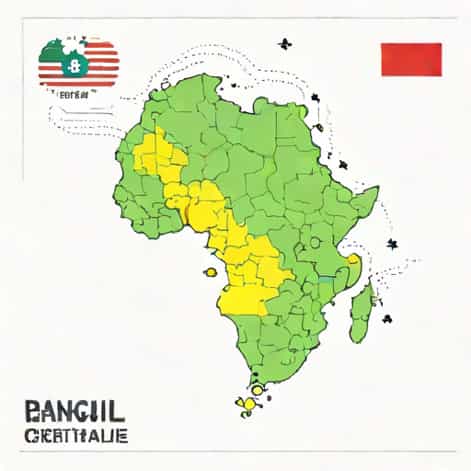
Bangui is the capital city of the Central African Republic, a landlocked country in the heart of Africa. Located along the banks of the Ubangi River, Bangui serves as the political, economic, and cultural center of the nation. Despite facing challenges related to infrastructure and development, the city remains the most important urban area in the country. Understanding where Bangui is situated geographically, its historical significance, and its role in the Central African Republic provides insight into its importance both locally and regionally.
Geographical Location of Bangui
Bangui is located in the southwestern part of the Central African Republic, close to the border with the Democratic Republic of the Congo. The city sits along the northern bank of the Ubangi River, which forms a natural boundary between the Central African Republic and the Democratic Republic of the Congo. This strategic location on a major river has historically made Bangui a center for trade, transport, and communication. The city is surrounded by a tropical savanna climate, with distinct wet and dry seasons that influence both daily life and economic activities.
Coordinates and Map Position
Bangui lies approximately at latitude 4.36° N and longitude 18.55° E. The city is positioned about 800 kilometers (500 miles) from the country’s northern border and roughly 400 kilometers (250 miles) from the eastern border. Its central location within the southwestern region of the country makes it easily accessible from major towns and provinces, although infrastructure limitations can sometimes make travel challenging.
Historical Significance of Bangui
Bangui has a rich historical background that dates back to the late 19th century. It was originally founded in 1889 by French colonial forces and became an important administrative center under French Equatorial Africa. During the colonial period, Bangui grew slowly as a trading post and administrative hub. After the Central African Republic gained independence in 1960, Bangui was designated as the capital, consolidating its role as the political and economic heart of the country.
Colonial and Post-Colonial Development
During the colonial era, Bangui developed as a small town with a focus on river transport and trade. The French established administrative buildings, schools, and basic infrastructure, which laid the foundation for the modern city. After independence, Bangui experienced periods of rapid growth, particularly in government services, commerce, and education. Despite periods of political instability and conflict, the city has remained central to the nation’s governance and administration.
Economic Role of Bangui
Bangui functions as the main economic hub of the Central African Republic. The city hosts government offices, banks, markets, and small-scale industries that contribute to the national economy. Trade along the Ubangi River has historically been vital, providing access to neighboring countries and supporting local commerce. The city’s markets are known for a variety of goods, including agricultural produce, handicrafts, and imported products from neighboring countries.
Key Economic Activities
- River transport and shipping along the Ubangi River
- Retail trade and street markets
- Small-scale manufacturing and artisanal production
- Government and administrative services
- Educational and healthcare services that support the local population
Population and Urban Life
Bangui is the most populous city in the Central African Republic, with a population estimated at over 700,000 people. The city is ethnically diverse, reflecting the various cultural groups found throughout the country. Urban life in Bangui is shaped by both traditional African customs and modern influences. Despite economic and political challenges, residents maintain vibrant communities with markets, festivals, and cultural events that reflect the city’s heritage and ongoing development.
Infrastructure and Transportation
Transportation in Bangui revolves around road networks and river access. The city’s main roads connect it to surrounding provinces, though road conditions can vary significantly. The M’Poko International Airport provides air connectivity for domestic and limited international flights. River transport along the Ubangi is crucial for goods and passenger movement, linking Bangui with other river ports in the region. Public transport within the city includes buses, taxis, and informal modes of transportation.
Cultural and Political Importance
As the capital, Bangui holds significant political importance. It is home to the Presidential Palace, government ministries, and diplomatic missions. The city has witnessed many key events in the nation’s history, including political transitions, peace agreements, and social movements. Culturally, Bangui hosts music, art, and theater that reflect the diverse heritage of the Central African Republic. Landmarks, museums, and cultural centers provide insight into the country’s history and traditions.
Challenges and Development
Despite its importance, Bangui faces numerous challenges, including limited infrastructure, political instability, and economic constraints. Access to clean water, healthcare, and reliable electricity can be inconsistent in some areas. International aid and development projects often focus on improving these essential services, while local authorities work to enhance urban planning, transportation, and economic opportunities. The city’s development is crucial for the overall progress of the Central African Republic.
Bangui, located in the southwestern part of the Central African Republic along the Ubangi River, is the country’s capital and most important urban center. Its strategic location, historical significance, and role as the political and economic hub make it central to understanding the nation. Despite challenges related to infrastructure and development, Bangui remains vibrant, culturally rich, and economically significant. Knowing where Bangui is situated and understanding its role in the Central African Republic provides valuable context for anyone interested in the country’s geography, history, and contemporary life.