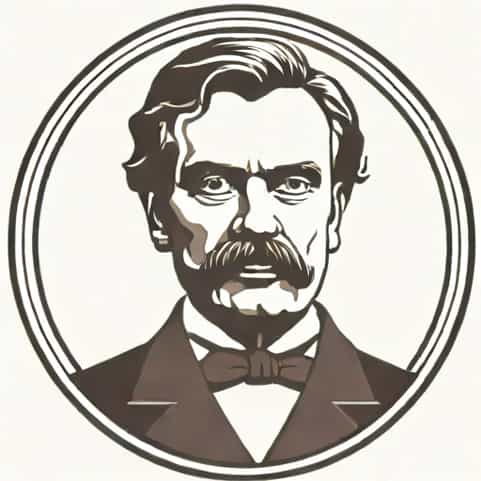
Friedrich Nietzsche is widely known as a philosopher who challenged traditional morality, religion, and cultural norms, but before his revolutionary work in philosophy, he was deeply rooted in the study of philology, the science of language, literature, and textual analysis. Nietzsche’s early engagement with philology profoundly influenced his later philosophical thought, shaping his critical approach to culture, history, and morality. He envisioned a philology of the future that would transcend mere historical and textual study, linking the analysis of language and culture to broader questions about human existence, values, and the evolution of knowledge. Understanding Nietzsche’s approach to philology offers a unique window into his intellectual development and his vision of a transformative future for culture and scholarship.
The Early Life and Philological Training of Nietzsche
Nietzsche’s immersion in philology began at a young age. He studied classical languages, literature, and history at the University of Bonn and later at Leipzig, where he trained under prominent philologists of his time. His education emphasized rigorous textual analysis, critical evaluation of historical sources, and deep engagement with Greek and Roman literary traditions. Nietzsche’s early works, including his studies of Greek tragedy, revealed a keen interest in understanding how ancient cultures expressed human experience through language, narrative, and ritual. This foundation in philology allowed him to approach texts with analytical precision, while also cultivating a sensitivity to the aesthetic, psychological, and moral dimensions of language.
The Influence of Classical Philology on Nietzsche’s Philosophy
Philology provided Nietzsche with tools to explore the human condition through the lens of language and literature. His famous work, The Birth of Tragedy, demonstrates this intersection, as he analyzed the tension between the Apollonian and Dionysian aspects of Greek culture. Here, philological research served not merely as historical inquiry but as a method for uncovering deep truths about art, society, and individual psychology. By examining the origins and meanings of words, myths, and literary forms, Nietzsche sought to reveal how cultures construct values, shape behavior, and interpret reality. His approach illustrated that philology could serve as a gateway to understanding the dynamics of human life, culture, and morality.
Nietzsche’s Critique of Traditional Philology
While Nietzsche valued the analytical rigor of philology, he was also critical of its limitations. Traditional philology, in his view, often became overly focused on historical reconstruction, textual minutiae, and rigid adherence to scholarly conventions. Nietzsche believed that such approaches risked detaching language and texts from the living realities they represented. He argued for a philology that did not merely catalog words or manuscripts but engaged with the transformative potential of culture and thought. For Nietzsche, the philologist of the future should be a thinker who could combine historical knowledge with creative insight, capable of reinterpreting texts to illuminate broader existential and cultural truths.
The Limitations of Conventional Scholarship
Nietzsche observed that many philologists treated classical texts as static objects, ignoring the dynamic interplay between language, culture, and human experience. He was critical of scholars who pursued minute linguistic details without considering the ethical, psychological, or artistic significance of their findings. By emphasizing historical accuracy over interpretive creativity, traditional philology risked becoming sterile and disconnected from the lived experience of individuals and societies. Nietzsche’s critique highlighted the need for a more expansive, visionary approach to scholarship-one that integrates knowledge with cultural critique and philosophical reflection.
The Concept of a Philology of the Future
Nietzsche’s notion of a philology of the future represents an effort to redefine the purpose and scope of the discipline. This future philology would not be limited to textual criticism or historical reconstruction but would embrace a broader, more dynamic understanding of language, culture, and values. It would involve examining the ways in which language shapes human thought, morality, and aesthetic experience, while also considering how new interpretations can inspire cultural renewal and individual growth. For Nietzsche, this future-oriented philology was both a scholarly method and a philosophical project, aiming to cultivate wisdom, creativity, and ethical insight.
Language as a Tool for Transformation
Central to Nietzsche’s vision of a philology of the future is the idea that language is not merely descriptive but generative. Words, myths, and literary forms have the power to shape consciousness, influence behavior, and construct cultural norms. By studying language critically and creatively, future philologists could uncover hidden assumptions, challenge established values, and offer new perspectives on life and morality. Nietzsche saw this process as essential for the renewal of culture, enabling individuals to reinterpret inherited traditions and forge new paths of meaning and expression.
The Role of the Scholar-Philosopher
In Nietzsche’s conception, the philologist of the future would be both a rigorous scholar and an independent thinker. This figure would combine technical expertise in language and textual analysis with philosophical insight and cultural imagination. By bridging the gap between historical scholarship and visionary thought, the scholar-philosopher could illuminate the ethical, aesthetic, and existential dimensions of human experience. Nietzsche’s vision anticipates later interdisciplinary approaches that integrate literary studies, philosophy, history, and cultural criticism into a holistic understanding of human life.
Implications for Modern Scholarship
Nietzsche’s ideas about the philology of the future continue to resonate in contemporary scholarship. His insistence on the interpretive, transformative, and ethical dimensions of philology prefigures modern approaches to literature, cultural studies, and critical theory. Scholars who follow Nietzsche’s vision emphasize the dynamic relationship between language, power, and culture, exploring how texts both reflect and shape social values. By integrating historical knowledge with philosophical and ethical inquiry, modern philology continues to extend the boundaries of traditional textual scholarship in ways that Nietzsche anticipated.
Philology and Interdisciplinary Studies
- Combining textual analysis with philosophy and cultural criticism to explore human values.
- Examining language as a tool for shaping thought, morality, and aesthetic experience.
- Encouraging interpretive creativity alongside historical rigor.
- Connecting the study of ancient texts to contemporary social and ethical concerns.
- Promoting intellectual independence and critical thinking in scholarship.
Nietzsche’s Enduring Influence
Nietzsche’s engagement with philology demonstrates that rigorous scholarship can coexist with bold philosophical innovation. His critique of traditional methods and his vision for a future-oriented philology inspire scholars to approach texts not only as historical artifacts but as living sources of insight and transformation. By emphasizing the interplay between language, culture, and human creativity, Nietzsche’s ideas continue to challenge conventional approaches and encourage innovative, interdisciplinary scholarship. The philology of the future, as he envisioned it, is not merely a technical discipline but a pathway toward understanding, critique, and cultural renewal.
Nietzsche’s early work in philology and his subsequent philosophical vision reveal a profound commitment to understanding the relationship between language, culture, and human life. He recognized the limitations of conventional scholarship and proposed a philology of the future that integrates historical knowledge with interpretive creativity, ethical insight, and cultural critique. This vision positions philology as a transformative tool capable of shaping thought, influencing values, and renewing culture. By studying Nietzsche’s approach, modern scholars gain inspiration for interdisciplinary research that honors both precision and imagination, reflecting the enduring relevance of his ideas for the study of language, literature, and the human condition.