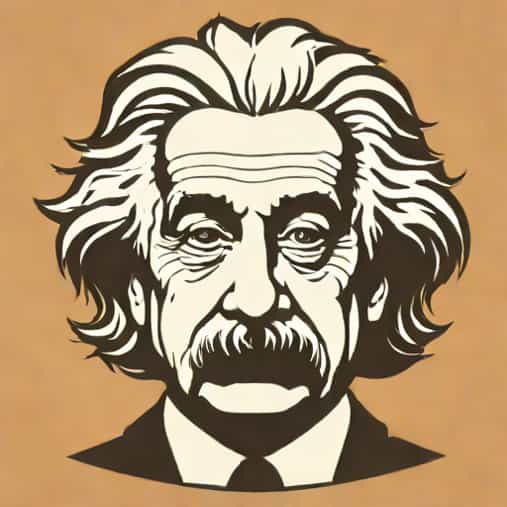
Albert Einstein, one of the greatest scientific minds in history, is often remembered for his groundbreaking theories and contributions to modern physics. Yet, few people know the full story of where he studied and how his academic journey shaped his intellectual development. The question Albert Einstein studied in which university? opens a fascinating look into the life of a man whose curiosity and determination redefined the way we understand space, time, and energy. His education was far from ordinary, filled with challenges, rebellion, and brilliance that set the foundation for his future discoveries.
Early Education and Academic Struggles
Before discussing the university Einstein attended, it’s important to understand his early education. Albert Einstein was born in Ulm, Germany, in 1879. He grew up in Munich, where he attended a traditional German school. From a young age, Einstein showed an exceptional interest in mathematics and science, but he often clashed with the rigid teaching style of his teachers. He disliked memorization and preferred understanding the deeper logic behind things, which often got him into trouble with authority figures.
At the age of 15, Einstein left school and moved to Switzerland, where he found a more open and progressive education system. This move became a turning point in his life, giving him the freedom to explore his intellectual interests without the strict discipline he faced in Germany.
Einstein’s Path to Higher Education
Einstein applied to the Swiss Federal Polytechnic School in Zurich, known today as ETH Zurich (Eidgenössische Technische Hochschule Zürich). However, his first attempt to enter the institution in 1895 did not go as planned. Although he excelled in mathematics and physics during the entrance exam, he performed poorly in subjects like literature and history. As a result, he was not accepted immediately.
Despite this setback, the headmaster of the Polytechnic recognized Einstein’s exceptional talent and advised him to complete his secondary education at the Argovian Cantonal School in Aarau, Switzerland. Einstein followed this advice, graduating from Aarau in 1896. His time there was crucial it nurtured his creativity and independent thinking, values that later became essential to his scientific breakthroughs.
The University Einstein Studied At
After completing his studies in Aarau, Albert Einstein was finally admitted to the Swiss Federal Polytechnic in Zurich in 1896. This is the university where Einstein officially studied and began developing his scientific ideas. At ETH Zurich, he enrolled in a teaching diploma program for mathematics and physics. His years at the Polytechnic were transformative, shaping him into the brilliant thinker the world remembers today.
Einstein’s professors included some of the most respected scientists of the time, such as Heinrich Weber and Hermann Minkowski. However, Einstein was known for being independent-minded. He often skipped classes, preferring to study on his own or discuss ideas with friends. Despite his unconventional habits, he excelled in the subjects that truly fascinated him, particularly theoretical physics.
What Einstein Studied at ETH Zurich
Einstein’s curriculum at ETH Zurich included a combination of physics, mathematics, and teaching methodology. Some of the key subjects he studied were
- Theoretical and experimental physics
- Differential and integral calculus
- Electromagnetism and mechanics
- Geometry and algebra
- Pedagogy for future science teachers
These subjects gave Einstein a strong foundation in the mathematical and physical principles that later influenced his famous theories of relativity. His deep understanding of classical mechanics, combined with his curiosity about light and motion, would eventually lead him to challenge existing scientific ideas and propose revolutionary new concepts.
Graduation and Early Career
Einstein graduated from the Swiss Federal Polytechnic in 1900 with a diploma to teach physics and mathematics. However, finding a teaching job proved difficult. His independent attitude had alienated some professors, and he did not receive strong recommendations. Instead of becoming a schoolteacher, Einstein worked as a patent examiner at the Swiss Patent Office in Bern starting in 1902.
While working at the patent office, Einstein continued to study physics in his spare time. His job involved reviewing inventions, which sharpened his analytical skills and helped him think practically about scientific principles. During this period, he published several groundbreaking papers that would change the world of physics forever.
The Influence of His University Education
Einstein’s time at ETH Zurich had a lasting influence on his career. The freedom of thought and scientific rigor he experienced there encouraged him to question established theories. Even though he did not excel in every subject, the environment allowed him to explore his intellectual curiosity fully. The friendships he formed with other students also played a role in his development; many of them became lifelong collaborators and supporters.
ETH Zurich’s focus on both theory and practical application shaped Einstein’s approach to science. He learned to combine mathematical precision with imaginative reasoning a balance that later helped him develop the theory of relativity and other groundbreaking ideas.
Other Universities Associated with Einstein
While ETH Zurich was the university where Albert Einstein studied as a student, his academic journey did not end there. Over the years, he was connected with several other universities as a researcher and professor.
- University of ZurichEinstein earned his Ph.D. from the University of Zurich in 1905. His dissertation focused on molecular dimensions and was a key step in his early research career.
- University of BernWhile working at the patent office, Einstein also lectured part-time at the University of Bern, sharing his insights with young students.
- University of PragueIn 1911, he became a full professor at Charles University in Prague, where he continued his theoretical work.
- University of BerlinFrom 1914 to 1933, Einstein worked at the University of Berlin and the Prussian Academy of Sciences. It was during this period that he completed his general theory of relativity and gained international fame.
- Institute for Advanced Study (Princeton University)After emigrating to the United States in 1933, Einstein joined the Institute for Advanced Study in Princeton, where he continued his research until his death in 1955.
Although he studied only at ETH Zurich as a student, his association with these prestigious institutions throughout his life solidified his legacy as one of the most influential scientists of all time.
Einstein’s Academic Legacy
Albert Einstein’s academic path reflects the power of persistence, curiosity, and independent thinking. His time at ETH Zurich not only shaped his understanding of science but also taught him the value of questioning authority and thinking creatively. Despite facing challenges and setbacks, he used his education as a foundation for innovation that transformed physics forever.
Today, ETH Zurich is proud to be known as the university where Einstein studied. The institution continues to honor his legacy through research in physics, mathematics, and engineering, inspiring generations of scientists to follow in his footsteps.
Interesting Facts About Einstein’s Education
- Einstein renounced his German citizenship at 16 to avoid military service and became a Swiss citizen while studying in Zurich.
- He met his first wife, Mileva Marić, while studying at ETH Zurich. She was one of the few women studying physics at the time.
- Einstein’s rebellious attitude toward formal education was not a sign of laziness but a reflection of his independent spirit and dislike of rote learning.
- His professors once considered him an average student, unaware that he would one day revolutionize modern science.
So, to answer the question Albert Einstein studied at the Swiss Federal Polytechnic in Zurich, now known as ETH Zurich. His time there laid the groundwork for his future achievements and gave him the intellectual tools to challenge traditional scientific ideas. Einstein’s journey reminds us that true learning comes not from memorizing facts, but from nurturing curiosity and creativity. His education, marked by persistence and self-discovery, stands as an inspiring example for anyone seeking to push the boundaries of human knowledge.