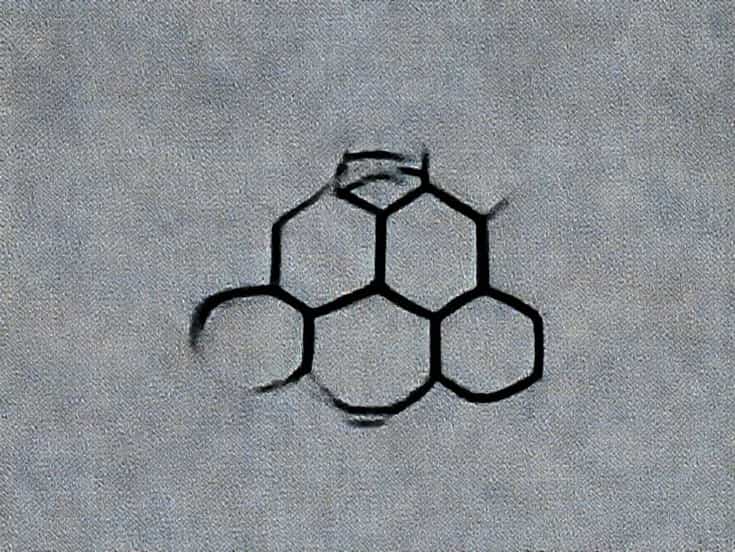
Aromatic compounds are a central topic in organic chemistry, often associated with the familiar benzene ring taught in basic courses. However, not all aromatic substances contain benzene. This is where non benzenoid aromatic compounds become important. These compounds follow the rules of aromaticity but do not include a benzene ring in their structure. Understanding them helps explain a wider range of chemical behavior found in nature, industry, and advanced scientific research.
Understanding Aromaticity in Simple Terms
Before discussing non benzenoid aromatic compounds, it is helpful to understand what aromaticity means. Aromaticity is a property of certain cyclic, planar molecules that have a special stability due to the delocalization of electrons. This stability makes aromatic compounds behave differently from other unsaturated compounds.
The Key Rules of Aromaticity
Most aromatic compounds follow a set of criteria often summarized by Hückel’s rule. According to this rule, a compound is aromatic if it is cyclic, planar, fully conjugated, and contains a specific number of pi electrons.
- The molecule must be cyclic
- The molecule must be planar or nearly planar
- Electrons must be delocalized across the ring
- The number of pi electrons must follow the 4n+2 rule
What Are Non Benzenoid Aromatic Compounds
Non benzenoid aromatic compounds are aromatic molecules that do not contain a benzene ring. Despite lacking benzene, they still meet the fundamental requirements of aromaticity. This makes them just as chemically significant as benzenoid aromatic compounds.
Why They Matter in Chemistry
These compounds expand the definition of aromatic systems and show that aromaticity is not limited to six-membered carbon rings. They demonstrate how electron delocalization can occur in various molecular frameworks.
Difference Between Benzenoid and Non Benzenoid Aromatics
Benzenoid aromatic compounds are those that contain one or more benzene rings. In contrast, non benzenoid aromatic compounds achieve aromatic stability without benzene. This difference affects their structure, reactivity, and applications.
Key Structural Differences
- Benzenoid compounds contain six-membered carbon rings
- Non benzenoid compounds may contain five-membered, seven-membered, or fused rings
- Non benzenoid aromatics may include heteroatoms like oxygen, nitrogen, or sulfur
Common Examples of Non Benzenoid Aromatic Compounds
Several well-known compounds fall into the category of non benzenoid aromatic compounds. These molecules are often studied to illustrate how aromaticity can exist beyond benzene.
Cyclopropenyl Cation
The cyclopropenyl cation is one of the simplest non benzenoid aromatic compounds. Despite having only three carbon atoms, it is aromatic because it contains two pi electrons that are delocalized over the ring.
Cyclopentadienyl Anion
This compound has five carbon atoms and six pi electrons, making it aromatic. It plays an important role in organometallic chemistry and demonstrates how charged species can still be aromatic.
Tropylium Ion
The tropylium ion is a seven-membered ring with six pi electrons. It is planar and fully conjugated, fulfilling the criteria for aromaticity without containing benzene.
Heterocyclic Aromatic Compounds Without Benzene
Many non benzenoid aromatic compounds include heteroatoms, which are atoms other than carbon in the ring. These heteroatoms contribute lone pairs that participate in electron delocalization.
Examples of Heterocyclic Non Benzenoid Aromatics
- Pyrrole
- Furan
- Thiophene
Although these compounds resemble benzene in stability, their chemical behavior is influenced by the presence of heteroatoms.
Electronic Structure and Stability
The stability of non benzenoid aromatic compounds comes from electron delocalization. This delocalization lowers the overall energy of the molecule, making it less reactive than similar non-aromatic compounds.
Role of Pi Electrons
Pi electrons move freely across the ring structure, creating a continuous cloud of electron density. This shared electron system is responsible for the unique stability of aromatic compounds.
Chemical Reactivity of Non Benzenoid Aromatic Compounds
While these compounds are stable, they can still participate in chemical reactions. Their reactivity often differs from benzenoid compounds due to ring size, charge distribution, and heteroatoms.
Typical Reaction Patterns
- Electrophilic substitution reactions
- Nucleophilic substitution in some cases
- Reactions influenced by ring strain or charge
Importance in Organic Synthesis
Non benzenoid aromatic compounds are valuable building blocks in organic synthesis. Chemists use them to create pharmaceuticals, dyes, and advanced materials.
Applications in Industry
Many medicines and agrochemicals contain non benzenoid aromatic systems. Their unique structures allow for specific interactions with biological targets.
Role in Biological Systems
Some non benzenoid aromatic compounds occur naturally and play important biological roles. Their aromatic nature contributes to stability and functionality in living organisms.
Biological Relevance
- Components of vitamins and cofactors
- Structures in natural toxins and pigments
- Key units in enzyme activity
Non Benzenoid Aromatic Compounds in Modern Research
Modern chemistry continues to explore new non benzenoid aromatic compounds. Researchers study them for their electronic properties, which are useful in materials science and nanotechnology.
Advanced Applications
These compounds are investigated for use in organic semiconductors, conductive polymers, and molecular electronics. Their tunable aromatic systems offer flexibility in design.
Common Misconceptions About Aromatic Compounds
A common misunderstanding is that all aromatic compounds must contain benzene or have a pleasant smell. In reality, aromaticity is a structural and electronic property, not related to odor.
Clarifying the Concept
Non benzenoid aromatic compounds clearly show that aromatic chemistry is much broader than benzene-based systems.
Learning Challenges for Students
Students often find non benzenoid aromatic compounds confusing because they break away from the familiar benzene model. However, learning these compounds strengthens understanding of electron delocalization and molecular stability.
Tips for Understanding
- Focus on electron count rather than ring size
- Check planarity and conjugation
- Apply Hückel’s rule carefully
Why Non Benzenoid Aromatic Compounds Are Important
These compounds show that aromaticity is a flexible concept that applies to many molecular systems. They help chemists design new molecules with predictable stability and reactivity.
Non Benzenoid Aromatic Compounds
Non benzenoid aromatic compounds play a crucial role in expanding the understanding of aromaticity beyond benzene. They demonstrate how different ring sizes, charges, and heteroatoms can still produce stable aromatic systems. From fundamental chemistry education to advanced industrial and biological applications, these compounds continue to shape modern science. By studying non benzenoid aromatic compounds, one gains a deeper appreciation for the diversity and elegance of chemical structures and the principles that govern them.